Mount Vernon: The Complex Legacy of Enslavement and Ownership
Mount Vernon is widely recognized as the home of George Washington, but the estate's history is deeply intertwined with the lives of the hundreds of enslaved people who lived and worked there. From the death of the first President in 1799 through the mid-19th century, the plantation underwent various shifts in ownership and management, reflecting the brutal realities of the American slave system.
At the time of George Washington's death in 1799, 316 enslaved people resided at Mount Vernon. While Washington owned about half of them, the majority were inherited by the children of Martha Washington's first husband, Daniel Parke Custis. These individuals, known as dower slaves (people held as part of a widow's dower rights), were subject to complex legal arrangements that delayed their freedom.
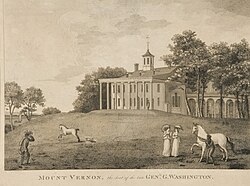
The Transition of Ownership and Emancipation
George Washington's will expressed an intent to free the people he enslaved, but the immediate effect was limited. Only his personal manservant, William Lee, was freed instantly. The rest were left to Martha Washington, with instructions that they be emancipated upon her death, at which point they would have become the property of her grandchildren.
In 1801, fearing for her own safety, Martha Washington freed the enslaved people she fully owned. However, the dower slaves remained in bondage and were divided among her four grandchildren following her death in 1802. This division scattered many families, as some remained at Mount Vernon while others were moved to different estates.
The Era of Bushrod Washington
Bushrod Washington, George's nephew and an executor of his will, inherited the Mount Vernon estate. Under his ownership, the plantation became a site of increasing tension. Bushrod brought in additional enslaved people inherited from his own parents, creating a community of both freed and enslaved Black and mulatto residents.
Tensions peaked when Bushrod explicitly stated he had no intention of freeing the enslaved people under his control. This led to acts of insubordination and a series of tragic events:
- The 1821 Sale: Bushrod sold 54 enslaved people to Horatio S. Sprigg and Archibald P. Williams for $10,000 (approximately $313,700 in 2024). They were transported in a coffle—a line of enslaved people chained together—toward Louisiana.
- Public Controversy: The sight of the coffle in Leesburg, Virginia, sparked a national debate after being reported in the Niles Weekly Register. Bushrod defended his actions in a Baltimore newspaper, asserting his right to sell his property.
- The Case of Hannah Smith Scott: In 1822, Hannah Smith Scott was convicted of attempting to poison an overseer with arsenic-tainted coffee. She was sentenced to death, a sentence later reduced to transportation out of Virginia. She died in a Richmond jail in 1823; her infant son, born in prison, remained the property of Bushrod Washington.
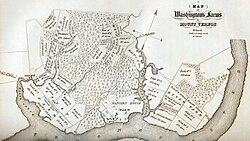
Later Management and the Path to Preservation
Following Bushrod's death in 1829, the estate passed to John Augustine Washington II, and subsequently to his widow, Jane Charlotte Blackburn Washington. In 1841, Jane Charlotte leased Mount Vernon to her son, John Augustine Washington III (Augustine). Augustine was the first Washington to personally manage the estate since the first President.
Augustine focused on agricultural expansion, doubling the cultivated acreage within five years and tripling it within ten. However, the estate faced economic decline and physical deterioration due to the constant influx of sightseers. By 1855, Augustine became the full owner but struggled to sell the property to the federal government or the Commonwealth of Virginia, eventually moving his family to the Waveland plantation in Fauquier County.
In 1859, the Mount Vernon Ladies' Association purchased a portion of the estate to preserve it. While the Association focused on the historical legacy of George Washington, the Black people who worked there focused on their own self-preservation and the pursuit of freedom and property ownership.
Key Facts
- Population: 316 enslaved people lived at Mount Vernon at the time of George Washington's death in 1799.
- Dower Slaves: Many enslaved people were not owned by George Washington but were part of the estate of Daniel Parke Custis.
- Financials: In 1821, Bushrod Washington sold 54 people for $10,000, a sum equivalent to over $313,000 today.
- Agricultural Growth: Augustine Washington tripled the cultivated acreage of the plantation within a decade of taking over management.
- Preservation: The Mount Vernon Ladies' Association acquired the estate in 1859.
| Period/Owner | Key Action/Status | Impact on Enslaved Population |
|---|---|---|
| George Washington (d. 1799) | Wrote will for emancipation | Only William Lee freed immediately |
| Martha Washington (d. 1802) | Freed personally owned slaves (1801) | Dower slaves divided among grandchildren |
| Bushrod Washington (d. 1829) | Managed estate and sold slaves | 54 people sold to Louisiana in 1821 |
| Augustine Washington (1841-1855) | Expanded cultivation | Increased labor demands and leasing of slaves |
| MV Ladies' Association (1859) | Purchased for preservation | Shift toward tourism and curated history |
Frequently Asked Questions
Why weren't all the enslaved people freed when George Washington died?
Many of the enslaved people were "dower slaves" inherited from Martha Washington's first husband, Daniel Parke Custis. George Washington did not have the legal authority to free people he did not own; they were destined to be inherited by Martha's grandchildren.
Who was Bushrod Washington?
Bushrod Washington was George Washington's nephew. He served as an executor of George's will and eventually inherited the Mount Vernon estate, where he managed the plantation and oversaw the sale of many enslaved people.
What happened to the enslaved people sold in 1821?
Fifty-four enslaved people were sold to Horatio S. Sprigg and Archibald P. Williams for $10,000. They were transported via a coffle to plantations on Bayou Robert on the Red River in Louisiana.
How did Augustine Washington change the plantation?
Augustine Washington increased the productivity of the land, expanding the cultivated acreage from 145 acres to three times that amount within ten years of taking over management in 1841.
What role did the Mount Vernon Ladies' Association play?
The Association purchased part of the estate in 1859 to preserve the site for future generations, particularly as the United States approached the Civil War.