MOTIR: South Korea's Ministry of Trade, Industry and Resources Overview
The Ministry of Trade, Industry and Resources (MOTIR; Korean: 산업통상부) serves as a vital pillar of the Government of South Korea. Tasked with regulating economic policy, the ministry plays a central role in managing the nation's industrial and resources sectors. Beyond domestic regulation, MOTIR is instrumental in driving economic growth by working to encourage foreign investment within South Korea.
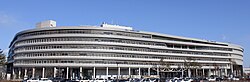
Key Facts
- Current Minister: Kim Jeong-kwan
- Headquarters: Sejong City, South Korea
- Primary Functions: Economic policy regulation, industrial management, and resource oversight.
- Core Objective: Encouraging foreign investment and managing trade negotiations.
- Established: Originally formed in 1948 as the Ministry of Commerce.
Historical Evolution of the Ministry
The history of MOTIR is a reflection of South Korea's shifting economic priorities and administrative reorganizations over several decades. Since its inception, the agency has undergone numerous name changes and structural shifts to align with the nation's evolving needs.
Early Foundations and Mergers (1948–1998)
The agency began its journey on July 17, 1948, as the Ministry of Commerce during the First Republic. For several decades, it operated under this name until 1993, when it merged with the Ministry of Energy (established in 1977) to form the Ministry of Commerce and Energy. By 1994, the name was updated to the Ministry of Trade and Energy.
In 1998, a significant shift occurred when trade negotiation duties were transferred to the foreign ministry, leading to the agency being renamed the Ministry of Industry and Energy.
Modern Restructuring (2008–Present)
In 2008, under the administration of President Lee Myung-bak, the ministry was restructured into the Ministry of Knowledge Economy. This was later reversed in 2013 during President Park Geun-hye's cabinet reorganization, which brought trade negotiation duties back from the foreign ministry, establishing the Ministry of Trade, Industry and Energy.
Recent years have seen further specialization. In 2017, duties related to Small and Medium Enterprises (SMEs) were delegated to the newly created Ministry of SMEs and Startups. Most recently, in 2025, following a cabinet reorganization by President Lee Jae Myung, the energy sector was transferred to the Ministry of Climate, Energy and Environment, resulting in the current designation: the Ministry of Trade, Industry and Resources (MOTIR).
Organizational Structure and Subsidiary Agencies
MOTIR operates through a complex hierarchy designed to manage specific economic sectors. The ministry is led by the Minister, supported by a 1st Vice Minister and a 2nd Vice Minister, along with specialized heads such as the Head of Trade Negotiations Division.
Subsidiary Organizations
To execute its specialized mandates, MOTIR oversees several key subsidiary organizations:
- Korean Agency for Technology and Standards: Focuses on industrial standardization and technical regulation.
- Korea Trade Commission: Manages trade-related administrative duties.
- Mine Registration Office: Oversees mineral and resource registration.
- Electricity Regulatory Committee: Manages regulations within the power sector.
- Free Economic Zone Planning Office: Coordinates development within specialized economic zones.
Summary of Ministry Evolution
| Period | Ministry Name | Key Change/Context |
|---|---|---|
| 1948–1993 | Ministry of Commerce | Original formation during the First Republic. |
| 1993–1994 | Ministry of Commerce and Energy | Merged with the Ministry of Energy. |
| 1994–1998 | Ministry of Trade and Energy | Name change following merger. |
| 1998–2008 | Ministry of Industry and Energy | Trade duties transferred to the foreign ministry. |
| 2008–2013 | Ministry of Knowledge Economy | Restructured under President Lee Myung-bak. |
| 2013–2025 | Ministry of Trade, Industry and Energy | Trade duties returned to the ministry. |
| 2025–Present | Ministry of Trade, Industry and Resources | Energy sector transferred to Ministry of Climate, Energy and Environment. |
Frequently Asked Questions
Where is the MOTIR headquarters located?
The headquarters are located in the Sejong Regional Government Complex in Sejong City, South Korea. They were formerly located in the Gwacheon Government Complex.
What is the primary role of MOTIR?
MOTIR is responsible for regulating economic policy, specifically focusing on the industrial and resources sectors, while also working to attract foreign investment to South Korea.
Who is the current Minister of MOTIR?
The current minister responsible for the ministry is Kim Jeong-kwan.
How does MOTIR differ from the Ministry of SMEs and Startups?
While MOTIR manages broad industrial and trade policies, duties specifically related to Small and Medium Enterprises (SMEs) were delegated to the Ministry of SMEs and Startups in 2017.
What happened to the energy sector within MOTIR?
In 2025, as part of a cabinet reorganization, the energy sector was transferred to the Ministry of Climate, Energy and Environment.