Monitor Ships: The Evolution of Heavy Shore Support in the 20th Century
The monitor is a specialized class of warship designed for a singular, potent purpose: providing heavy artillery support to troops ashore. Characterized by a shallow draft (the vertical distance between the waterline and the bottom of the hull) and massive armament, these vessels sacrificed speed and seaworthiness to deliver devastating firepower in coastal and riverine environments.
Throughout the 20th century, the monitor evolved from makeshift coastal batteries in World War I to sophisticated "river battleships" in the jungles of Vietnam. While they were rarely suited for high-seas combat, their ability to operate in shallow waters made them indispensable for amphibious operations and internal waterway patrols.
Key Facts
- Primary Role: Close shore support and riverine patrol.
- Design Trade-off: Heavy armament and stability were prioritized over speed and seaworthiness.
- WWI Innovation: The Royal Navy used "cheap and cheerful" designs, often repurposing guns from scrapped battleships.
- WWII Utility: Used for the Invasion of Normandy and clearing the German-mined River Scheldt.
- Vietnam Era: Converted from LCM Mark 6 landing craft to create heavily armored "river battleships."
- Current Status: The Brazilian Navy's Parnaíba is the last remaining true monitor.
World War I: The Rise of the Coastal Monitor
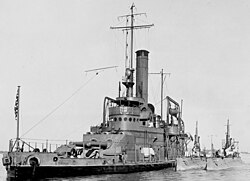
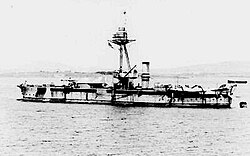
During the First World War, the Royal Navy developed several monitor classes to support ground troops. These ships were often makeshift, designed to carry whatever spare guns were available from ships that were either scrapped or never completed. To ensure stability for their heavy turrets, they featured broad beams—typically about one-third of the ship's overall length—which made them extremely slow and unsuitable for open-ocean combat.
The Humber class began as large river gunboats for the Brazilian navy, while later classes like the Abercrombie (1915) incorporated waterline bulges to increase resilience against torpedo attacks. These vessels played a critical role in the 1914 "Race to the Sea" and later patrolled the Straits of Dover to block enemy surface vessels from the English Channel.
The scale of these ships varied significantly. The Abercrombie class measured 320 feet (98 m) long, while the M29 class was only 170 feet (52 m). The largest, the Erebus class (1916), reached 405 feet (123 m). One notable example, HMS General Wolfe, was equipped with a single 18-inch (457 mm) gun capable of shelling targets 20 miles (30 km) away.
International Developments in WWI
While the Royal Navy expanded its fleet, the United States Navy had largely moved away from monitors, relegating its final seven active vessels to roles as submarine tenders (ships that provide maintenance and supplies to submarines). The last original American monitor, USS Wyoming (renamed USS Cheyenne), was removed from service in 1937.
Meanwhile, the Austro-Hungarian Navy invested heavily in river monitors for the Danube and its tributaries. These ships were among the first to fire on Serbian territory and participated in the bombardment of Belgrade. After the war, these vessels were distributed as prizes to Romania and the new state of Yugoslavia.
World War II and the Return of Shore Bombardment
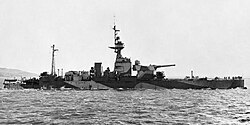
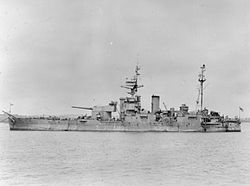
Following WWI, most small Royal Navy monitors were scrapped, though HMS Erebus and HMS Terror survived into the second global conflict. As the need for shore support returned, the British built the Roberts-class monitors, Roberts and Abercrombie, fitting them with 15-inch (380 mm) guns salvaged from older battleships.
These vessels were instrumental in the Mediterranean during the British Eighth Army's desert and Italian campaigns. They also provided critical offshore bombardment during the 1944 Invasion of Normandy and helped clear German mines from the River Scheldt to open the port of Antwerp.
Other nations continued to use monitors in riverine contexts. The German, Yugoslav, Croatian, and Romanian navies all operated monitors on the Danube. Italy's Faa di Bruno, originally a WWI monitor, served as a floating battery before being captured by Germany and renamed Biber.
Soviet Riverine Strategy
The Soviet Union developed a robust fleet of river monitors for use on lakes and internal waterways. Drawing on lessons from WWI and the Russian Civil War, they launched a new series of monitors in the 1930s. The lead ship, Zheleznyakov, laid down in 1934 in Kiev, survives today as a museum ship on the Dnieper.
The Vietnam War: The "River Battleships"
In 1965, the U.S. Navy reactivated its brown-water navy (naval forces operating in rivers and coastal areas) to combat insurgency in the Mekong Delta. Secretary of Defense Robert S. McNamara authorized the Mobile Riverine Force (MRF) in 1966 to provide the heavy armor and firepower that smaller patrol boats lacked.
These Vietnam-era monitors were converted from WWII-era 56-foot (17 m) Landing Craft Mechanized (LCM) Mark 6s. They were developed in two phases:
- Program 4: 10 monitors armed with a single 40 mm cannon in a Mk 52 turret.
- Program 5: Advanced versions including the Monitor (H), armed with a 105 mm howitzer in a T172 turret, and the Monitor (F), equipped with six flamethrowers in M8 cupola turrets.
These vessels averaged 10 tons of armor, reached a maximum speed of 8.5 knots (15.7 km/h), and were manned by 11 crewmen. Following the fall of South Vietnam in 1975, nearly all were captured, except for training monitor #C-18, which remains on display in Coronado, California.
Summary of Monitor Specifications
| Class/Vessel | Era | Primary Armament | Key Feature |
|---|---|---|---|
| Abercrombie (WWI) | WWI | Various (Heavy Turrets) | Waterline bulges for torpedo defense |
| Roberts-class | WWII | 2 x 15-inch (380 mm) guns | Used in Normandy Invasion |
| Zheleznyakov | Pre-WWII | Riverine Artillery | Soviet river flotilla lead ship |
| Vietnam Monitor (H) | Vietnam War | 105 mm Howitzer | Converted from LCM Mark 6 |
Frequently Asked Questions
What is a monitor ship?
A monitor is a shallow-draft warship designed primarily for shore bombardment and riverine patrol, featuring heavy armament and high stability at the expense of speed and seaworthiness.
Why were Royal Navy monitors described as "cheap and cheerful"?
They were often built quickly using inexpensive hull designs and repurposed guns from decommissioned or cancelled battleships to meet urgent wartime needs.
How did the U.S. Navy use monitors in the Vietnam War?
The U.S. Navy converted WWII landing craft (LCM Mark 6) into heavily armored "river battleships" equipped with 40 mm cannons, 105 mm howitzers, or flamethrowers to support operations in the Mekong Delta.
Which country currently operates a true monitor?
The Brazilian Navy currently operates the Parnaíba as part of its inland waterway force, making it the last true monitor in service.
What was the role of monitors in the Invasion of Normandy?
The Roberts-class monitors provided heavy offshore bombardment to support the landing forces during the 1944 invasion.