European River Monitors: Armored Warships of the Danube and Beyond
In the strategic waterways of Central and Eastern Europe, the river monitor—a shallow-draft, armored warship designed for riverine operations—played a pivotal role in regional conflicts. These vessels provided critical fire support for ground troops and controlled vital transport arteries, most notably along the Danube River during the first half of the 20th century.
The Danube Theater in World War I
During World War I, the Danube became a primary arena for riverine combat between Austria-Hungary and Romania. The conflict's naval opening was marked by the Austro-Hungarian monitor Bodrog, which fired the first shots of the war against the city of Belgrade.
The Bodrog continued its service into the Romanian Campaign, sustaining damage during the Flămânda Offensive in October 1916. Other Austro-Hungarian vessels faced similar hardships; the Körös was severely damaged by Romanian artillery, taking 12 hits and running aground after its steam lines were severed. One of the most significant losses occurred on September 22, 1917, when the Enns-class monitor Inn was sunk by a Romanian mine near Brăila. Although later refloated, it was not repaired before the war ended and was handed to Romania as war reparations, where it was renamed Basarabia.
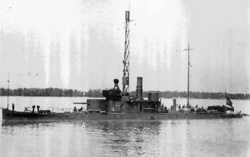
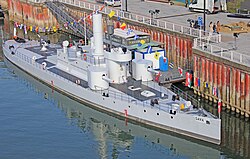
Romanian Naval Dominance
Romania deployed the Brătianu class, which were the largest river monitors on the Danube. These ships displaced 680 tons and featured heavy protection, with at least 70 mm of armor covering the belt, turrets, and conning tower. Their primary armament consisted of three 120 mm guns.
The construction of the Brătianu class was a complex international effort; they were built in sections in Triest, Austria-Hungary, transported by rail to Romania, and assembled at the Galați shipyard between 1907 and 1908. While they rarely engaged other ships, they were essential in supporting ground forces during the Battle of Turtucaia and the First Battle of Cobadin, as well as the 1917 campaign.
By the interwar period, the Romanian Danube Flotilla had become the most powerful riverine fleet in the world. This force was utilized in 1924 to help suppress the Tatarbunary Uprising. Romania continued to modernize its fleet into the late 20th century, commissioning Smârdan-class monitors (classified as large armored boats) and three Mihail Kogălniceanu-class monitors, which remain in use in the 21st century.
Riverine Warfare in Other European Nations
Czechoslovakia and Yugoslavia
Czechoslovakia operated a single monitor, the President Masaryk. Displacing approximately 200 tons, it was officially classified as a hlídková loď (patrol boat). After being captured by Germany in 1939 and renamed Bechelaren, the ship underwent extensive rebuilding in 1943. By February 1945, with modified armament, it supported German troops during Operation Spring Awakening and sank two Soviet gunboats in Austria.
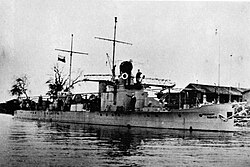
Yugoslavia's river monitors were primarily former Austro-Hungarian warships acquired as reparations. These included the Vardar (ex-Bosna), Sava (ex-Bodrog), Drava (ex-Enns), and Morava (ex-Körös). Following the fall of Yugoslavia in April 1941, the Sava and the Morava (renamed Bosna) were commissioned by the Independent State of Croatia.
Poland, the Soviet Union, and Hungary
In 1939, Poland utilized six smaller monitors (70–100 tons) on the shallow Pripyat River. These were captured by the Soviet Union and deployed on the Pripyat and Dnepr rivers in 1941. The Soviet Union also operated five Zheleznyakov-class monitors of 263 tons, serving in both the Danube and Dnieper Flotillas during World War II.
Hungary also maintained a river monitor force, with five vessels notably participating in the Kozara Offensive of 1942.
Key Facts
- First Shot of WWI: Fired by the Austro-Hungarian monitor Bodrog against Belgrade.
- Largest Danube Monitors: The Romanian Brătianu class, displacing 680 tons.
- Romanian Armor: Brătianu class ships featured 70 mm armor on the belt, turrets, and conning tower.
- Czechoslovakian Vessel: The President Masaryk was a 200-ton monitor classified as a patrol boat.
- Soviet Capability: The Zheleznyakov-class monitors displaced 263 tons.
| Vessel/Class | Country | Displacement | Key Feature/Role |
|---|---|---|---|
| Brătianu class | Romania | 680 tons | Largest on the Danube; 120 mm guns |
| Zheleznyakov class | Soviet Union | 263 tons | Served in Danube and Dnieper Flotillas |
| President Masaryk | Czechoslovakia | ~200 tons | Classified as a patrol boat |
| Polish Monitors | Poland | 70–100 tons | Used on shallow Pripyat River |
Frequently Asked Questions
What is a river monitor?
A river monitor is a shallow-draft, armored warship specifically designed for operations on rivers and coastal waters, typically used to provide heavy artillery support for land forces.
Which ship fired the first shots of World War I?
The Austro-Hungarian river monitor Bodrog fired the first shots of the war against the city of Belgrade.
How were the Romanian Brătianu class monitors constructed?
They were built in sections in Triest, Austria-Hungary, transported to Romania via rail, and finally assembled at the Galați shipyard between 1907 and 1908.
What happened to the Czechoslovakian monitor President Masaryk?
It was captured by Germany in 1939, renamed Bechelaren, rebuilt in 1943, and used to support German troops and fight Soviet gunboats.
Which nation had the most powerful riverine fleet during the interwar period?
The Romanian Danube Flotilla was the most powerful riverine fleet in the world during the interwar period.