250t-Class Torpedo Boats: Service History and Legacy
The 250t-class torpedo boats were a series of 27 vessels that played a versatile role in the naval conflicts of the early 20th century. Originally intended for high-seas operations, funding limitations ultimately restricted them to coastal duties. Despite this, they became workhorses for the Austro-Hungarian Navy, performing everything from convoy escorts and minesweeping to aggressive shore bombardments and anti-submarine patrols.
Key Facts
- Total Vessels: 27 boats were built and saw active service.
- Primary Roles: Convoy escort, minesweeping, anti-submarine operations, and shore bombardment.
- Operational Area: Primarily the Adriatic Sea and the Albanian coastline.
- Post-WWI Fate: Distributed among the navies of Romania, Greece, Portugal, and the Kingdom of Serbs, Croats and Slovenes.
- Longevity: Some vessels remained in service with the Yugoslav Navy until the early 1960s.
World War I Operations (1914–1918)
At the start of the Great War, the 250t-class boats were integrated into the Austro-Hungarian 1st Torpedo Flotilla. Their strategic purpose was to act as a rear guard for cruising battle formations, intervening only if primary battleships were disabled or to finish off damaged enemy ships.
Early Conflict and the Struggle for Pelagosa (1914–1915)
By 1915, the boats were frequently used for shore bombardments along the Italian coast, including raids on Ortona and the railway lines between Ancona and Pesaro. A significant engagement occurred at the island of Pelagosa. An initial attempt to seize the island on July 28 failed due to an underestimated Italian garrison. However, a second attack on August 17 succeeded after the Austro-Hungarian force destroyed the island's water cistern, forcing an Italian withdrawal.
Escalation and the Otranto Barrage (1916–1917)
In 1916, the boats expanded their operations to include mine-laying and supporting seaplane raids. They were frequently involved in raids against the Otranto Barrage—an Allied naval blockade designed to prevent submarines from exiting the Adriatic. Notable actions included the sinking of the British drifter Beneficent and various skirmishes with Italian destroyers.
By 1917, the fleet adapted to evolving threats by installing anti-aircraft mounts on their 66 mm guns. They continued to support air attacks on Italian airfields and coastal targets, often utilizing minefields as tactical shields to elude superior Italian forces.
The Final Years of the Empire (1918)
The final year of the war was marked by internal instability and attrition. Nationalist mutinies broke out in the Bocche di Cattaro and Pola. In June 1918, several 250t-class boats provided an escort for the dreadnought Szent István, though they were unable to prevent its sinking by Italian MAS boats (fast torpedo motorboats). The class's final major action occurred on October 2, when boat 87 survived an Allied bombardment of Durazzo.
Post-War Transfers and World War II
Following the collapse of Austria-Hungary, the surviving boats were distributed among several nations. This redistribution saw the vessels enter service with the Romanian, Portuguese, Greek, and Yugoslav navies.
| Recipient Navy | Notable Vessel Names | General Fate |
|---|---|---|
| Romanian Navy | Viforul, Vartejul, Sborul, Fulgerul | Mostly scrapped by 1932 or lost |
| Portuguese Navy | Zezere, Ave, Cavado, Sado, Liz, Mondego | Scrapped between 1921 and 1940 |
| Hellenic Navy (Greece) | Proussa, Panormos, Pergamos, Kyzikos, Kios, Kydoniai | All sunk by aircraft in April 1941 |
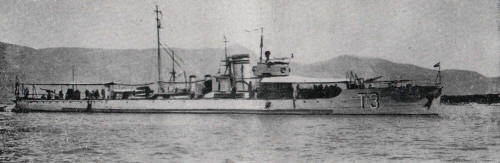
| Kingdom of Serbs, Croats and Slovenes | T1, T2, T3, T4, T5, T6, T7, T8 | Some survived into Yugoslav service |
During the German invasion of Greece in April 1941, the five remaining Greek boats were all destroyed by German aircraft (including Junkers Ju 87 dive bombers) off the coasts of Corfu, Athens, and the Peloponnese.
Final Service in Yugoslavia
The longest-lived members of the class served in the Yugoslav Navy. Two boats, renamed Golešnica (formerly T1) and Cer (formerly T5), were re-armed with 40 mm and 20 mm guns and had their torpedo tubes removed. Golešnica served until 1959, while Cer remained in service until 1962.
Frequently Asked Questions
Why were the 250t-class boats limited to coastal operations?
Although originally intended for high-seas operations, inadequate funding during their development restricted them to coastal duties.
What was the Otranto Barrage?
The Otranto Barrage was an Allied naval blockade in the Adriatic Sea intended to trap Austro-Hungarian and German submarines.
How did the boats adapt to aerial threats in 1917?
The Austro-Hungarian Navy modified the boats by placing one of their 66 mm guns on an anti-aircraft mount.
What happened to the Greek 250t-class boats in WWII?
All five surviving Greek boats were sunk by German aircraft during the invasion of Greece in April 1941.
Which vessels had the longest service life?
The boats that entered Yugoslav service lasted the longest, with the vessel Cer serving until 1962.