Mongolia: A Journey Through Steppe History, Culture, and Modernity
Exploring Mongolia: A Journey Through History, Culture, and Landscape Spanning a vast expanse of Central Asia, Mongolia is a land of dramatic contrasts, where ancient nomadic traditions m...
Exploring Mongolia: A Journey Through History, Culture, and Landscape
Spanning a vast expanse of Central Asia, Mongolia is a land of dramatic contrasts, where ancient nomadic traditions meet a rapidly modernizing society. From the sweeping dunes of the Gobi Desert to the rugged peaks of the northern mountains, the country offers a profound connection to a history that once shaped the course of global civilization.
Today, Mongolia is a unitary semi-presidential republic, characterized by its unique political identity and a resilient population. As the nation navigates the complexities of the 21st century, it remains deeply rooted in the legacy of the great empires that once rose from its steppes.
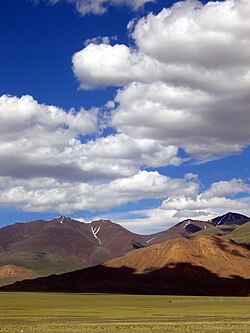
Mongolian landscape: Mongolian landscape
Key Facts
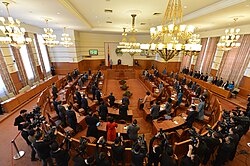
State Great Khural during the opening of the spring session in March 2014
Capital City: Ulaanbaatar
Official Languages: Mongolian (including Buriat, Khalkha, and Oirat dialects)
Official Scripts: Cyrillic and traditional Mongolian script
Total Area: 1,564,116 km² (making it the 18th largest country)
Population: Approximately 3.59 million (2025 estimate)
Primary Religions: Buddhism (51.7%) and No religion (40.6%)
Currency: Tögrög (MNT)
A Legacy of Empires
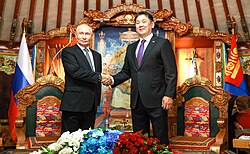
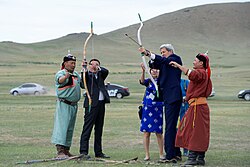
Mongolian President Ukhnaagiin Khürelsükh with Russian President Vladimir Putin in Ulaanbaatar, Mongolia, 3 September 2024
The historical identity of Mongolia is inseparable from the Mongol Empire, which saw its formal formation in 1206. This era of expansion and influence continued through the Yuan dynasty and the Northern Yuan, leaving an indelible mark on the world's political landscape.
This map shows the boundary of the 13th-century Mongol Empire compared to today's Mongols. The red area shows where the majority of Mongolian speakers reside today.: This map shows the boundary of the 13th-century Mongol Empire compared to today's Mongols. The red area shows where the majority of Mongolian speakers reside today.
Following the era of the great Khans, Mongolia underwent various periods of transition, including the Qing dynasty conquest and the eventual declaration of independence in 1911. The 20th century brought significant political shifts, from the establishment of the Mongolian People's Republic in 1924 to the democratic reforms initiated in the 1990s, which led to the current constitution in 1992.
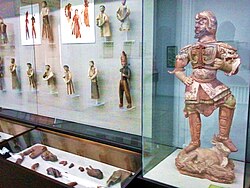
7th-century Göktürk artifacts found 180 km (112 mi) from Ulaanbaatar: 7th-century Göktürk artifacts found 180 km (112 mi) from Ulaanbaatar
Yuan dynasty, c. 1294: Yuan dynasty, c. 1294
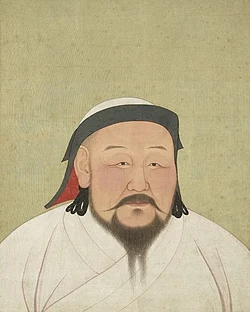
A portrait of Kublai Khan by Araniko (1245–1306): A portrait of Kublai Khan by Araniko (1245–1306)
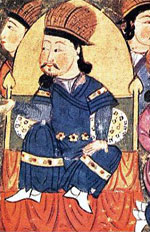
Altan Khan (1507–1582) founded the city of Hohhot, helped introduce Buddhism and originated the title of Dalai Lama.: Altan Khan (1507–1582) founded the city of Hohhot, helped introduce Buddhism and originated the title of Dalai Lama.
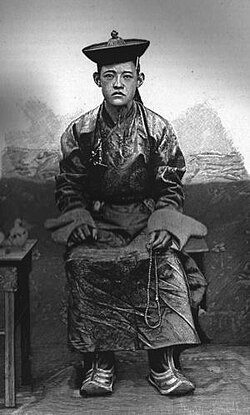
The eighth Jebtsundamba Khutuktu, Bogd Khaan: The eighth Jebtsundamba Khutuktu, Bogd Khaan
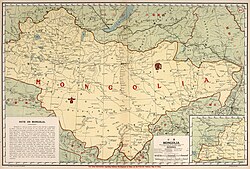
Map of unified Mongolia in 1917: Map of unified Mongolia in 1917
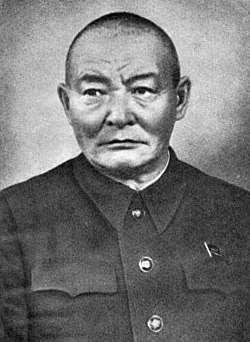
Khorloogiin Choibalsan led Mongolia during the Stalinist era, and presided over an environment of intense political persecution.: Khorloogiin Choibalsan led Mongolia during the Stalinist era, and presided over an environment of intense political persecution.
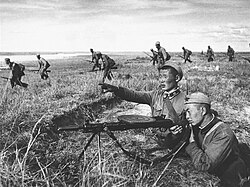
Mongolian troops fight against the Japanese counterattack at Khalkhin Gol, 1939.: Mongolian troops fight against the Japanese counterattack at Khalkhin Gol, 1939.
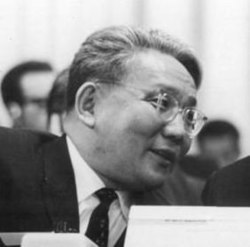
Mongolian Premier Yumjaagiin Tsedenbal was the longest-serving leader in the Eastern Bloc, with over 44 years in office.: Mongolian Premier Yumjaagiin Tsedenbal was the longest-serving leader in the Eastern Bloc, with over 44 years in office.
Geography and Climate
Mongolian President Tsakhiagiin Elbegdorj with US Secretary of State John Kerry, June 2016
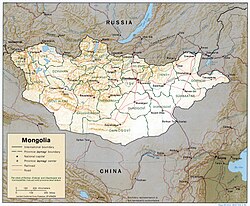
Mongolia's geography is defined by its diverse and often extreme environments. The southern portion of the country is dominated by the Gobi Desert, while the northern and western regions are characterized by mountainous terrain.
The southern portion of Mongolia consists of the Gobi Desert, while the northern and western portions are mountainous.: The southern portion of Mongolia consists of the Gobi Desert, while the northern and western portions are mountainous.
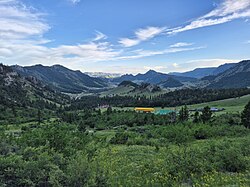
The Khentii Mountains in Terelj, close to the birthplace of Genghis Khan: The Khentii Mountains in Terelj, close to the birthplace of Genghis Khan
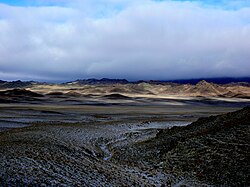
The Gobi Desert, Ömnögovi Province. Desertification is a key issue in Mongolia.: The Gobi Desert, Ömnögovi Province. Desertification is a key issue in Mongolia.
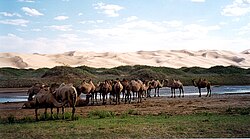
Bactrian camels by sand dunes in Gobi Desert: Bactrian camels by sand dunes in Gobi Desert
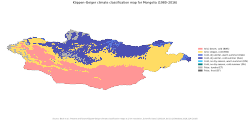
The climate is highly variable, categorized by various Köppen climate classification zones. This diversity supports a range of wildlife and unique ecosystems, though environmental challenges such as desertification remain a significant concern for the region.
Köppen climate classification zones in Mongolia: Köppen climate classification zones in Mongolia
Culture and Traditions
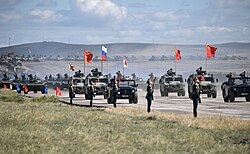
Mongolian, Chinese and Russian national flags set on armored vehicles during the large-scale military exercise Vostok 2018 in Eastern Siberia
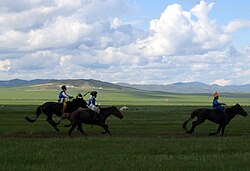
Despite modernization, Mongolian culture remains vibrant and deeply tied to its nomadic roots. Traditional practices, such as the Naadam festival—the country's largest summer celebration—continue to bring communities together through wrestling, horse racing, and archery.
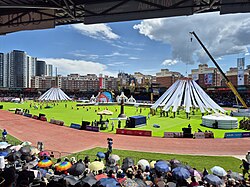
Naadam is the largest summer celebration.: Naadam is the largest summer celebration.
Riders during Naadam festival: Riders during Naadam festival
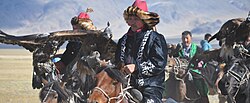
Kazakh hunters in Mongolia with eagles: Kazakh hunters in Mongolia with eagles
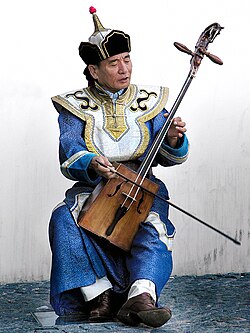
Musician playing the traditional Mongolian musical instrument morin khuur: Musician playing the traditional Mongolian musical instrument morin khuur
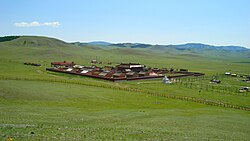
Religion plays a significant role in social life, with Buddhism being the most practiced faith. Spiritual traditions like Shamanism also maintain a presence in the cultural fabric. The landscape is dotted with significant religious sites, such as monasteries, which serve as centers of both faith and history.
Amarbayasgalant Monastery: Amarbayasgalant Monastery
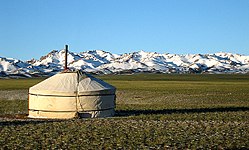
A ger in front of the Gurvan Saikhan Mountains: A ger in front of the Gurvan Saikhan Mountains
Modern Mongolia: Economy and Society
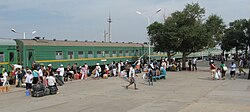
Train in Zamyn-Üüd station in Dornogovi Province
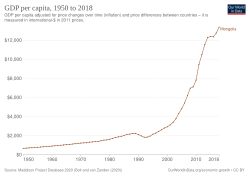
The modern Mongolian economy is increasingly driven by the mineral industry and large-scale mining operations. Significant projects, such as the Oyu Tolgoi mine, play a crucial role in the nation's GDP and employment.
Oyu Tolgoi employs 21,000 workers and produced 168,000 tons of copper in 2023.[109]: Oyu Tolgoi employs 21,000 workers and produced 168,000 tons of copper in 2023.[109]
Historical development of real GDP per capita in Mongolia: Historical development of real GDP per capita in Mongolia
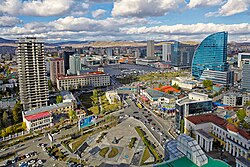
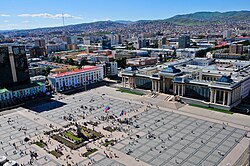
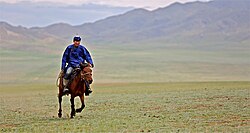
Urbanization is highly concentrated, with Ulaanbaatar serving as the capital and the primary hub for commerce, government, and culture. While the city grows, the nation continues to balance industrial development with the preservation of its traditional way of life, including the iconic Mongolian horse, which remains a national symbol even as motorized vehicles become more common.
View of Ulaanbaatar with the Blue Sky Tower: View of Ulaanbaatar with the Blue Sky Tower
Ulaanbaatar is the capital and largest city of Mongolia.: Ulaanbaatar is the capital and largest city of Mongolia.
While the Mongolian horse continues to be revered as the national symbol, they are rapidly being replaced by motorized vehicles.: While the Mongolian horse continues to be revered as the national symbol, they are rapidly being replaced by motorized vehicles.
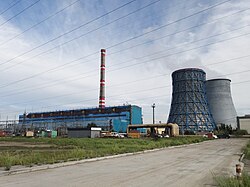
Thermal Power Plant No. 4 in Ulaanbaaatar is Mongolia's largest power station.: Thermal Power Plant No. 4 in Ulaanbaaatar is Mongolia's largest power station.
Summary of Key Demographics and Economy
Mongolia: Statistical Overview (2025 Estimates)
Category
Metric/Value
Total Population
3,591,120
GDP (Nominal)
$25.800 billion
GDP (PPP)
$73.280 billion
HDI (2023)
0.747 (High)
Urban Population (Ulaanbaatar)
44.2%
Frequently Asked Questions
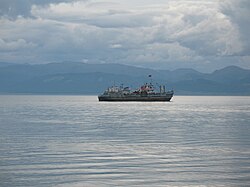
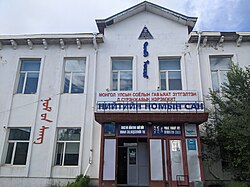
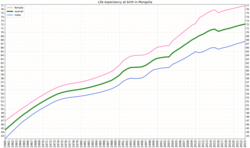
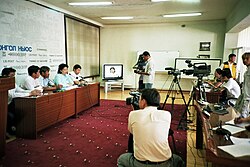
Mongolian ferry Sukhbaatar on Lake Khovsgol in Khovsgol ProvincePublic Library and Museum in Mörön, Khövsgöl province showing signage in Mongolian (Mongolian script and Cyrillic) and EnglishLife expectancy in MongoliaMongolian media interviewing the opposition Mongolian Green Party in 2008. The media has gained significant freedoms since democratic reforms initiated in the 1990s.
What is the capital of Mongolia?
The capital and largest city of Mongolia is Ulaanbaatar.
What are the main religions practiced in Mongolia?
The majority of the population identifies as Buddhist (51.7%), while 40.6% identify as having no religion. Other practiced faiths include Islam, Shamanism, and Christianity.
What is the primary language spoken in Mongolia?
The official language is Mongolian, which includes various dialects such as Khalkha, Buriat, and Oirat. The country uses both Cyrillic and traditional Mongolian scripts for official documents.
How is the Mongolian economy structured?
Mongolia's economy is supported by the mineral industry, agriculture, and services. Large-scale mining, particularly for copper and other minerals, is a significant contributor to the national economy.
What is Naadam?
Naadam is Mongolia's largest summer festival, featuring traditional competitions such as wrestling, horse racing, and archery.


![Oyu Tolgoi employs 21,000 workers and produced 168,000 tons of copper in 2023.[109]](/images/1b/e4/1be42253de35350ca640c84981dc42ed15a10c98c545c355a12c6d58a5d60f95.jpg)