Molecular Clock: Measuring the Timeline of Evolution
The molecular clock is a powerful technique used by biologists to deduce the timing of prehistoric events. By analyzing the mutation rate of biomolecules, scientists can estimate when two or more life forms diverged from a common ancestor. This process typically relies on biomolecular data, such as nucleotide sequences for DNA and RNA, or amino acid sequences for proteins.
Key Facts
- Core Concept: Uses the constant rate of molecular mutations to estimate divergence times between species.
- Founders: The hypothesis was first proposed by Émile Zuckerkandl and Linus Pauling in 1962.
- Data Sources: Primarily utilizes DNA, RNA, and protein sequences (e.g., hemoglobin and cytochrome c).
- Neutral Theory: Motoo Kimura's theory suggests that most evolutionary changes are neutral, providing a theoretical basis for the clock.
- Variability: Rates are not universal; they vary by species, generation time, and genomic region.
Early Discoveries and Genetic Equidistance
The molecular clock hypothesis began in 1962 when Émile Zuckerkandl and Linus Pauling observed that amino acid differences in hemoglobin between different lineages changed roughly linearly over time, matching estimates from fossil evidence. They proposed that the rate of evolutionary change for any specific protein remains approximately constant across different lineages.
In 1963, Emanuel Margoliash identified the phenomenon of genetic equidistance. He noted that the number of residue differences in cytochrome c (a protein involved in cellular respiration) was primarily determined by the time elapsed since two species diverged. For instance, the difference between the cytochrome c of a carp and various other vertebrates (such as frogs, turtles, and horses) remained a constant 13% to 14%.
Further evidence came in 1967 from Vincent Sarich and Allan Wilson, who studied albumin proteins in primates. They employed the relative rate test, which posits that if one lineage evolves faster than its sister lineage, the molecular difference between that species and a distant outgroup will be larger. Their findings suggested that humans (Homo sapiens) and chimpanzees (Pan troglodytes) had accumulated similar changes since their common ancestor, leading to the estimate that their divergence occurred approximately 4–6 million years ago.
The Role of Neutral Theory
While early observations were phenomenological, Motoo Kimura provided a theoretical framework through the neutral theory of molecular evolution. Kimura proposed that most mutations are neutral, meaning they have no effect on an organism's fitness. In a haploid population of size N, the probability of a new neutral mutation becoming fixed is 1/N. Since there are N new mutations every generation, one neutral mutation becomes fixed per generation regardless of population size. This implies that mutations accumulate at a clock-like rate equal to the individual mutation rate.
Calibration and Dating Methods
To turn relative mutation rates into absolute dates, scientists use various calibration methods:
- Node Calibration: Using the known age of a fossil branch point to date a node in a phylogenetic tree.
- Tip Calibration: Using the age of the samples at the tips of the tree.
- Expansion Calibration: Using documented geological population expansions to calibrate rates on shorter, intraspecific timescales.
Expansion dating has revealed that molecular clock rates can be inflated on short timescales (less than 1 million years) due to the incomplete fixation of alleles.
Challenges to the Constant Rate Hypothesis
Despite its utility, the molecular clock does not always run at a constant speed. Research shows that genomic regions under high purifying selection (such as rRNA) evolve much slower (1% per 50 million years) than regions with low negative selection (0.7–0.8% per million years).
Taxonomic differences also play a significant role. For example, tube-nosed seabirds have clocks that run at half the speed of other birds, and many turtles evolve at one-eighth the speed of small mammals. These variations are often attributed to longer generation times.
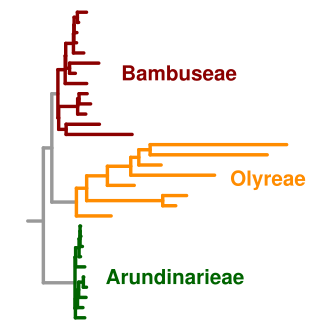
Francisco J. Ayala highlighted five primary factors that limit the application of simple molecular clock models: changing generation times, population size (where genetic drift is stronger in small populations), and species-specific differences related to metabolism, ecology, and evolutionary history.
Summary of Molecular Clock Variations
| Category | Estimated Rate / Speed | Influencing Factor |
|---|---|---|
| Low Negative Selection | 0.7–0.8% per Myr | General genomic drift |
| Purifying Selection (rRNA) | 1% per 50 Myr | High functional constraint |
| Tube-nosed Seabirds | ~50% of other birds | Longer generation times |
| Turtles | ~12.5% of small mammals | Slow metabolism/generation time |
Frequently Asked Questions
What is the molecular clock in biology?
It is a technique that uses the mutation rate of DNA, RNA, or proteins to estimate the time in prehistory when two or more life forms diverged from a common ancestor.
Who first proposed the molecular clock hypothesis?
The concept was first attributed to Émile Zuckerkandl and Linus Pauling in 1962, based on their observations of hemoglobin amino acid differences.
Does the molecular clock always run at the same speed?
No. The rate can vary significantly based on the species, the specific genomic region being studied, the generation time of the organism, and the population size.
What is the relative rate test?
The relative rate test compares the molecular differences between two sister species and a more distantly related outgroup to determine if one lineage has evolved faster than the other.
How does neutral theory support the molecular clock?
Neutral theory suggests that most molecular changes are neutral and fix in a population at a rate equal to the mutation rate, providing a mathematical basis for a constant clock-like accumulation of changes.