Mohammed Abdel Wahab: The Innovator of Modern Egyptian Music
Mohammed Abdel Wahab was a towering figure in the world of Arabic music, serving as a singer, actor, and composer whose influence reshaped the sonic landscape of Egypt and the wider Arab world. Known for his mastery of the oud (a short-neck lute-type pear-shaped stringed instrument) and his emotive vocals, Abdel Wahab bridged the gap between traditional Tarab—a style of Arabic music designed to evoke deep emotional ecstasy—and modern global influences.
From his early beginnings as a child performer to his role as a cultural ambassador, Abdel Wahab's career spanned over seven decades, leaving an indelible mark on both the arts and the political identity of his homeland.

Key Facts
- Born: March 13, 1902, in Cairo, Egypt.
- Died: May 4, 1991, in Cairo, Egypt.
- Musical Output: Composed more than 1,820 songs.
- Major Contribution: Integrated Western rhythms (such as waltz and rock and roll) into classical Egyptian music.
- Political Impact: Composed the national anthem of Libya.
- Cinema: Pioneered the Egyptian musical comedy film.
Early Life and Musical Beginnings
Born in the Bab El-Sheriyah neighborhood of Cairo, Abdel Wahab displayed musical talent from a very young age. He began performing in local productions at age seven and achieved his first professional recording by the age of 13. This early start laid the foundation for a career defined by constant evolution and a willingness to experiment with new sounds.
The Evolution of Egyptian Cinema
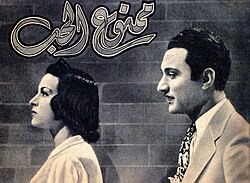
In 1933, after visiting Paris and studying French musical cinema, Abdel Wahab revolutionized the Egyptian film industry. He introduced a lighthearted musical comedy genre that departed from traditional Egyptian tunes, often portraying the Western social elite. He was the first Egyptian singer to successfully transition from the silent film era to singing roles.
His 1933 film, The White Rose, became a record-breaking success and remains a staple in Egyptian theaters. Between 1933 and 1949, he composed eight musical comedies before stepping away from the screen in 1950 to dedicate himself fully to his growth as a vocalist and composer.
Musical Innovation and Global Influence
Abdel Wahab is regarded as one of the most innovative musicians in Egyptian history. He is credited with establishing a new era of music by incorporating non-local rhythms and refining the technique of oud playing. While some critics questioned his orientation toward Western music, his ability to blend these elements into classical forms was groundbreaking.
Notable examples of his experimentation include:
- 1941: Introducing the waltz rhythm in the song "El Gandol."
- 1957: Introducing rock and roll rhythms in the song "Ya Albi Ya Khali," performed by his close friend and compatriot, Abdel Halim Hafez.
Beyond his own performances, he composed for other legendary artists. He wrote ten songs for the iconic Umm Kulthum and several hits for Nagat El Saghira, including four poems by Nizar Qabbani. He also composed for the Lebanese star Fairuz, whom he affectionately called "Our Ambassador to the Stars."
Patriotism and Political Legacy
Abdel Wahab used his art to fuel nationalist sentiments. He composed numerous Egyptian and Arab nationalist songs, including "O Egypt, Happiness Is Here," "The Call of Duty," and "Voice of the Masses." His commitment to regional causes extended to Palestine, where he produced the nationalist song "Akhi Jawiz Alzaalimun Almadaa" (Brothers, the oppressors have gone too far) in the 1950s.
His most enduring political contribution is the national anthem of Libya, which was adopted from 1951 to 1969 and reinstated in 2011.
Summary of Career and Achievements
| Category | Details |
|---|---|
| Active Years | 1917–1991 |
| Primary Instruments | Vocals, Oud |
| Total Compositions | 1,820+ songs |
| Key Film | The White Rose (1933) |
| Major Honors | Order of the Nile, Order of the Republic (Tunisia), Order of the Cedar (Lebanon) |
Frequently Asked Questions
How did Mohammed Abdel Wahab influence Egyptian music?
He modernized Egyptian music by introducing non-local rhythms and Western styles, such as the waltz and rock and roll, while maintaining the essence of classical Arabic forms.
What was his contribution to the film industry?
Abdel Wahab pioneered the Egyptian musical comedy film after being inspired by French cinema, starring in and composing eight such films between 1933 and 1949.
Which national anthem did he compose?
He composed the national anthem of Libya, which served the country from 1951 to 1969 and was readopted in 2011.
Who were some of the artists he collaborated with?
He composed songs for legendary figures including Umm Kulthum, Fairuz, Nagat El Saghira, and Abdel Halim Hafez.
When and how did Mohammed Abdel Wahab pass away?
He died of a stroke on May 4, 1991, in his hometown of Cairo, Egypt, at the age of 89.