Middle Eastern Musical Traditions: Theory, Instruments, and Cultural Heritage
The musical landscape of the Middle East is a rich tapestry woven from diverse cultural threads. It encompasses the traditions of Arabic-speaking nations, Persian ritual music, the Jewish music of Israel and the diaspora, and the distinct sounds of Kurdish, Armenian, Azeri, and Assyrian cultures. From the Coptic ritual music of Egypt to the varied traditions of Cyprus and Turkey, these styles have not only defined the region but have also influenced the music of Central Asia, the Balkans, Southern Italy, and Spain.
Religion has served as a primary unifying force across these different languages and nations. Starting in the 7th century, the predominance of Islam facilitated the rapid spread of Arabic and Byzantine influences throughout the region, creating a shared musical foundation.
Key Facts
- Maqamat: The melodic modes that form the basis of Arabic and Turkish music.
- Quarter Tones: Intervals halfway between the notes of a standard Western scale, common in vocal and string music.
- Monophonic Texture: A musical style focusing on a single melodic line without Western-style chords or harmony.
- Tarab: An emotional climax in traditional performances that can last several hours.
- Ancient Roots: Some instruments, like the oud, have pictorial records dating back over 5,000 years.
The Theory and Structure of the Music
At the heart of Middle Eastern music is the maqam (plural: maqamat), a system of melodic modes. In Turkish music, this is known as the makam. This system is strongly melodic and often utilizes the Phrygian Dominant scale. Early Arab scholars mastered and expanded upon ancient Greek musical theory—including the diatonon, chromatikon, enharmonium, and Systema ametabolon—creating a system similar to the Persian dastgah.
While these systems began in classical music, they have permeated folk, liturgical, and popular genres. A defining characteristic is the use of quarter tones, which are notes that fall between the half-steps used in Western music. These are typically produced by the human voice or fretless string instruments.
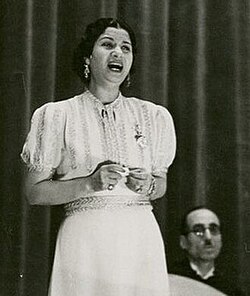
Structurally, the music is characterized by a monophonic texture and complex rhythmic patterns. Unlike Western music, it does not rely on harmony or chords. Traditional performances are often endurance events, lasting one to three hours, building toward a state of musical ecstasy known as tarab.
Traditional Instruments
String Instruments
The oud is perhaps the most iconic stringed instrument of the region. A pear-shaped lute, it traditionally featured four strings, though modern versions may have up to six courses. Iraqi folklore, cited by Al-Farabi, attributes its invention to Lamech, the sixth grandson of Adam. Historically, the oldest record of the oud is a 5,000-year-old cylinder seal from the Uruk period in Southern Mesopotamia, now held by the British Museum.
Other notable strings include the saz, a popular long-necked Turkish lute, and the qanoun. Developed by Farabi during the Abbasid era, the qanoun features approximately 26 triple-string courses and metal levers that allow the musician to adjust the pitch by a quarter to a whole step. Additionally, the European violin was adopted in the 19th century; its fretless nature makes it ideal for producing non-Western quarter-tones.
Percussion
Percussion provides the complex rhythmic backbone of the music. The riq (a type of tambourine) and finger cymbals provide high-pitched accents over the deeper rhythms of drums and clappers. A staple of Egyptian music is the darbuka (also called tabla), a ceramic clay drum with a goatskin head that dates back to ancient Egypt.
Wind Instruments
The region utilizes a variety of double-reed and flute instruments. The Armenian duduk is crafted from apricot tree wood, while the Moroccan rhaita and the sorna (similar to the mizmar and zurna) are used for loud celebrations and festivals. The Turkish mey also features a large double reed. For softer textures, bamboo reed pipes are common in Egyptian belly dancing music, alongside the kaval (a three-part flute) and the ney (a long cane flute played by blowing across a sharp edge).
Modern Evolution and Genres
While traditional forms remain deeply respected, modern Middle Eastern music is evolving. There is a growing trend of fusion, where Western pop and rock are blended with traditional styles. This has led to a diverse array of contemporary genres across the Arabic-speaking world.
| Category | Examples |
|---|---|
| Regional Styles | Egyptian, Iraqi, Jordanian, Lebanese, Syrian, Palestinian, Moroccan, Maghrebian, Khaliji |
| Traditional/Classical | Tarab, Mawwal, Zajal, Mugham, Arabesque, Arabic Andalusian |
| Modern/Fusion | Arabic Pop, Arabic Rap, Arabic Rock, Sha'abi |
| Cultural/Folk | Dabke, Kurdish music, Mizrahi music |
Frequently Asked Questions
What is the difference between Middle Eastern and Western music?
The primary differences lie in the scale and texture. Middle Eastern music uses quarter tones and a monophonic texture (a single melody), whereas Western music typically uses a twelve-tone equal temperament scale and relies heavily on harmony and chords.
What is a maqam?
A maqam is a system of melodic modes used in traditional Arabic and Turkish music. It defines the set of notes, the intervals between them, and the typical melodic paths a musician follows.
What is the significance of the oud?
The oud is a central string instrument in the region with a history spanning over 5,000 years. It is the ancestor of many other lute-style instruments and is fundamental to both classical and folk traditions.
What does the term "tarab" mean?
Tarab refers to the emotional state of ecstasy or enchantment experienced by both the performer and the audience during a musical climax, often after a long, building performance.
Which wind instruments are most common in the region?
Common wind instruments include the ney (cane flute), the duduk (apricot wood), and various double-reed instruments like the zurna, mizmar, and rhaita.