Mobilization: The Evolution of Military Readiness and Mass Deployment
Mobilization is the strategic process of assembling and readying military troops and supplies for war. While the concept of gathering forces is ancient, the formal term entered military lexicon in the 1850s to describe the preparations of the Prussian Army. At its core, mobilization is the transition from a peacetime footing to a wartime state; its opposite is demobilization, the process of standing down forces after a conflict.
The shift toward modern mobilization was driven by the institutionalization of the Levée en masse (French for 'mass levy of conscripts'), a concept born during the French Revolution. This transition was further accelerated by three critical developments: the telegraph for rapid communication, the railway for the swift movement of troops, and conscription—the compulsory enlistment of people in a national service—which provided a trained reserve of soldiers ready for immediate deployment.
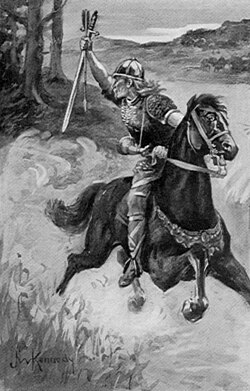
Key Facts
- Definition: The act of assembling and preparing military personnel and supplies for active conflict.
- Technological Drivers: Railways and telegraphs revolutionized the speed and scale of troop concentration.
- Historical Scale: Bulgaria mobilized over 25% of its population during World War I, the highest proportion of any nation in that conflict.
- Modern Scale: The Soviet Red Army during World War II was the largest military force in history, with up to 34 million soldiers.
- Strategic Risk: In the early 20th century, general mobilization was often viewed as an irrevocable act of war.
The History of Military Assembly
Ancient and Early Modern Eras
Mobilization has always been limited by population and logistics. The Roman Republic, for instance, could mobilize between 6% and 10% of its total population during emergencies, though these forces often included poorly trained militia.
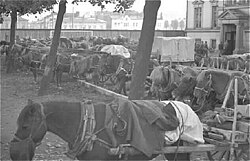
By the 17th century, the average army consisted of roughly 20,000 men. Supporting such a force required approximately 20 tons of food daily, along with munitions and transport (mostly horses or mules). Because transportation was inefficient, armies often relied on foraging—gathering food from the land—which restricted their movement to agriculturally productive regions.
The Rise of the Mass Army
By the 19th century, increased national wealth and new policies expanded the average army size to 100,000 men. Napoleon Bonaparte demonstrated the scale of this shift in 1812, leading 600,000 soldiers toward Moscow, supported by the widespread adoption of high-calorie crops like potatoes.
The 1859 Second Italian War of Independence highlighted the growing importance of infrastructure. Napoleon III utilized military railways to transport 130,000 soldiers to Italy. While the French and their Piedmontese allies struggled with sloppily organized supply caravans, their Austrian opponents faced similar logistical failures, with some caravans moving less than three miles per day.
Mobilization in World War I
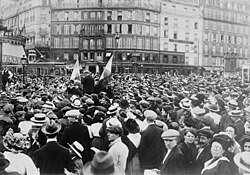
By 1914, mobilization had become a rigid, high-stakes science. Most European Great Powers—including Germany, France, Russia, Italy, and Austria-Hungary—relied on compulsory service. Only the United Kingdom lacked conscription at the start of the war.
Because these nations relied on millions of reservists with limited training, they developed intricate, inflexible plans based on worst-case scenarios. These plans left little room for diplomacy; once the gears of mobilization began to turn, they were nearly impossible to stop without risking national security.
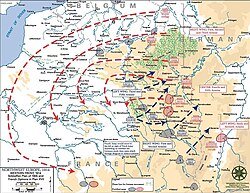
The road to war was paved by these schedules. Tsar Nicholas II of Russia struggled with the decision between partial and general mobilization, eventually ordering the latter on July 30, 1914. Germany responded by declaring war on Russia and implementing the Schlieffen Plan, which envisioned a two-front war against Russia and France. This plan involved a pincer movement through neutral Belgium, which ultimately triggered Britain's entry into the war.
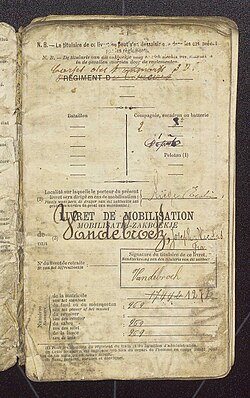
The scale of movement was unprecedented. Germany coordinated 11,000 trains to move troops across the Rhine, while France utilized 7,000. Animal mobilization was equally massive: Russia mobilized over a million horses, while Germany and Austria-Hungary prepared 715,000 and 600,000 respectively.
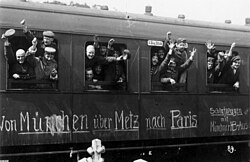
Global Contributions and Industrialization
Britain's Dominions (Canada, Australia, New Zealand, and South Africa) recruited and equipped their own forces. In Canada, the Canadian Expeditionary Force was created via volunteers rather than existing regimental structures. Over time, these "colonial" forces became recognized as elite units, with the Australian Corps becoming the first British Empire formation commanded entirely without British officers by 1918.
Industrial mobilization also surged. France saw a massive influx of women into factories, reaching a production rate of 100,000 shells per day by 1915. Russia increased its artillery shell production by 2,000%, producing over 1.5 million shells monthly by November 1915.
The United States entered the war in 1917 with a small army of 107,641 soldiers. However, through rapid conscription, they mobilized 2 million soldiers by October 1918.
Mobilization in World War II and Beyond
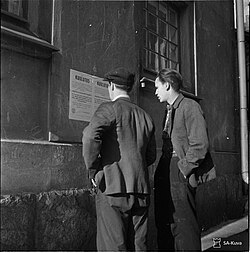
The lead-up to World War II saw similar patterns of tension. Poland fully mobilized on August 30, 1939, just before the German invasion. While Britain and France were slower to mobilize, Canada initiated partial mobilization on August 25, 1939, eventually deploying several divisions overseas.
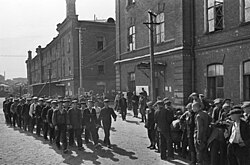
The scale of World War II surpassed all previous conflicts. The United Kingdom mobilized 22% of its total population for direct military service—the highest percentage of any nation in the era. Meanwhile, the Soviet Union's Red Army grew to 34 million soldiers, the largest force in human history.
Contemporary Mobilization
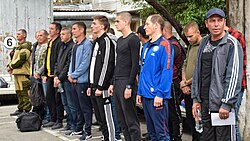
In the 21st century, mobilization continues to be a tool for national defense. Following the 2022 Russian invasion, President Volodymyr Zelenskyy signed a decree for general mobilization in Ukraine, later lowering the mobilization age from 27 to 25 in 2024. In response to the conflict, Russian President Vladimir Putin announced a partial mobilization of 300,000 experienced reservists in September 2022.
Mobilization Summary Table
| Era/Conflict | Key Method/Driver | Notable Scale/Statistic |
|---|---|---|
| Roman Republic | Emergency Militia | 6% to 10% of population |
| 17th Century | Foraging & Horse Transport | Avg. 20,000 men per army |
| World War I | Railways & Telegraphs | Bulgaria: >25% of population |
| World War II | Total National Effort | Red Army: 34 million soldiers |
| Modern (2022+) | Decrees & Reservists | Russia: 300,000 reservists (partial) |
Frequently Asked Questions
What is the difference between mobilization and conscription?
Mobilization is the overall process of assembling troops and supplies for war, whereas conscription is the specific legal mechanism of compelling citizens to enlist in the military to provide the manpower needed for that mobilization.
Why were railways so important for mobilization?
Railways allowed for the rapid movement and concentration of massive numbers of troops and supplies over long distances, replacing slow-moving caravans and reducing the army's reliance on foraging from the local land.
Why was general mobilization considered an act of war in 1914?
Because mobilization plans were intricate and based on worst-case scenarios, they were nearly impossible to stop once started. If one nation mobilized, its neighbors felt they had to do the same immediately or risk being defeated by a ready enemy.
Which country had the highest mobilization rate in World War I?
Bulgaria mobilized the greatest share of its population during World War I, calling up 1.2 million men, which represented more than a quarter of its 4.3 million people.
What was the Levée en masse?
The Levée en masse was a mass levy of conscripts first introduced during the French Revolution, which shifted military service from small professional armies to large-scale national armies.