Misthiote Culture: Preserving the Heritage of the Cappadocian Greeks
The Misthiotes are descendants of Greek communities from the cities of Misthi and the towns of Tsaricli, Dela (Dilion), Tseltek, and Cavaclou. Their heritage is a unique blend of Byzantine traditions and regional influences, shaped by centuries of existence in Asia Minor. Today, this rich cultural identity is being revitalized through community gatherings, linguistic study, and the preservation of ancestral customs.
The Gavoustema: A Cultural Renaissance
The Gavoustema is an Annual Panhellenic Meeting established in the late 1990s. Originally organized by descendants from Misthi and surrounding towns, the first meeting took place in Mandra, Larissa. Since then, the event has rotated among various Greek cities where Misthiote families settled.
More than just a reunion, the Gavoustema is a comprehensive cultural festival. It features art, music, and dance exhibitions, academic lectures on history, book expositions, and gastronomical tours. The event typically attracts over 3,000 participants annually, serving as a vital link for younger generations to reconnect with a culture that was nearly lost. For many, these meetings have led to the discovery of unknown relatives and a deeper understanding of their ancestry.
The success of the Gavoustema has also sparked a wave of academic interest, encouraging both professional researchers and laypeople to investigate the history, language, and customs of the Misthiotes.

Gavoustema Hosting History
| Year | Location | Month/Dates |
|---|---|---|
| 1997 | Mandra, Larissa | August |
| 1998 | Xanthi | August |
| 1999 | Konitsa, Ioannena | August |
| 2000 | Kokkinochoma, Kavala | August |
| 2001 | Ano Mavrolofo, Magnesia | 17–19 August |
| 2002 | Xerochori, Salonica | 23–24 August |
| 2003 | Neo Agioneri, Kilkis | 22–24 August |
| 2004 | Alexandroupolis | 6–8 August |
| 2005 | Mandra, Larissa | 19–21 August |
| 2006 | Kavala | August |
| 2008 | Plagia, Kilkis | August |
| 2009 | Kavala | August |
| 2010 | Alexandroupolis | 20–22 August |
| 2011 | Neos Mylotopos, Pella | 19–21 August |
| 2012 | Neo Agioneri, Kilkis | 24–25 August |
| 2013 | Neokaisaria, Ioannena | 23–25 August |
| 2014 | Petrana, Kozani | 22–23 August |
The Misthiotica Dialect
The Misthiotica dialect is a branch of Cappadocian Greek. It is rooted in Byzantine Greek, preserving several archaic features while incorporating a significant number of Turkish loanwords. The dialect is characterized by specific phonetic simplifications and sound alterations.
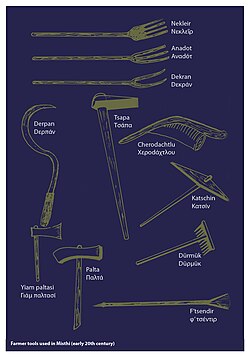
Common linguistic patterns include the omission of certain consonants (such as the Greek delta "-d-") and the alteration of initial sounds (such as "K" becoming "Tsch"). For example, the word for child can be Peí (simplifying paidí) or Fschách, the latter possibly derived from splachno (gut/wound), used religiously to denote a child.
Misthiotic Gastronomy
The culinary traditions of the Misthiotes reflect their geographic history, blending Greek staples with regional influences. A central ingredient in many dishes is pligouri (cracked wheat).
- Pitoulica (Mantiz): A yogurt-based soup with pasta and olive-oil croutons, sometimes enhanced with fried garlic.
- Toundouri Bread: Bread baked in a ground-based oven called a toundouri, a method also found in Middle Eastern and Indian cuisines.
- Arjalou fai: A soup combining yogurt and pligouri.
- Gilindiria: A soup featuring small pasta balls made from pligouri and flour, seasoned with boukovo (chili pepper).
- Goultsigalat fai: A milk and pligouri soup.
- Xovota avga: Eggs fried in boiled water rather than oil or butter.
- Pintoush: A thick cream made from eggs, milk, flour, and pligouri, similar to a béchamel.
- Sougkatous: An omelet made with eggs, milk, and flour.
Byzantine and Ancient Cultural Indicators
Beyond language and food, several cultural markers point to the ancient and Byzantine origins of the Misthiote people. These are evident in their social customs, spiritual beliefs, and daily life.
Social and Material Customs
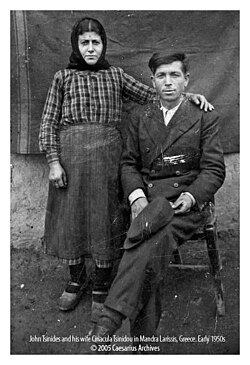
The design of traditional garments and footwear differed significantly from surrounding Turkish styles, maintaining Byzantine influences. In marriage, the dressing of the groom mirrored the robings of a Byzantine Bishop. Additionally, the community maintained ancient seasonal games, including wrestling, the Vara-Vara dance, and horseback polo—a sport dating back to Alexandrian times.
Spiritual Beliefs and Folklore
Many Misthiotic beliefs are rooted in antiquity and the Byzantine era:
- Death Rituals: Dying men were often required to provide death duties to ensure forgiveness and admission to Hades.
- The Archangel Michael: It was believed that the Archangel Michael took the soul of a man using his sword. Consequently, all water was thrown out of the house after a death, as it was believed the Archangel had washed his sword in it, making the water a bad omen.
- Cosmology: Earthquakes were explained as the world shifting from one horn of a bull to the other, based on the belief that the world rested on a bull's horns.
- Celestial Observation: Stars and planets were consulted to determine the best time for travel or work. Eclipses were viewed with anxiety and explained as a demon besieging the sun or moon, requiring magic rituals to resolve.
Key Facts
- Gavoustema: An annual cultural festival attracting over 3,000 participants to preserve Misthiote heritage.
- Linguistic Roots: The Misthiotica dialect is a Cappadocian Greek variant based on Byzantine Greek with Turkish loanwords.
- Dietary Staple: Pligouri (cracked wheat) is a fundamental ingredient in many traditional soups and creams.
- Ancient Ties: Cultural practices include horseback polo and beliefs in a bull-supported world, linking the community to ancient times.
- Geographic Origin: Descendants hail from Misthi, Tsaricli, Dela, Tseltek, and Cavaclou.
Frequently Asked Questions
What is the Gavoustema?
The Gavoustema is an Annual Panhellenic Meeting and cultural festival for descendants of Misthi and surrounding towns. It includes academic lectures, art exhibitions, and gastronomical tours to revive Misthiotic culture.
What characterizes the Misthiotica dialect?
It is a Cappadocian branch of Greek based on Byzantine Greek. It is known for preserving archaic features, using Turkish loanwords, and employing specific phonetic simplifications, such as omitting the "d" sound in words like "brother" (Aefló).
What is pligouri and how is it used in Misthiotic cooking?
Pligouri is cracked wheat. It is a primary ingredient in several traditional dishes, including Arjalou fai (yogurt soup), Gilindiria (pasta ball soup), and Pintoush (a béchamel-like cream).
What are some of the ancient beliefs held by Misthiotes?
Beliefs include the idea that the world rests on the horns of a bull (explaining earthquakes) and the practice of consulting stars and planets to determine propitious times for travel.
How did the Misthiotes view the role of Archangel Michael?
They believed the Archangel Michael used his sword to take the souls of the deceased. This led to the custom of discarding all household water after a death, as it was believed the Archangel had used it to clean his sword.