Miriam College: A Legacy of Education and Social Justice
Miriam College stands as a beacon of academic excellence and social commitment in the Philippines. From its humble beginnings as a teacher-training initiative to its evolution into a premier institution for women, the college has consistently blended faith, learning, and a fierce dedication to human rights.
The Foundations of Maryknoll College
The institution's roots trace back to 1926, when the Archbishop of Manila, Michael J. O'Doherty, requested the Maryknoll Sisters of St. Dominic from Ossining, New York, to establish a teacher-training program for women. This vision materialized as the Malabon Normal School, which initially operated out of a remodeled Augustinian convent in Malabon.
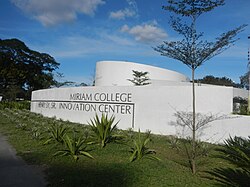
Over the following decades, the school underwent several relocations. In 1952, it was officially renamed Maryknoll College and established its permanent home on the eastern edge of Diliman, in what is now known as Loyola Heights, Quezon City.
Following the Second Vatican Council, the Maryknoll congregation re-evaluated its missionary work. By the 1960s, the sisters recognized that the Filipino laity were prepared to take over the leadership and continuation of the educational mission they had pioneered.
A History of Activism and Resistance
During the Marcos dictatorship, Maryknoll College became renowned for its active stance against the regime's abuses. The institution served as a hub for those protesting the excesses of the government, led by courageous figures within the community.
Sr. Helen Graham, a prominent leader, became a founding member of the Task Force Detainees of the Philippines after one of her students was detained for political reasons. Similarly, alumna Suellen Escribano dedicated her life to serving farmers and women in the border areas of Quezon and Bicol provinces, fighting against landgrabbers. Escribano's contributions were later honored by the Bantayog ng mga Bayani, an organization that recognizes martyrs and heroes of the democratic struggle.
The Maryknoll sisters were also active participants in the 1986 People Power Revolution, which resulted in the ouster of the Marcos family. The events of this historic period were documented in the diary of Sr. Helen Graham, which was later published by the Philippine Daily Inquirer.
Transition to Miriam College
The shift toward lay leadership began in 1977 when ownership and management were transferred to lay administrators. To foster a unique identity that remained connected to, yet distinct from, the Maryknoll sisters, the school sought a new name. After extensive consultations, the institution was renamed Miriam College in 1989.
In 1999, the college transitioned its collegiate level to be exclusively for women. The final group of male collegiate students, who entered in 1998, graduated in 2002. Despite this change, several departments remain co-educational, including the preschool, adult education, graduate school, and deaf-mute education departments.
Leadership and Governance
Miriam College has been led by a series of distinguished women who have made significant impacts on Philippine society. Dr. Paz V. Adriano made history as the first lay president and the first female president of a Catholic college in the Philippines.
Subsequent leadership included Dr. Lourdes Quisumbing, who served as the Secretary of Education under President Corazon Aquino, and Dr. Loreta Castro. Dr. Patricia B. Licuanan, the fourth president, currently serves as the chairperson of the Commission on Higher Education. Dr. Rosario Oreta Lapus led the institution from 2010 to 2019, and the current president is Ambassador Laura Quiambao-del Rosario, a former diplomat and Department of Foreign Affairs undersecretary.
Key Facts
- Founded: 1926 as Malabon Normal School.
- Location: Loyola Heights, Quezon City (since 1952).
- Renaming: Changed from Maryknoll College to Miriam College in 1989.
- Gender Policy: All-women's college at the undergraduate level since 2002; co-educational for preschool, graduate, adult, and deaf-mute education.
- Legacy: Strong history of social activism and resistance during the Marcos regime.
| Period/Year | Institution Name | Key Milestone |
|---|---|---|
| 1926 | Malabon Normal School | Established for women's teacher training. |
| 1952 | Maryknoll College | Moved to permanent site in Quezon City. |
| 1977 | Maryknoll College | Management transferred to lay administrators. |
| 1989 | Miriam College | Official renaming to establish a unique identity. |
| 2002 | Miriam College | Became an exclusive all-women's college at the collegiate level. |
Frequently Asked Questions
When did the school become Miriam College?
The institution was renamed Miriam College in 1989 following a series of consultations after the school had been turned over to lay administrators in 1977.
Is Miriam College open to male students?
The collegiate level is an exclusive all-women's program. However, the preschool, graduate school, adult education, and deaf-mute education departments remain co-educational and open to men.
Who was the first female president of a Catholic college in the Philippines?
Dr. Paz V. Adriano, a former student of the Maryknoll nuns, was the first lay president and the first female president of a Catholic college in the Philippines.
What role did the college play during the Marcos dictatorship?
The college was highly active in protesting the abuses of the regime. Notable figures included Sr. Helen Graham and alumna Suellen Escribano, who worked to support political detainees and marginalized farmers.
Where is the campus located?
Miriam College is permanently settled on the eastern edge of Diliman, specifically in Loyola Heights, Quezon City.