Minority Languages: Definitions, Legal Protections, and Global Realities
In a world comprising 196 sovereign states and an estimated 5,000 to 7,000 spoken languages, the concept of a minority language is a fundamental aspect of human geography. A minority language is defined as a language spoken by a minority of a territory's population. Because of this vast linguistic diversity, the majority of languages spoken globally function as minority languages within the countries where they are situated.
The relationship between a language and a state is often complex. Some minority languages hold official status, such as Irish in Ireland or various indigenous languages in Bolivia. Conversely, certain national languages may be considered minority languages if they belong to a stateless nation.
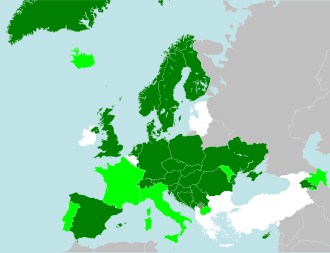
Defining Linguistic Minorities
There is no single scholarly consensus on how to classify a minority language. Instead, researchers typically use different frameworks to categorize them:
Demographic Definitions
This approach defines minority languages based on population size relative to other groups in a specific area. In highly diverse regions, even the largest linguistic group might not constitute a majority (over 50%). For instance, in Cameroon, the largest linguistic group, Fang, accounted for only 19% of the population, making it a minority group.
Ethno-social Definitions
Proposed by Allardt (1984), this definition relies on four criteria: self-categorization, common descent, distinctive linguistic or cultural traits, and a social organization that places the group in a minority position. However, applying these criteria can be difficult. A group might not all claim common descent, or a demographically large group might be politically marginalized, as seen with French-speaking colonists in French Algeria.
Key Facts
- Global Diversity: There are between 5,000 and 7,000 languages spoken worldwide.
- Official Status: Some minority languages, like Irish, are also official state languages.
- Demographic Thresholds: In North Macedonia, any language spoken by more than 20% of the population can become co-official.
- Legal Protections: The European Charter for Regional or Minority Languages provides a framework for protecting linguistic diversity in Europe.
- Scale: Some languages, like Marathi and Telugu, have over 80 million speakers but may not hold a majority in every territory they inhabit.
Legal Frameworks and International Politics
The European Context
The European Charter for Regional or Minority Languages defines these languages as those different from the official language(s) of a state, specifically excluding dialects of the official language or the languages of migrants. The adoption of this charter is often politically sensitive. Some nations have declined to sign or ratify it to avoid granting status to "world languages" (like English or Russian) that might threaten the dominance of the national language.
In Slovakia, for example, the 1995 language law grants the Slovak language preferential status. This has led to controversy, as some argue it is inconsistent with European standards, particularly regarding fines imposed for improper use of minority languages on signage or in professional communication.
Numerical Thresholds and Census Controversies
Different countries use specific percentages to trigger linguistic rights. In Belgium, a municipality is considered "bilingual" if a minority language is spoken by at least 30% of the population. Historically, the use of linguistic censuses to determine these numbers has been a source of intense political friction and allegations of fraud.
In North Macedonia, the 2001 Ohrid Agreement established that any language spoken by more than 20% of the population could achieve co-official status, a criterion met by the Albanian language.
Global Linguistic Landscape
The status of a language can vary significantly depending on borders and local laws. Below is a summary of various languages and their status in specific contexts.
| Language | Status/Context | Estimated Speakers/Notes |
|---|---|---|
| Hungarian | Official in Hungary; Co-official in Serbia | 293,000 in Vojvodina |
| Romanian | Official in Romania; Co-official in Serbia | 250,000 in Serbia (Ethnologue) |
| Serbian | Official in Serbia; Co-official in Bosnia and Kosovo | Minority in Montenegro, Croatia, etc. |
| Tamil | Official in India, Sri Lanka, and Singapore | 78 million |
| Berber | Official in Morocco and Algeria | 45 million |
| Basque | Regional official in Spain | 665,800 |
| Irish | Official in Ireland; Minority in UK | 291,470 native speakers |
| Māori | Official in New Zealand | 157,110 speakers |
Frequently Asked Questions
Can a minority language also be an official language?
Yes. Some languages are recognized as official state languages despite being spoken by a minority of the total population, such as Irish in Ireland or various indigenous languages in Bolivia.
What is the difference between a dialect and a minority language?
Under the European Charter for Regional or Minority Languages, the definition of regional or minority languages specifically excludes dialects of the official language(s) of a State.
Why do some countries refuse to recognize certain minority languages?
Some states refuse recognition because they fear that granting rights to "world languages" (like English or Russian) could empower those populations to the point that the national language is marginalized or declines.
How are linguistic rights determined in Belgium?
In Belgium, the use of languages in administrative matters is often tied to municipal populations. A municipality may be considered bilingual if speakers of a minority language constitute at least 30% of the population.
What role do courts play in language rights?
Courts often adjudicate disputes regarding linguistic rights. For example, in Canada, the Supreme Court decision in Arsenault-Cameron v. Prince Edward Island addressed the rights of Francophone parents to access French-language primary education.