Military Pilot Training: The Graduated Phases of Flight Instruction
Training a military pilot is an immense investment of time and capital. To manage these costs and ensure safety, air forces employ a graduated training regimen designed to identify and eliminate unsuitable candidates early in the process. This phased approach is critical; failing to properly assess a pilot's aptitude before they move to high-performance aircraft can lead to catastrophic results. For instance, the Indian Air Force historically faced high casualty rates when pilots transitioned to supersonic MiG-21 aircraft without a suitable advanced training bridge.
Military instruction is generally divided into two primary domains: flight training, where candidates develop fundamental flying skills, and operational training, where those skills are applied to simulated combat, attack, and fighter techniques.
Key Facts
- Phased Screening: Training is structured to filter out candidates who lack the physical or mental attributes for high-performance flight.
- Ab Initio: The first stage of training, meaning "from the beginning," often uses light civilian-style aircraft.
- LIFT: Lead-in Fighter Training uses advanced jets to emulate combat scenarios at a lower cost than operational fighters.
- Operational Conversion: The final stage where pilots transition to combat-capable aircraft, often using two-seat trainer variants.
- Diversification: Candidates unsuitable for fast jets may be redirected to multi-engine aircraft, navigation, or weapons officer roles.
Ab Initio Training
The ab initio phase (Latin for "from the beginning") serves as the initial screening process. Candidates fly light aircraft to evaluate their mental and physical suitability for a pilot commission. Historically, the United States Air Force Academy used the Slingsby Firefly, while the RAF utilized Scottish Aviation Bulldogs. More recently, the U.S. transitioned to the Initial Flight Training (IFT) program using the Diamond DA20.
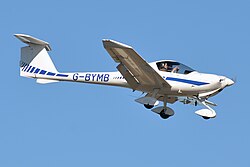
For basic cadet training, the USAF Academy also employs piston-powered aircraft like the Cirrus SR20 (T-53A). Air forces with tighter budgets may utilize gliders, motor gliders, or ultra-light aircraft. At the conclusion of this phase, those who do not qualify as pilots may be offered training as navigators or weapons officers.
Basic and Primary Training
Candidates who pass the initial screening move to basic or primary trainers. Modern air forces typically use turboprops, such as the Embraer Tucano or Pilatus PC-9, because they can replicate the handling of jet aircraft while allowing instructors to assess a student's reaction speed and technical control. Before high-performance turboprops became standard, jets like the T-37 Tweet, Fouga Magister, and BAC Jet Provost filled this role.
Students who demonstrate that they are not suited for fast jet flight may be diverted to fly multi-engined aircraft commissions.
Advanced Jet Training
Pilots destined for fast jets progress to advanced trainers capable of high-energy maneuvers and high subsonic speeds. These aircraft are equipped with systems that simulate modern surveillance and weaponry. Notable examples include the Northrop T-38 Talon, BAE Hawk, Alenia Aermacchi M-346 Master, and the Yakovlev Yak-130.
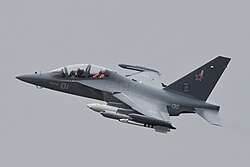
Because modern combat relies heavily on electronics, this phase introduces pilots to radar and electronic systems. Since most advanced trainers lack actual radar, they use programmable multi-function displays to simulate radar contacts. By utilizing GPS and datalinks, aircraft can relay real-time positions to one another, creating a virtual radar environment that replicates the systems found in operational combat aircraft.
Lead-in Fighter Training (LIFT)
Lead-in Fighter Training (LIFT) acts as a bridge to operational flying. It utilizes advanced jets with avionics and stores-management capabilities that emulate actual fighter planes. This allows pilots to practice combat scenarios—including air-to-air and surface-to-air missile intercepts, chaff and flare countermeasures, and electronic warfare—at a significantly lower cost than using front-line fighters.
Operational Conversion
The final stage is operational conversion, where pilots learn to fly the specific combat aircraft they will use in service. Most combat jets have two-seat trainer versions that retain full functionality, though they may suffer slight performance losses due to increased weight and drag. For example, the TA-4F is a two-seat, combat-capable version of the A-4 Skyhawk.
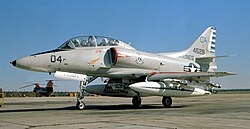
Conversion is achieved in different ways: some aircraft, like the Panavia Tornado, duplicate controls in a rear cockpit, while others, like the TA-4S, add a second cockpit behind the original. Once qualified, pilots maintain their skills through exercises like the USAF's Red Flag or international competitions in gunnery and bombing.
In some cases, the trainer variant evolves into a dedicated operational aircraft. The F-15E Strike Eagle, for instance, developed from the two-seat F-15D trainer to include a dedicated weapons officer station.
Specialized Training Paths
Multi-Engine Training
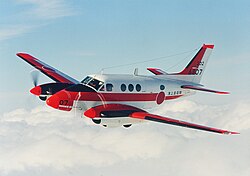
Pilots destined for tankers or transport aircraft begin with small multi-engine planes, such as the Beechcraft King Air (T-44A Pegasus), before moving to the right-hand seat of an operational aircraft. Some air forces use aircraft families to simplify this; for example, the Boeing 707 served as a base for transport, tanker, and ELINT (Electronic Intelligence) variants.
Navigation Training
Specialized aircraft like the Boeing T-43 or Vickers Varsity were designed to train navigators and rear-crew operators. Because these trainees use instruments and consoles, they do not require a direct view of the ground, allowing them to be seated within the aircraft cabin.
| Phase | Primary Goal | Typical Aircraft Types | Key Focus |
|---|---|---|---|
| Ab Initio | Initial Screening | Light Piston / Gliders | Aptitude & Physical Attributes |
| Basic | Fundamental Skills | Turboprops (e.g., Tucano) | Handling & Reaction Speed |
| Advanced | High-Performance Flight | Subsonic/Supersonic Jets | Electronics & Radar Simulation |
| LIFT | Combat Emulation | Advanced Jet Trainers | Tactics & Electronic Warfare |
| Operational Conversion | Type Qualification | Two-seat Combat Aircraft | Mission-specific Proficiency |
Frequently Asked Questions
What does "ab initio" mean in the context of pilot training?
Ab initio is a Latin term meaning "from the beginning." In military aviation, it refers to the very first stage of flight training where candidates are screened for their basic aptitude using light aircraft.
Why is a graduated training regimen necessary?
A phased approach reduces the financial risk of training unsuitable candidates and, more importantly, prevents loss of life by ensuring pilots are fully assessed before moving to high-performance, supersonic aircraft.
How do advanced trainers simulate radar without having actual radar?
They use programmable multi-function displays combined with GPS and datalinks. This allows aircraft to share their positions in real time, which the onboard computer then renders as a radar contact on the pilot's screen.
What is the difference between LIFT and Operational Conversion?
LIFT uses advanced trainers to teach combat tactics and avionics in a cost-effective environment. Operational Conversion is the final step where the pilot learns to fly the actual combat-capable aircraft they will use in the field.
Can a pilot be redirected if they fail a specific phase?
Yes. Candidates who are unsuitable for fast jets but show other strengths may be offered commissions to fly multi-engine aircraft or qualify as navigators and weapons officers.