Military Logistics: The Science of Sustaining Armed Forces
At its core, military logistics is the discipline of planning and executing the movement, supply, and maintenance of military forces. While strategy determines the goals of a conflict and tactics dictate how battles are fought, logistics provides the physical means to make those ambitions possible. It encompasses everything from the design and acquisition of materiel to the transport of personnel and the disposal of equipment.
In a modern context, logistics is the invisible engine of warfare. Without the precise coordination of food, fuel, and ammunition, even the most advanced army cannot maintain its operational tempo or sustain its presence in the field.
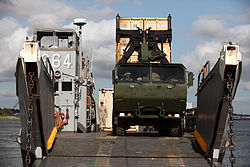
Key Facts
- Scope: Includes the design, storage, distribution, and maintenance of materiel, as well as personnel transport.
- Etymology: Derived from the Greek logistikos (skilled in calculating) and the French logistique.
- Evolution: Shifted from local foraging and animal transport to a high-tech "logistical revolution" driven by mechanization and air transport.
- NATO Definition: Specifically includes the acquisition of services and the operation of facilities alongside materiel management.
- Business Link: The modern business term "logistics" (supply chain management) is a more restricted version of the broader military definition.
The Evolution of Logistics
Etymology and Early Definitions
The term originates from the Greek logistikos, meaning "skilled in calculating," and logos, referring to principles of thought and action. In ancient Athens, a logistês was both a mathematics master and an auditing magistrate. The term saw a revival around 1670 when King Louis XIV of France created the position of Maréchal des logis, an officer tasked with planning marches, establishing campsites, and regulating supplies.
By the late 19th century, the term became formalized in military education. In 1888, the Naval War College introduced a course on naval logistics, and by 1895, it was defined as the "branch of the military art embracing all the details for moving and supplying armies." During World War II, Lieutenant General LeRoy Lutes expanded this definition to include all military activities not covered by strategy and tactics.
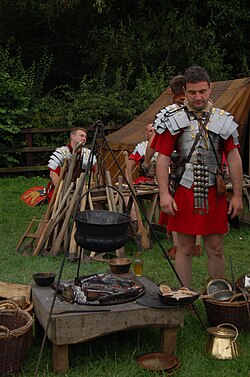
Historical Progression
In Neolithic times, armies were limited in size—rarely exceeding 20,000 men—due to the difficulty of securing food and water. The Iron Age saw the introduction of beasts of burden, such as horses, camels, and elephants, to carry supplies. The Roman Empire further advanced the field by building extensive networks of roads and canals, though they found sea transport significantly cheaper than land transport for bulk goods like grain.
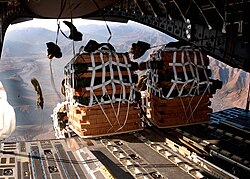
Following the fall of Rome, the system shifted toward feudalism, a distributed logistics model where local lords provided their own men and equipment. The 20th century brought a "logistical revolution." The internal combustion engine replaced animals, and the development of air transport allowed for the rapid movement of personnel and critical supplies over vast distances, as seen in the 1948 Berlin Air Lift.
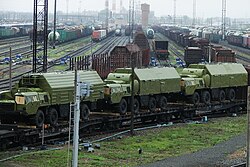
Core Principles and Models
Principles of Logistics
Historian James A. Huston identified sixteen principles, including Equivalence (the interdependence of strategy, tactics, and logistics), Relativity (the impact of time and space), and Continuity (the need for systems that can handle emergencies without fundamental changes). The United States Joint Chiefs of Staff later streamlined these into seven core principles to improve command efficiency.
Logistical Levels
Military logistics is typically categorized by the level of operation:
- Tactical Logistics: Activities directly supporting units engaged in active combat.
- Operational Logistics: The broader planning and sustainment of campaigns, which includes the concept of operational reach—the distance and duration across which a force can employ its military capabilities.
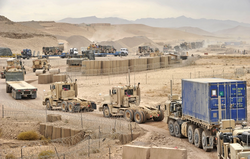
Supply Options in the Field
Armies generally utilize three primary methods for sustaining their forces, often using a combination of all three:
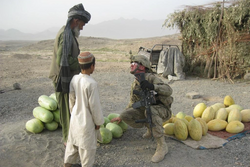
- Obtaining Supplies in the Field: Purchasing or foraging for food and resources locally.
- Carrying Supplies: Transporting rations, weapons, and gear via pack animals, wagons, or on the soldiers' backs. While this increases self-sufficiency, it creates a large baggage train that can slow an army's advance.
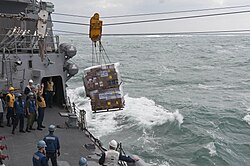
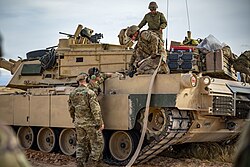
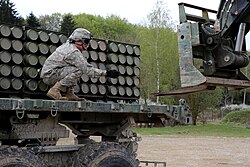
- Shipping from the Rear: Using depots and magazines to send supplies to the front. This became essential during the Industrial Revolution as the weight of ammunition increased and mechanization created a demand for fuel and spare parts that cannot be found locally.
Logistics Summary Table
| Method | Primary Means | Main Advantage | Main Disadvantage |
|---|---|---|---|
| Field Acquisition | Local purchase/foraging | Reduced transport burden | Unreliable availability |
| Carried Supplies | Pack animals, wagons, backpacks | Immediate availability | Slows movement (baggage train) |
| Rear Shipment | Rail, sea, air, motor transport | Supports large-scale, long-term ops | High dependency on infrastructure |
Frequently Asked Questions
What is the difference between military and business logistics?
Military logistics is far more comprehensive, covering the entire lifecycle of materiel, personnel transport, and the construction of facilities. Business logistics is more restricted, focusing primarily on physical distribution and supply chain management.
What is "operational reach"?
Operational reach is the distance and duration over which a military force can successfully employ its capabilities based on its logistical sustainment.
How did the Industrial Revolution change military logistics?
It introduced technological and administrative advances that allowed supplies to be moved faster and further. It also created a dependency on rear-shipment due to the need for heavy ammunition and fuel for mechanized vehicles.
What are the three basic supply options for an army?
The three options are obtaining supplies directly in the field, carrying supplies with the army, and shipping supplies from rear depots to the front lines.
Who was the Maréchal des logis?
Created by King Louis XIV around 1670, this was an officer responsible for planning marches, establishing campsites, and regulating the transport and supply of the army.