Military Intelligence: Principles, Levels, and the Intelligence Cycle
Military intelligence is a specialized discipline that employs systematic information collection and analysis to provide commanders with the guidance and direction necessary for critical decision-making. By assessing data from a diverse array of sources, intelligence professionals transform raw information into actionable insights that align with mission requirements or support operational and campaign planning.
The process begins by identifying a commander's specific information requirements. These needs drive the entire cycle of collection, analysis, and dissemination, ensuring that the resulting intelligence is relevant to the operational environment, including hostile, friendly, and neutral forces, as well as the civilian population in combat zones.
Key Facts
- Purpose: To assist commanders in decision-making through the assessment of data from multiple sources.
- Scope: Operates across tactical, operational, and strategic levels during peacetime, transitions to war, and active conflict.
- Core Process: Follows a cycle of collection, processing, analysis, and dissemination.
- Collaboration: Military intelligence capabilities often collaborate with civilian intelligence agencies to inform political and military activities.
- Personnel: Staff are often selected based on personal intelligence and analytical abilities before undergoing formal training.
Levels of Military Intelligence
Intelligence operations are structured hierarchically to serve different levels of leadership and warfare.
Strategic Intelligence
Strategic intelligence focuses on broad, high-level issues such as national economics, political assessments, and the military capabilities and intentions of foreign nations or non-state actors. It integrates scientific, technical, diplomatic, and sociological data with known facts regarding geography, demographics, and industrial capacities. Formally, it is the intelligence required for the formation of policy and military plans at national and international levels.
Operational Intelligence
Operational intelligence supports the design and practical manifestation of campaigns. It is defined as the intelligence required for planning and conducting major operations to achieve strategic objectives within specific theaters or operational areas. In a law enforcement context, this term is more narrowly applied to identifying and intervening in criminal activity through long-term investigations.
Tactical Intelligence
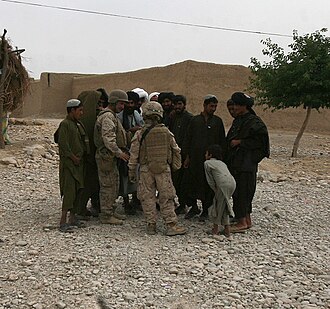
Tactical intelligence provides direct support to battlegroups and units in the field. It involves delivering briefings to patrols regarding current threats and collection priorities. Following these missions, patrols are debriefed to gather information that is then analyzed and passed up the reporting chain to support the execution of battles and engagements.
The Intelligence Process and Tasking
Intelligence must be responsive to leadership needs based on military objectives. This is managed through Collection Co-ordination and Intelligence Requirement Management (CCIRM). The military objective focuses the estimate process, deriving requirements related to terrain, hostile force disposition, local population sentiments, and the enemy's order of battle.
The Intelligence Cycle
While terminology varies by nation, the core process generally consists of several phases:
- Collection: Gathering raw information from various sources.
- Processing/Exploitation: Converting raw data into a usable format.
- Analysis/Production: Evaluating the data to produce intelligence.
- Dissemination/Integration: Delivering the finished intelligence to decision-makers.
In the United States, Joint Publication 2-0 (JP 2–0) expands this into six categories: planning and direction, collection, processing and exploitation, analysis and production, dissemination and integration, and evaluation and feedback.
Collection Methods and Analysis
Information Collection
A significant portion of data is gathered via open-source intelligence, using public records on demographics, industry, and military hardware. Other methods include:
- Photointerpretation: Using high-altitude imagery to catalog military bases and munitions factories.
- Cartography: Maintaining accurate maps, while identifying disinformation placed in public maps by adversaries.
- Diplomatic and Journalistic Channels: Utilizing personnel in foreign service offices or patriotic reports from journalists.
Analytical Assessment
Analysis involves identifying an adversary's capabilities and vulnerabilities. Analysts seek critical vulnerabilities—the most fragile resources necessary for military capability, such as a fuel supply logistics chain.
Human intelligence (HUMINT), gathered by spies, is uniquely valuable for understanding an opponent's intentions and rationales. However, because it is prone to inaccuracy or fabrication, it is strictly tested against unrelated sources.
Dissemination and Organization
Once analyzed, intelligence is indexed by nation and unit and packaged for policy-makers and war-fighters. This information is disseminated through database systems, intelligence bulletins, and briefings. The cycle concludes when these bulletins generate new information requirements, restarting the process.
| Level | Primary Focus | Key Objective | Scope |
|---|---|---|---|
| Strategic | National/International Policy | National security objectives | Global/Broad |
| Operational | Campaigns and Major Operations | Theater-level objectives | Regional/Theater |
| Tactical | Battles and Engagements | Unit-level military objectives | Local/Immediate |
Frequently Asked Questions
What is the difference between information and intelligence?
Information is the raw data collected from various sources. It only becomes intelligence after an analyst has evaluated, verified, and processed that information to provide meaning and context.
What is open-source intelligence?
Open-source intelligence is the collection of data from publicly available sources, such as journals, newspapers, public records, and photographs of military equipment.
Why is human intelligence (HUMINT) considered risky?
HUMINT is prone to inaccuracy because sources may fabricate stories for payment or use the intelligence channel to settle personal grudges. Consequently, it must be cross-referenced with other independent sources.
What is a critical vulnerability in military analysis?
A critical vulnerability is the least defended or most fragile resource that is essential for an adversary's military capabilities, such as a specific link in a fuel logistics chain.
How does the intelligence cycle end?
The cycle ends with dissemination, where processed intelligence is delivered to decision-makers. However, this often leads to new questions, which creates new information requirements and restarts the cycle.