Microcredit: Empowering Impoverished Borrowers Through Small-Scale Loans
Microcredit is the provision of very small loans, known as microloans, to impoverished individuals who are typically excluded from traditional banking. These borrowers often lack collateral (assets used to secure a loan), steady employment, or a verifiable credit history. By providing access to capital, microcredit aims to foster entrepreneurship, facilitate self-employment, and alleviate poverty within low-income communities.
The global significance of this financial tool was highlighted in 2005 when the United Nations declared it the International Year of Microcredit. This initiative sought to promote financial inclusion as a core strategy for poverty reduction. By the early 2010s, the reach of microcredit had expanded vastly, with estimates indicating that over 200 million people worldwide had benefited from these services.
Key Facts
- Primary Goal: To support self-employment and poverty alleviation for those without traditional banking access.
- Global Reach: Over 200 million beneficiaries worldwide by the early 2010s.
- Pioneering Model: The Grameen Bank model, which earned Muhammad Yunus and the bank the Nobel Peace Prize in 2006.
- Diverse Models: Ranges from interest-free community loans (Akhuwat) to peer-to-peer digital platforms (Kiva).
- Impact: An Aspen Institute study found over half of 405 US microentrepreneurs escaped poverty within five years.
The Evolution of Microcredit
Early Roots
While modern microcredit gained fame in the late 20th century, the concept is centuries old. In 1727, Jonathan Swift established a charitable loan fund in Dublin with £500 of his own money. He provided interest-free loans to poor tradespeople, utilizing a system where two neighbors acted as guarantors to ensure community accountability. This model spread across Ireland, eventually providing credit to roughly 20% of Irish households by the 19th century.
The Modern Era and the Grameen Influence
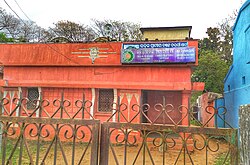
The contemporary landscape was shaped largely by the Grameen Bank in Bangladesh. Its success inspired other institutions, such as BRAC (1972) and ASA (1978) in Bangladesh, and PRODEM in Bolivia (which became the for-profit BancoSol in 1986). Other regional efforts emerged through savings and credit cooperatives under the World Council of Credit Unions (WOCCU) in Latin America and West Africa, and through BancoEstado Microempresas in Chile.
Originally a non-profit dependent on government subsidies, Grameen Bank transitioned into a corporate entity called Grameen II in 2002. The organization's impact on social development from the bottom up was recognized globally with the 2006 Nobel Peace Prize.
Global Implementations and Models
Asia: Bangladesh, India, and Pakistan
In Bangladesh, Grameen Bank remains a cornerstone of microfinance and expanded its reach to New York in 2008. In India, the National Bank for Agriculture and Rural Development (NABARD) supports over 500 banks that lend to Self-Help Groups (SHGs). These groups, mostly consisting of women from the poorest castes and tribes, save small amounts monthly and can borrow from banks at a ratio of up to four rupees for every rupee in their group fund. This SHG-Bank Linkage model is the largest microfinance program globally, involving approximately 20 million women across 1.4 million groups.
Pakistan developed its own approach, notably through Akhuwat, founded by Amjad Saqib in 2001. Unlike many other models, Akhuwat provides interest-free loans funded by donations, utilizing mosques and community centers. As of 2024, it has provided over PKR 200 billion in loans to more than 4.5 million families.
The United States and Developed Economies
In the US, microcredit typically refers to loans under $50,000 for entrepreneurs. Organizations like the Accion U.S. Network provide not only capital but also financial literacy training and business consultations. Since 1991, Accion has provided over $450 million in loans with a repayment rate exceeding 90%.
Other initiatives include Grameen America, supported by corporate sponsors like Citi Foundation and Capital One, which serves women in New York City, Omaha, and Indianapolis. Grameen America reported a 99% repayment rate after facilitating over $35 million in loans to 9,000 borrowers.
Digital Transformation: Peer-to-Peer Lending
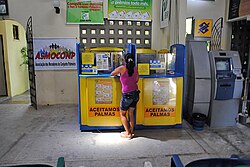
The internet has revolutionized microcredit through peer-to-peer (P2P) platforms. Services like Kiva, Zidisha, and the Microloan Foundation connect lenders directly with entrepreneurs. Zidisha became the first P2P platform to link international lenders and borrowers without local intermediaries in 2009. Other specialized models, such as the now-defunct United Prosperity, used guarantees to help borrowers build credit histories with local banks.
Summary of Microcredit Models
| Model/Organization | Primary Region | Key Characteristic | Funding/Interest Type |
|---|---|---|---|
| Grameen Bank | Bangladesh / Global | Solidarity lending / Women-focused | Corporate/Institutional |
| SHG-Bank Linkage | India | Self-Help Groups (SHGs) | Savings-backed bank loans |
| Akhuwat | Pakistan | Community-based (Mosques) | Interest-free / Donation-funded |
| Accion U.S. Network | United States | Entrepreneurial support & training | Nonprofit microloans |
| Kiva / Zidisha | Global (Web) | Peer-to-Peer (P2P) | Crowdfunded / Direct |
Frequently Asked Questions
Who is eligible for microcredit?
Microcredit is designed for impoverished borrowers who cannot access traditional bank loans because they lack collateral, a steady salary, or a formal credit history.
How does the Self-Help Group (SHG) model work in India?
Small groups of up to 20 members (mostly women) save small amounts of money together. Once the group proves it can manage these funds, local banks provide larger loans based on the group's savings, typically lending four rupees for every one rupee saved.
Is microcredit always based on interest?
No. While many institutions charge interest (ranging from 30% to 70% in some Asian contexts), some models are entirely interest-free, such as the Akhuwat model in Pakistan and Jonathan Swift's original 18th-century loan fund.
Does microcredit actually help people escape poverty?
Evidence varies, but some studies show positive results. For example, an Aspen Institute study of 405 US microentrepreneurs found that more than half escaped poverty within five years, with average household assets increasing by nearly $16,000.
What is the difference between microcredit and peer-to-peer lending?
Microcredit is the general practice of giving small loans to the poor. Peer-to-peer lending is a specific method of delivering those loans using internet platforms to connect individual lenders directly with borrowers.