Miami Intermodal Center: A Hub for South Florida Transit
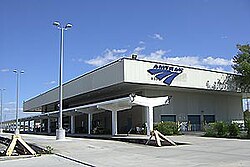
The Miami Intermodal Center (MIC) serves as a critical transportation nexus located at 3797 NW 21st Street in Miami, Florida. Positioned strategically east of Miami International Airport (MIA), the MIC integrates several modes of transport—including heavy rail, people movers, buses, and rental cars—into a single streamlined facility. By connecting regional rail lines with airport access, the center aims to reduce congestion and improve the travel experience for residents and tourists alike.
The facility is owned by the Greater Miami Expressway Agency and provides seamless transitions between the Metrorail, Tri-Rail, and the MIA Mover, as well as connections to intercity bus services like Greyhound and Flixbus.
Key Facts
- Location: NW 21st Street, Miami, FL, adjacent to Miami International Airport.
- Primary Rail Services: Metrorail (Orange Line) and Tri-Rail.
- Airport Connection: The MIA Mover provides direct transit to airport terminals.
- Rental Car Capacity: A consolidated center housing 16 companies and 6,500 vehicles.
- Environmental Impact: The removal of rental car shuttle buses reduced airport gas emissions by 30%.
- Accessibility: The facility is fully accessible and includes ground-level bicycle parking.
Evolution and Construction
Planning and Funding
The MIC project was initiated in mid-1993 by the Florida Department of Transportation (FDOT) and several USDOT agencies. Funding was secured through a combination of federal TIFIA loans and a regional half-cent sales tax approved by Miami-Dade County voters in 2002. While some planned Metrorail expansions were canceled in 2010 due to the recession and agency mismanagement, the spur to the airport proceeded, though its costs eventually doubled from original estimates.
Phased Development
Construction occurred in distinct stages to manage the complexity of the intermodal integration:
- Rental Car Center (RCC): The first major component to open on July 13, 2010.
- Phase I: Focused on the MIA Mover (opened September 9, 2011), an elevated people mover, and the Metrorail Orange Line spur (opened July 28, 2012).
- Phase II: Involved the construction of mainline rail and intercity bus facilities. Tri-Rail service resumed at the new site on April 5, 2015, and Greyhound began operations on June 24, 2015.
The Amtrak Challenge
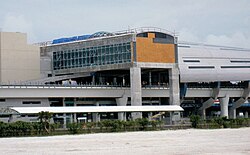
Despite being designed to accommodate Amtrak, the facility has faced significant hurdles. The platforms were constructed at 1,030 feet, which is insufficient for Amtrak's longer winter trains that require 1,220 feet. After years of lease negotiations and failed attempts to extend platforms due to the proximity of NW 25th Street, Amtrak officially notified officials in December 2024 that it would not relocate to the MIC. The decision was based on projected operating costs, with estimates suggesting $5 million in added annual expenses against only $2 million in new revenue.
Facility Layout and Services
Rail and Transit Infrastructure
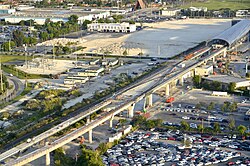
The MIC utilizes a multi-level design to separate different transit modes. The Tri-Rail section features two island platforms and four tracks, while the Metrorail Orange Line operates from a single island platform under a modular stainless steel and aluminum canopy. The MIA Mover provides the final link to the airport terminals.
The Consolidated Rental Car Center
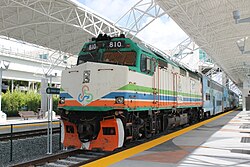
The RCC is a multi-level facility that serves approximately 28,000 customers daily. It features the first multi-level fueling system in the United States, including 120 gas pump positions and 42 car wash bays. By consolidating 16 rental companies into one hub, the airport reduced its rental car bus fleet from 120 to 60 before the MIA Mover replaced shuttles entirely.
Future Expansions
Plans are underway for a 1,450-foot footbridge over the Tamiami Canal. This bridge is intended to connect the MIC with Miami Freedom Park, with construction expected to begin in 2027 and conclude by mid-2029.
Summary of MIC Transit Services
| Service | Type | Key Connection | Opening Date |
|---|---|---|---|
| Metrorail | Heavy Rail (Orange Line) | Dadeland South / Earlington Heights | July 28, 2012 |
| Tri-Rail | Commuter Rail | Mangonia Park / Hialeah Market | April 5, 2015 |
| MIA Mover | Automated People Mover | MIA Airport Terminals | September 9, 2011 |
| Rental Car Center | Consolidated Facility | 16 Rental Agencies | July 13, 2010 |
| Intercity Bus | Bus (Greyhound/Flixbus) | Regional/National Destinations | June 24, 2015 |
Frequently Asked Questions
How do I get from the Miami Intermodal Center to the airport terminals?
Passengers can use the MIA Mover, an elevated automated people mover that connects the MIC directly to the Miami International Airport terminals.
Does Amtrak serve the Miami Intermodal Center?
No. Although the station was designed for Amtrak, the company decided in December 2024 not to relocate to the MIC due to high operating costs and platform length constraints.
Which Metrorail line serves the MIC?
The Metrorail Orange Line provides service to the Miami Intermodal Center, connecting it to stations such as Earlington Heights and Dadeland South.
What is the benefit of the consolidated Rental Car Center?
The RCC consolidates 16 rental companies into one location, which reduced the number of shuttle buses required and decreased airport gas emissions by 30%.
Is the Miami Intermodal Center accessible for people with disabilities?
Yes, the facility is designed to be fully accessible to all passengers.