Metrorail: Miami's Rapid Transit Backbone
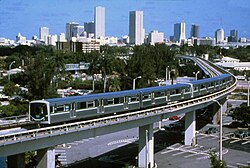
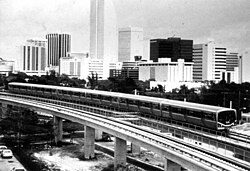
Metrorail is the cornerstone of rapid transit in Miami and Miami-Dade County, Florida. Operated by Miami-Dade Transit (MDT), a departmental agency of the county, it stands as the only rapid transit metro system in the state of Florida. Since its inception in 1984, the system has provided a high-capacity alternative to the region's congested roadways, spanning 24.4 miles of standard gauge track.
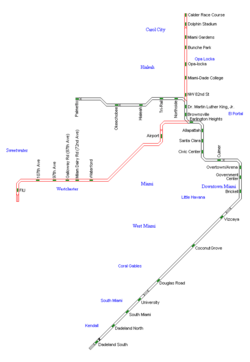
The system currently consists of two primary lines and 23 stations, facilitating the movement of tens of thousands of passengers daily across the urban landscape of South Florida.
Key Facts
- Owner/Operator: Miami-Dade Transit (MDT)
- System Length: 24.4 miles (39.3 km)
- Number of Stations: 23
- Lines: 2 (Green and Orange)
- Electrification: Third rail, 750 V DC
- Top Speed: 58 mph (93 km/h)
- Daily Ridership: 51,600 (Weekdays, Q1 2026)
System History and Construction
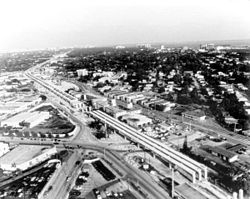
The journey toward a rapid transit system began in April 1979, when the Interstate Commerce Commission ratified an agreement to transfer the right-of-way along US 1 to the Metro Transit Agency. Originally referred to by the working name DART (Dade Area Rapid Transit), the system was officially named "Metrorail" by the county commission.
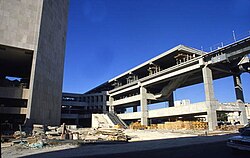
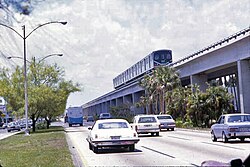
Construction officially commenced in December 1980 near the University of Miami. The original 21-mile line required the placement of 2,704 double-tee guideway girders, costing approximately $55.8 million. By June 1983, the first segment—comprising 10 stations from Dadeland South to Overtown—was completed following the construction of the Miami River Bridge.
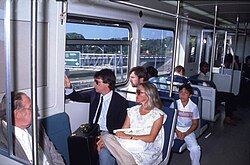
Revenue operations began on May 20, 1984. The inaugural day saw a massive turnout, with 125,000 people utilizing the free first-day service between Pinecrest/Dadeland and Overtown.
The Orange Line and Airport Expansion
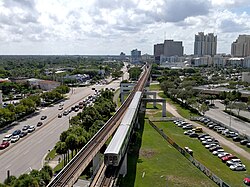
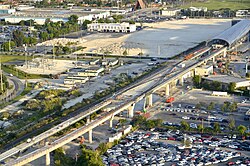
While early plans intended for the system to reach the airport, political lobbying shifted the original alignment toward Hialeah. This gap was eventually addressed through the AirportLink project. Approved by voters in 2002 as part of the People's Transportation Plan (PTP), the project was funded largely by a half-penny tax, with an additional $101.3 million provided by the Florida Department of Transportation (FDOT).
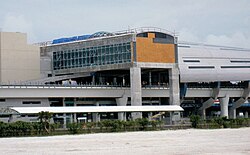
Groundbreaking for the 2.4-mile extension occurred in May 2009, connecting Earlington Heights station to the Miami Intermodal Center (MIC). Service on the new Orange Line officially began on July 28, 2012. The MIC serves as a critical transit hub, linking Metrorail to Tri-Rail, Greyhound intercity buses, and the MIA Mover.
Operational Details and Services
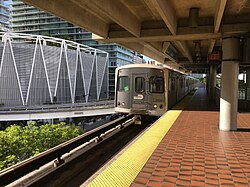
Metrorail operates seven days a week from 5 a.m. until midnight. The system utilizes a third rail electrification system (750 V DC) and maintains an average speed of 31 mph.
Service Frequency (Headways)
Headways—the time between arriving trains—vary based on the time of day and the specific line segment:
- Shared Track (Dadeland South to Earlington Heights): Every 5 minutes during peak hours, 7 minutes mid-day, and 15 minutes on weekends/late nights.
- Single Service Stations: Every 10 minutes during weekday rush hours, 15 minutes mid-day, and 15–30 minutes after 6 p.m. and on weekends.
- Orange Line (Weekends): Operates only between Earlington Heights and Miami International Airport every 15 minutes.
Special Services and Fleet
From December 2015 until March 2020, the system operated the Downtown Express, a pilot program that skipped several stations during rush hour to speed up commutes to downtown. Additionally, the Route 500 Midnight Owl bus provides hourly service between Dadeland South and Government Center from 12:30 a.m. to 5:30 a.m., replacing a previous 24-hour rail service.
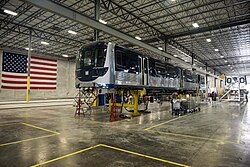
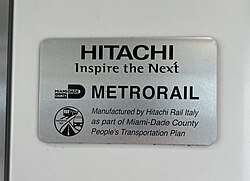
The fleet has evolved from the original Budd cars to modern Hitachi-built cars, which are assembled at a facility in Medley.
System Overview Summary
![A busy bike and ride rack at Brickell station. Some stations have bike lockers; bicycles are also allowed on the trains.[53]](/images/aa/60/aa604036f28d6753ad037f2e6c6cc2847d581be7ac8840168e66b81b540388e0.jpg)
| Feature | Specification |
|---|---|
| Total System Length | 24.4 miles (39.3 km) |
| Track Gauge | 4 ft 8.5 in (Standard Gauge) |
| Electrification | 750 V DC Third Rail |
| Train Length | 4 or 6 cars |
| Annual Ridership (2025) | 14,971,300 |
| Operating Hours | 5:00 AM - 12:00 AM Daily |
Ridership Trends
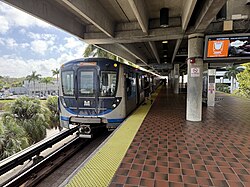
Metrorail ridership has seen significant fluctuations over the decades. After starting with 16,000 average weekday passengers in 1984, the system saw a steady climb, peaking in 2013 with record-high annual passengers when combined with the Metromover. Notable spikes in ridership often coincide with major events, such as the Miami Heat parade on June 24, 2013, which drew 117,000 passengers.
Frequently Asked Questions
Does Metrorail run 24 hours a day?
No, Metrorail currently operates from 5 a.m. until midnight daily. However, the Route 500 Midnight Owl bus provides hourly service between Dadeland South and Government Center during the overnight hours (12:30 a.m. to 5:30 a.m.).
How do I get to Miami International Airport via Metrorail?
Passengers can take the Orange Line to the Miami Intermodal Center (MIC) station, which is located adjacent to the airport's rental car center and connects to the MIA Mover.
What is the difference between the Green and Orange lines?
The Green Line is the primary north-south artery of the system. The Orange Line is an extension that branches off to serve the Miami International Airport via the AirportLink.
Are bicycles allowed on Metrorail?
Yes, bicycles are allowed on the trains. Some stations also provide bike lockers and ride racks for passenger convenience.
Who operates the Metrorail system?
The system is owned and operated by Miami-Dade Transit (MDT), which is a departmental agency of Miami-Dade County.