Meteosat Second Generation: Advancing Global Weather Monitoring
The Meteosat Second Generation (MSG) represents a significant leap in meteorological satellite technology. Designed to meet the evolving needs of nowcasting—the practice of very short-term forecasting—and numerical weather prediction, these satellites provide the high-resolution data necessary to track atmospheric changes in real-time. Beyond weather, the MSG fleet contributes vital data to climate research and global monitoring.
These spacecraft are engineered for stability and precision. Each satellite measures 3.2 meters in diameter and 2.4 meters in height, operating at a geostationary altitude of 36,000 km. To maintain their orientation, they are spin-stabilized, rotating anti-clockwise at 100 rpm.
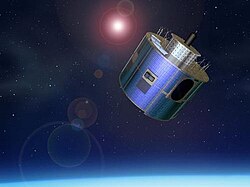
Development and Engineering
The contract for the MSG series was awarded to Aérospatiale at the Cannes Mandelieu Space Centre (now known as Thales Alenia Space). The project involved a consortium of major subcontractors, including Matra, Messerschmitt, and Alenia. While they retained the spin-stabilized design of their predecessors, the MSG satellites introduced numerous design improvements to increase data frequency and comprehensiveness.
This enhanced capability allows weather forecasters to identify and predict dangerous phenomena more swiftly. This includes the detection of thunderstorms, fog, and the explosive development of small but intense depressions that can trigger devastating wind storms.
The MSG Satellite Fleet
The fleet consists of four primary satellites, each launched via an Ariane 5 rocket from the Guiana Space Centre in Kourou, French Guiana.
Meteosat-8 (MSG-1)
Commencing routine operations on January 29, 2004, Meteosat-8 served as a cornerstone of the fleet. It was eventually stationed over the Indian Ocean, becoming the prime Indian Ocean Data Coverage (IODC) spacecraft on February 1, 2017. After twenty years in orbit, it was retired on July 1, 2022, and decommissioned on October 13, 2022. In accordance with ISO-24113 guidelines, the satellite was raised 740km above the geostationary ring, spun down to 20rpm, and passivated.
Meteosat-9 (MSG-2)
Launched on December 21, 2005, Meteosat-9 eventually moved to the Indian Ocean, arriving at 45.5°E on April 20, 2022. It officially took over as the prime IODC spacecraft on June 1, 2022, replacing Meteosat-8.
Meteosat-10 (MSG-3)
Launched on July 5, 2012, Meteosat-10 is located over Africa. Since March 20, 2018, it has provided the European "rapid scan" mode service, delivering updated images of Europe every 5 minutes.
Meteosat-11 (MSG-4)
Launched on July 15, 2015, MSG-4 was placed into in-orbit storage after commissioning in December 2015 and renamed Meteosat-11. Since February 20, 2018, it has provided the main full Earth imagery service over Europe and Africa, producing images every 15 minutes.
Key Facts
- Altitude: 36,000 km (Geostationary).
- Rotation: Spin-stabilized at 100 rpm.
- Dimensions: 3.2m diameter and 2.4m height.
- Primary Instrument: SEVIRI (Spinning Enhanced Visible and Infrared Imager).
- Climate Instrument: GERB (Geostationary Earth Radiation Budget).
- Rapid Scan: Images of Europe every 5 minutes via Meteosat-10.
Technical Payloads and Instrumentation
Each MSG satellite is equipped with a sophisticated suite of instruments to maximize its utility:
- SEVIRI: The main optical payload used for high-resolution weather imaging.
- GERB: An instrument dedicated to monitoring the Earth's radiation budget for climate research.
- SARP: The Search and Rescue signal Processor, which detects 406 MHz distress signals from emergency position-indicating radiobeacon stations.
- DCP: Data Collection Platform capable service equipment.
Below is a summary of the MSG satellite mission timelines:
| Satellite | Launch Date | Launch Vehicle | Launch Site | Mission Status/End |
|---|---|---|---|---|
| Meteosat-8 (MSG-1) | 2002-08-28 | Ariane 5G | Kourou, ELA-3 | Retired 1 July 2022 |
| Meteosat-9 (MSG-2) | 2005-12-22 | Ariane 5GS | Kourou, ELA-3 | Active until 2028 |
| Meteosat-10 (MSG-3) | 2012-07-05 | Ariane 5ECA | Kourou, ELA-3 | Active until 2030 |
| Meteosat-11 (MSG-4) | 2015-07-15 | Ariane 5ECA | Kourou, ELA-3 | Active until 2034 |
Frequently Asked Questions
What is the primary purpose of the MSG satellites?
The MSG satellites are designed to support nowcasting applications and numerical weather prediction, providing frequent and comprehensive data to help forecasters predict dangerous weather like thunderstorms and wind storms.
What does the SEVIRI instrument do?
SEVIRI, the Spinning Enhanced Visible and Infrared Imager, is the main optical payload used to capture the imagery required for weather monitoring and forecasting.
How does the "rapid scan" mode work?
The rapid scan mode, currently provided by Meteosat-10, allows for high-frequency imaging of Europe, delivering new images every 5 minutes.
What is the role of the GERB instrument?
The Geostationary Earth Radiation Budget (GERB) instrument provides critical data used for climate monitoring and scientific research.
How are the MSG satellites stabilized in space?
The satellites are spin-stabilized, meaning they rotate anti-clockwise at a rate of 100 rpm to maintain their orientation while orbiting at 36,000 km.
Do these satellites assist in search and rescue operations?
Yes, each satellite carries a Search and Rescue signal Processor (SARP) capable of detecting 406 MHz distress signals from emergency radiobeacons.