Korea Meteorological Administration: South Korea's Guardian of Weather Science
The Korea Meteorological Administration (KMA) serves as the official national meteorological service for South Korea. Tasked with monitoring the skies and providing critical weather data, the KMA plays a vital role in the nation's safety and scientific advancement. From its early roots in the early 20th century to its current status as a high-tech powerhouse, the agency has evolved into a sophisticated institution utilizing advanced supercomputers and satellite technology.
Key Facts
- Established: The current administration was formed on December 27, 1990.
- Parent Agency: Ministry of Environment.
- Global Affiliation: Member of the World Meteorological Organization (WMO) since 1956.
- Core Technology: Uses the Unified Model software suite for numerical weather prediction.
- Satellite Assets: Operates the Communication, Ocean and Meteorological Satellite (COMS), also known as Chollian.
A Legacy of Meteorological Evolution
The history of weather monitoring in South Korea stretches back much further than the modern KMA. The foundation was laid in 1904 with the establishment of temporary observatories in key locations such as Busan, Incheon, and Mokpo. These early efforts eventually led to the creation of the Central Meteorological Office (CMO) in August 1949.
Over the decades, the organization underwent several transformations. In 1978, the CMO was renamed the Korea Meteorological Service (KMS). The modern iteration of the agency, the Korea Meteorological Administration, was officially established in 1990. A significant milestone occurred in 2017 when the WMO recognized the Seoul and Busan observatories as Centennial Observing Stations, honoring over a century of continuous data collection.
Technological Milestones and Supercomputing
To meet the demands of modern forecasting, the KMA has invested heavily in computational power. In 1999, the administration introduced its first meteorological supercomputer. By November 2021, the KMA's supercomputers, named Guru and Maru, achieved impressive global standing, ranking 27th and 28th in the world, respectively.
In 2010, the KMA reached another technological peak by launching South Korea's first geostationary meteorological satellite, the Communication, Ocean and Meteorological Satellite (COMS), commonly referred to as Chollian. Following its launch, Chollian began official operations in 2011, providing essential space-based weather observations.
Advanced Radar and Observation Networks
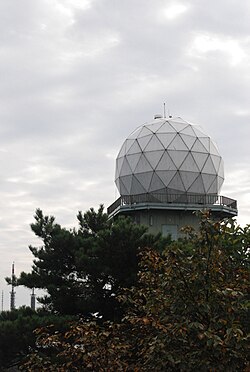
To ensure comprehensive coverage across the peninsula, the KMA has implemented sophisticated radar projects. In 2013, the agency contracted with the US-based Enterprise Electronics Corporation (EEC) to deploy 11 S-band Klystron Dual-Polarization Doppler Weather radar systems. This initiative was designed to provide complete weather radar coverage throughout the entire country.
Organizational Structure and Locations
The KMA is headquartered in the Dongjak District of Seoul. To manage the diverse meteorological needs of the nation, the agency operates through several specialized categories of co-working organs, including:
- Regional offices of the KMA
- Weather stations
- Observatories
- Joint offices for meteorological observation (established through collaboration with provincial offices)
Summary of KMA Profile
| Category | Details |
|---|---|
| Korean Name | 기상청 (Gisangcheong) |
| Headquarters | Seo District, Daejeon / Dongjak District, Seoul |
| Director | Yoo Hee-dong |
| Vice Administrator | Jang Dong-eun |
| Primary Software | Unified Model software suite |
Frequently Asked Questions
When did the KMA join the World Meteorological Organization?
The service joined the WMO in 1956.
What is the Chollian satellite?
Chollian is the name for South Korea's first geostationary meteorological satellite, officially known as the Communication, Ocean and Meteorological Satellite (COMS).
How does the KMA perform weather predictions?
The KMA utilizes numerical weather prediction performed through the Unified Model software suite and high-ranking supercomputers like Guru and Maru.
What kind of radar technology does the KMA use?
The KMA utilizes S-band Klystron Dual-Polarization Doppler Weather radar systems to provide nationwide coverage.
Which government ministry oversees the KMA?
The KMA operates under the jurisdiction of the Ministry of Environment.