Metalworking: The Science and Craft of Shaping the World
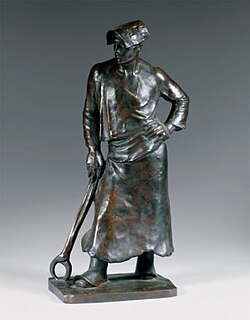
Metalworking is the essential process of shaping and reshaping metals to create everything from massive ships and bridges to delicate jewelry and precise engine components. Spanning a vast spectrum of scales, it is a discipline that functions as both a rigorous science and a highly skilled craft. Whether through industrial manufacturing or individual artistry, metalworking remains a primary driver of human technology and trade.
Modern metalworking is generally categorized into three fundamental areas: forming, cutting, and joining. While ancient techniques like blacksmithing are now largely reserved for artisanal work or historical reenactment, modern machine shops utilize highly specialized tools to achieve extreme precision.
Key Facts
- Metalworking processes are categorized into forming, cutting, and joining.
- The oldest evidence of copper working dates back to 8,700 BCE in northern Iraq.
- Modern precision machining can reach tolerances within one-thousandth of an inch.
- Brazing and soldering are joining processes that use capillary action with filler metals.
- CNC (Computer Numerical Control) technology allows for complex 3D object production.
The Ancient Roots of Metallurgy
The history of metalworking predates recorded history. Early humans began by shaping soft, native metals like gold using simple hand tools. The earliest substantiated evidence of metalworking in the Americas involves copper processing in Wisconsin, dated between 4000–5000 BCE. In these early stages, copper was hammered until brittle and then heated to allow for further manipulation.
As civilizations advanced, the ability to liberate metals from rock through heat—a process known as smelting—transformed society. By approximately 6000 BCE, copper smelting became common in Southwestern Asia. The subsequent mastery of bronze and the emergence of the Iron Age marked significant technological shifts in tool and weapon production.
Ancient Metals and Oxidation Potential
Ancient civilizations recognized seven primary metals. Their chemical properties, specifically their oxidation potential (measured in volts), vary significantly:
- Iron: +0.44 V
- Tin: +0.14 V
- Lead: +0.13 V
- Copper: −0.34 V
- Mercury: −0.79 V
- Silver: −0.80 V
- Gold: −1.50 V
Core Metalworking Processes
Casting and Forming
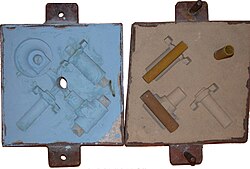
Casting involves pouring molten metal into a mold to create a specific shape. Common methods include sand casting, investment casting (often called lost wax casting in art), die casting, and centrifugal casting.
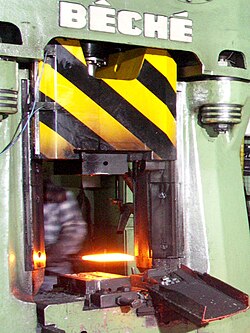
Forming processes reshape metal through mechanical force. Bulk forming includes techniques like forging (shaping metal using compressive forces), extrusion, and rolling. Sheet forming involves bending, stamping, and deep drawing to create thinner, more complex shapes.
Cutting and Machining
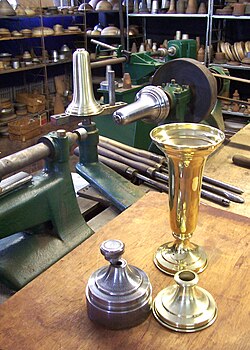
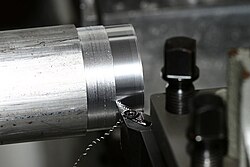
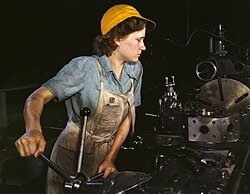
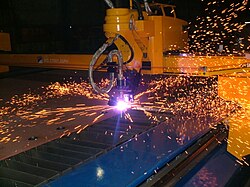
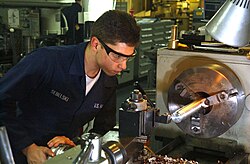
Cutting processes are divided into chip-producing processes (machining), burning (using oxidation to separate metal), and specialty processes. Machining utilizes tools to remove material, often involving turning on a lathe or milling with a rotating tool.
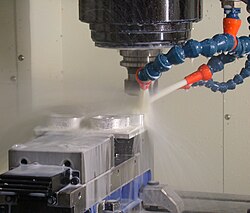
Modern CNC (Computer Numerical Control) machines translate complex 3D designs into X, Y, and Z coordinates, allowing for automated, high-precision production. To manage the heat generated during these high-speed operations, machinists often use coolants to reduce friction and protect the tools.
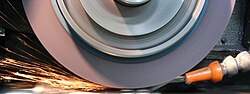
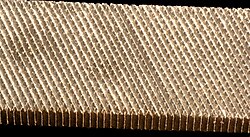
For fine finishing, grinding is used. Grinders use abrasive wheels to achieve tight tolerances and smooth surfaces. This is often followed by manual finishing with a file, an abrasive tool used to remove small, imprecise amounts of metal.
Joining Metals
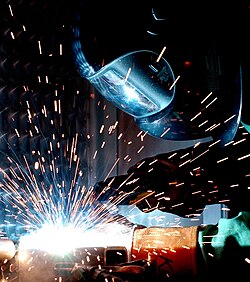
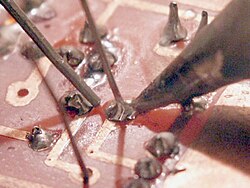
Joining is the process of connecting two or more pieces of metal. Welding melts the base metal to create a bond, while brazing and soldering use a filler metal that is drawn into the joint via capillary action.
The primary difference between brazing and soldering is temperature: brazing occurs above 450 °C (842 °F), while soldering occurs below that threshold. Because soldering uses lower temperatures, the resulting metallurgical bond is generally weaker than a brazed or welded joint.
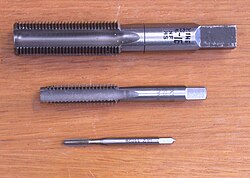
Precision Measurement and Tools
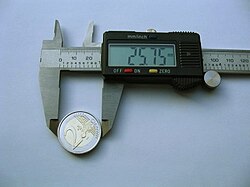
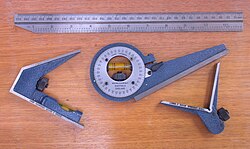
Accuracy is the cornerstone of modern metalworking. Calipers are essential hand tools used to measure the distance between two points, capable of precision within one-thousandth of an inch (25.4 μm). Other essential tools include combination squares for transferring designs and various specialized gauges for quality control.
Process Compatibility Summary
| Material | Sand Casting | Die Casting | Forging | Extrusion | Stamping |
|---|---|---|---|---|---|
| Iron | X | 0 | 0 | 0 | X |
| Steel | X | 0 | X | 0 | X |
| Aluminium | X | X | 0 | X | X |
| Copper | X | 0 | 0 | 0 | X |
Key: X = Routinely performed; 0 = Performed with difficulty or caution.
Frequently Asked Questions
What is the difference between brazing and soldering?
Both processes use a filler metal and capillary action to join parts. However, brazing is performed at temperatures exceeding 450 °C (842 °F), resulting in a stronger, more ductile joint, whereas soldering occurs below 450 °C and creates a weaker bond.
What does CNC stand for in metalworking?
CNC stands for Computer Numerical Control. It refers to the use of computerized systems to control machine tools, allowing them to follow precise X, Y, and Z coordinates to create complex 3D objects.
How do machinists ensure high precision?
Machinists use specialized tools like calipers for measurement and machines like grinders for fine finishing. They also utilize coolants to manage heat, which prevents the metal from expanding and affecting accuracy.
What are the three main categories of metalworking?
The three broad categories are forming (shaping the metal), cutting (removing material), and joining (connecting pieces together).
Is blacksmithing still used today?
While not economically competitive for large-scale industrial production in developed countries, blacksmithing is still used for artisanal work, hobbies, and historical reenactments.