Mercury Records: A Legacy of Musical Innovation and Global Influence
Founded in 1945 by Irving Green, Berle Adams, Arthur Talmadge, and Ray Greenberg, Mercury Records has spent over eight decades as a pivotal force in the global music industry. From its early days in Chicago to its current status as an imprint under Republic Records (a division of Universal Music Group), the label has not only launched the careers of legendary artists but has also pioneered recording technologies that changed how music is captured and consumed.
Key Facts
- Founded: 1945 in Chicago, Illinois.
- Innovation: Credited with the first documented use of tape overdubbing in 1947.
- Classical Milestone: Created the "Living Presence" series, renowned for high-fidelity single-microphone recordings.
- Genre Dominance: Became a premiere label for hard rock in the 1980s, hosting acts like Bon Jovi and Def Leppard.
- Current Status: An imprint of Republic Records under the Universal Music Group umbrella.
Technological Pioneers: From Overdubbing to Living Presence
Mercury Records is etched into history for its contributions to audio engineering. In 1947, musician and manager Jack Rael suggested that artist Patti Page record both the lead and "answer" vocals for the song "Confess." While overdubbing had been attempted on 78 rpm discs in the 1930s, this marked the first documented instance of overdubbing—the process of adding new layers of sound to an existing recording—using magnetic tape.
The label's commitment to sonic excellence continued in 1951 with the launch of the Living Presence series. Under the guidance of recording engineer C. Robert "Bob" Fine and director David Hall, Mercury utilized a single-microphone technique to capture the natural acoustics of symphony orchestras. This approach created an immersive experience that critic Howard Taubman described as being in the "living presence of the orchestra."
The series achieved significant success with the Minneapolis Symphony Orchestra, producing the first complete recordings of Tchaikovsky's Swan Lake, The Sleeping Beauty, and The Nutcracker. The label also pushed boundaries with the 1812 Overture, incorporating actual artillery and carillon bells to enhance the dramatic effect.
Evolution of the Label: 1950s to the Digital Age
Throughout the 1950s, Mercury found commercial success with artists like the Platters and Brook Benton. The 1960s brought significant corporate shifts, starting with an exchange agreement with the Dutch electronics firm Philips in 1961, which eventually led to Mercury being sold to Consolidated Electronics Industries Corp. (Conelco), a Philips affiliate.
By 1972, the label became part of PolyGram, a joint venture between Philips and Siemens. During the 1970s and early 1980s, Mercury diversified its sound, releasing hits from rock acts like Rod Stewart and Rush, as well as funk powerhouses such as Kool & the Gang and the Ohio Players.
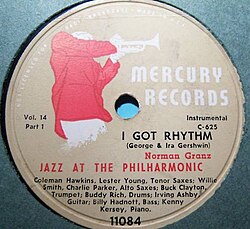
In 1980, the company moved its headquarters from Chicago to New York City. Following the absorption of Casablanca Records, Mercury solidified its position as a hard rock leader, representing iconic bands including Kiss, Scorpions, and Def Leppard. Many of these artists were associated with Vertigo Records in Europe, which specialized in progressive and hard rock.
Global Reach and Modern Rebranding
Mercury's influence extended far beyond the United States. In the UK, the label transitioned through various distributors including Oriole, Pye, and EMI before being absorbed into Virgin EMI in 2013. In Australia, the label launched in 1955, supporting artists such as INXS and Darren Hayes. In Japan, the label evolved through several iterations, including Nippon Phonogram and Kitty MME, before merging into Universal Music Japan.

The late 1990s saw a major restructuring when Seagram acquired PolyGram, folding Mercury into the Island Def Jam Music Group (IDJMG). While the label was relaunched in 2007, it became defunct in 2015. However, the brand was revived on April 11, 2022, when Republic Records acquired Mercury Records to continue as an imprint.
Mercury's Specialized Divisions
Today, the Mercury name persists through several specialized entities:
- Mercury KX: Formerly Mercury Classics, this label shifted its focus to post-classical music in 2016.
- Mercury Nashville: The dedicated country music unit.
- Mercury Studios: A film division that absorbed Eagle Rock Entertainment in 2014.
| Category | Details |
|---|---|
| Founders | Irving Green, Berle Adams, Arthur Talmadge, Ray Greenberg |
| Parent Companies | Universal Music Group (Current), PolyGram, Philips |
| Key Locations | Chicago, IL (1945–1980); New York, NY (1980–Present) |
| Notable Innovations | Tape overdubbing, Living Presence single-mic recording |
| Major Genres | Jazz, Classical, Hard Rock, Funk, Pop, Country |
Frequently Asked Questions
What was Mercury Records' first major recording innovation?
Mercury Records is credited with the first documented use of tape overdubbing in 1947, when Patti Page recorded both parts of the song "Confess" because the budget did not allow for a second singer.
What is the "Living Presence" series?
The Living Presence series was a line of classical recordings initiated in 1951 that used a single-microphone technique to capture a more natural, immersive orchestral sound.
Which hard rock bands were associated with Mercury Records?
Mercury became a premiere hard rock label by representing artists such as Bon Jovi, Def Leppard, Kiss, Scorpions, and Thin Lizzy.
Who currently owns Mercury Records?
Mercury Records is currently an imprint of Republic Records, which is part of the Universal Music Group (UMG).
What happened to Mercury Classics?
Mercury Classics was rebranded as Mercury KX in 2016, shifting its artistic focus toward post-classical music.