Mercedes Sosa: The Voice of the Voiceless and Conscience of Latin America
Known globally as the "voice of the voiceless ones" and the "conscience of Latin America," Mercedes Sosa was more than just a singer; she was a cultural icon who bridged the gap between traditional folk music and social activism. Through her powerful vocals, she gave life to the struggles, hopes, and identities of millions across the Hispanic world.
Sosa became a preeminent figure in the nueva canción (new song) movement—specifically the nuevo cancionero in Argentina—which sought to modernize folk music by integrating political and social themes. Her career spanned over four decades, taking her from local radio competitions in Tucumán to the world's most prestigious stages.
Key Facts
- Full Name: Haydée Marta Mercedes Sosa Girón.
- Movement: A leading exponent of the nueva canción movement.
- Major Awards: Six Latin Grammy Awards, including a Lifetime Achievement Award (2004).
- Global Reach: Performed at the Roman Colosseum, Carnegie Hall, and the Sistine Chapel.
- Humanitarian Work: Served as an ambassador for UNICEF and a UNESCO Goodwill Ambassador.
Early Life and Artistic Beginnings
Born on July 9, 1935, in San Miguel de Tucumán, Argentina, Sosa was of mestizo ancestry, with French, Spanish, and Diaguita descent. Her nickname, "la Negra," reflects her indigenous heritage and is a common term of endearment in Argentina for those with darker complexions.
The daughter of a day laborer and a washerwoman, Sosa's early life was steeped in the political atmosphere of Peronism. She began her singing career under the pseudonym Gladys Osorio, performing for the Peronist Party. Her professional breakthrough came at age fifteen in 1950, after winning a local radio singing competition.
By 1959, she recorded her first album, La voz de la zafra. However, it was her appearance at the 1965 Cosquín National Folklore Festival—where she was brought onto the stage from the audience by fellow singer Jorge Cafrune—that catapulted her into the national spotlight.
Rise to International Stardom
Throughout the late 1960s, Sosa expanded her reach beyond Argentina, touring the United States and Europe. She began collaborating with renowned artists, including composer Ariel Ramírez and lyricist Félix Luna, resulting in concept albums such as Cantata sudamericana and Mujeres argentinas.
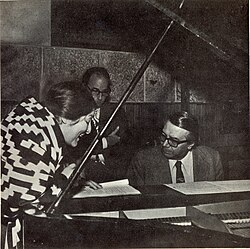
In 1971, she recorded a tribute to Chilean musician Violeta Parra, which included the timeless song "Gracias a la vida." Sosa also became a champion of other Latin American songwriters, popularizing the works of Brazil's Milton Nascimento and Cuba's Pablo Milanés and Silvio Rodríguez.
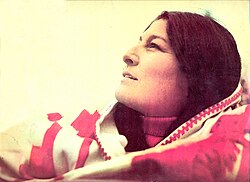
Her music often tackled systemic issues. For example, the song "Cuando tenga la tierra," written by Ariel Petrocelli and Daniel Toro, addressed land inequality and wealth disparity. Beyond music, she ventured into cinema, appearing in films by Leopoldo Torre Nilsson, including Güemes, la tierra en armas (1971), where she portrayed the guerrilla leader Juana Azurduy de Padilla.
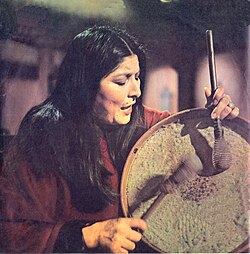
Persecution, Exile, and Return
The political climate in Argentina shifted drastically in 1976 with the rise of the military junta led by Jorge Videla. Because of her leftist leanings and the nature of her music, Sosa became a target of the regime. In 1979, she was arrested on stage during a concert in La Plata; she and the audience were only released following international pressure.
Banned from performing in her own country, Sosa entered a period of exile in Paris and Madrid. This era was marked by deep emotional struggle. In her 1981 album A quien doy, she recorded "Cuando me acuerdo de mi país," a song by Chilean exile Patricio Manns that mirrored her own sorrow and longing for her homeland.
Sosa returned to Argentina in February 1982, shortly before the collapse of the military regime. Her return was marked by a series of triumphant concerts at the Teatro Ópera in Buenos Aires, which were captured in the best-selling double album Mercedes Sosa en Argentina.
Legacy and Final Years
In her later years, Sosa continued to be a powerful voice for democracy and human rights. She supported President Raul Alfonsin during the return to democracy in 1983 and later supported Néstor Kirchner. Despite her political convictions, she resisted being labeled a "protest singer," arguing that the poetry of the art was more important than party politics.
Her health declined in the 1990s due to recurrent endocrine and respiratory issues, yet she continued to perform globally, selling out the Roman Colosseum and Carnegie Hall in 2002.
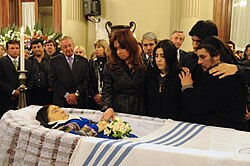
Mercedes Sosa passed away on October 4, 2009, in Buenos Aires at the age of 74, due to multiple organ failure. Her death prompted three days of national mourning ordered by President Cristina Fernández de Kirchner.
Career Summary
| Category | Details |
|---|---|
| Active Years | 1950–2009 |
| Total Albums | 40 |
| Key Awards | 6 Latin Grammys, Premio Gardel (2000), Diamond Konex Award (1995) |
| Notable Songs | "Gracias a la vida", "Cuando tenga la tierra" |
| Diplomatic Roles | UNICEF Ambassador, UNESCO Goodwill Ambassador |
Frequently Asked Questions
What was the "nueva canción" movement?
The nueva canción (new song) movement was a musical and political trend in Latin America that blended traditional folk music with lyrics focusing on social justice, political struggle, and the plight of the working class.
Why was Mercedes Sosa called "la Negra"?
The nickname "la Negra" is a reference to her indigenous heritage and darker complexion, which is a common and often affectionate term in Argentina.
Why was Mercedes Sosa forced into exile?
Sosa was targeted by the Argentine military junta that took power in 1976. Due to her political stances and the social themes of her music, she faced death threats and was eventually banned from performing in Argentina, leading her to move to Europe.
Which awards did Mercedes Sosa win posthumously?
Sosa won two posthumous Latin Grammy Awards for Best Folk Album in 2009 and 2011.
Did Mercedes Sosa consider herself a political singer?
While she was open about her political beliefs and supported leftist causes, she disliked the label "protest singer." She believed that the poetry of the music was more significant than party politics.