Francisco Canaro: The Legendary Violinist and Architect of Tango
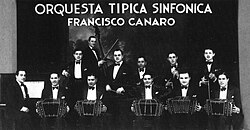
Francisco Canaro, affectionately known by the nickname Pirincho, stands as one of the most influential figures in the history of tango. A virtuoso violinist and prolific orchestra leader, Canaro's career bridged the gap between the early, raw sounds of the streets and the sophisticated salon styles that would eventually define the genre globally.
Early Life and Humble Beginnings
Born in San José de Mayo, Uruguay, in 1888 to Italian immigrant parents, Canaro moved to Buenos Aires, Argentina, before the age of ten. His journey into music began with remarkable ingenuity; while working in a factory as a young man, he fashioned his first violin out of an empty oil can. This resourcefulness paved the way for a career that began in the gritty atmosphere of seedy bars and ascended to the world's most prestigious stages.
Canaro's formal entry into the world of the orquesta típica (a traditional tango orchestra) occurred in 1908 under the guidance of leader Vicente Greco. By 1912, he had established himself as a composer with the piece "Pinta brava" ("Fierce Look").
A Career of Innovation and Influence
Canaro's impact extended beyond the bandstand into the burgeoning world of cinema. In 1915, he composed the music for the Argentine classic film Nobleza gaucha. His eye for talent was equally sharp; in 1920, he discovered Azucena Maizani, who would go on to become a major star of the tango world.
Beyond performance, Canaro was a fierce advocate for the rights of creators. Starting in 1918, he campaigned for intellectual property rights, a mission that culminated in 1935 with the establishment of the Argentine Society of Composers and Songwriters (SADAIC). Canaro's commitment was so profound that he personally purchased the downtown Buenos Aires lot where the organization's headquarters were built.
International Success and Evolution
In 1925, Canaro took his orchestra to Paris. The ensemble was an immediate success with local audiences, leading Canaro to remain in Europe for a decade. Upon returning and becoming a naturalized Argentine citizen in 1940, his music evolved. While he is regarded as a member of the "old guard," his recordings from the 1940s reflect the classic salon style and helped facilitate the transition toward concert tango, a more formal, listening-oriented version of the genre.
Later Years and Legacy
Throughout the 1940s and early 1950s, Canaro's orchestra was a staple of Argentine radio. Despite his later evolution, many dancers and listeners continue to prize his "golden age" recordings as the pinnacle of the genre. In 1956, he documented his life in his memoirs, Mis 50 años con el tango (My Fifty Years with the Tango).
Tragically, Canaro was forced into retirement after developing Paget's disease, a chronic disorder that causes bones to grow abnormally. He passed away in Buenos Aires on December 14, 1964, at the age of 76.
Key Facts
- Birth: November 26, 1888, in San José de Mayo, Uruguay.
- Death: December 14, 1964, in Buenos Aires, Argentina.
- Primary Instrument: Violin.
- Major Contribution: Co-founded SADAIC to protect intellectual property rights for composers.
- Notable Work: Composed the score for the 1915 film Nobleza gaucha.
- Discography: Over 12,400 recording transfers are listed in the TANGO-DJ.AT Database.
| Category | Details |
|---|---|
| Genres | Tango |
| Occupations | Musician, Orchestra Leader |
| Key Collaborations | Vicente Greco, Azucena Maizani, Ada Falcón |
| Filmography | New Port (1936), The Song of the Suburbs (1941) |
| Citizenship | Uruguayan (born), Argentine (naturalized 1940) |
Frequently Asked Questions
What was Francisco Canaro's nickname?
He was widely known by the nickname "Pirincho."
How did Canaro start playing the violin?
Coming from humble beginnings, Canaro created his first violin using an empty oil can while working in a factory as a young man.
What was Canaro's role in the music industry beyond performing?
He was a pioneer for intellectual property rights and was instrumental in founding the Argentine Society of Composers and Songwriters (SADAIC) in 1935.
Which films did Francisco Canaro contribute to?
He composed the music for the 1915 classic Nobleza gaucha and is credited in films such as New Port (1936) and The Song of the Suburbs (1941).
What caused Francisco Canaro's retirement?
Canaro was forced to retire from his musical career after developing Paget's disease.