Discovering Melbourne: A Guide to Australia's Cultural and Sporting Capital
Melbourne, known to its traditional custodians as Narrm, is a vibrant metropolis that serves as the heart of the state of Victoria. From its deep Indigenous roots to its rapid transformation during the 19th-century gold rush, the city has evolved into a global hub of culture, sport, and innovation. Whether you are exploring its famous laneways or admiring its soaring skyline, Melbourne offers a unique blend of historical charm and modern energy.
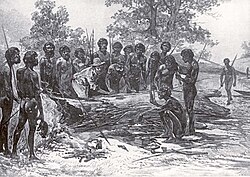
A Rich and Complex History
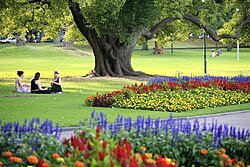
The history of Melbourne is a tapestry of diverse experiences. Long before British colonisation, the land was inhabited by the Boonwurrung and Woiwurrung peoples. The formal establishment of the settlement began on 30 August 1835, marking nearly 190 years of continuous urban development.
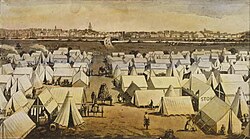
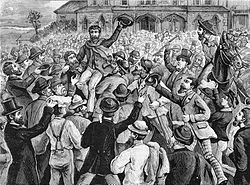
The mid-19th century brought a seismic shift to the region with the Victorian gold rush. This era of immense wealth transformed the settlement into a bustling city, attracting thousands of migrants from around the world. This influx of people led to the creation of "Canvas Town" in South Melbourne, which provided temporary housing for the massive waves of arrivals during the 1850s.
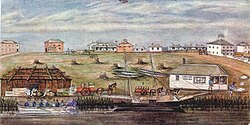
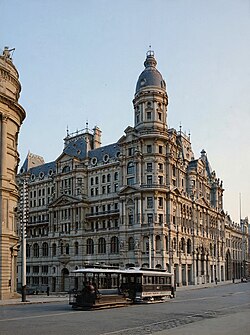
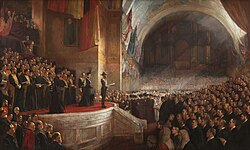
As the city grew, it experienced periods of significant economic fluctuation, including a notable land boom and bust. Melbourne even served as the temporary capital of Australia during certain periods and played a vital role during World War II. Today, the city stands as a testament to resilience, having transitioned from a colonial outpost to a sophisticated contemporary metropolis.
Geography and Climate
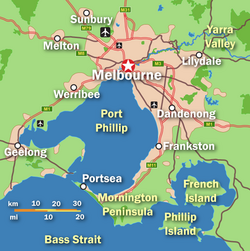
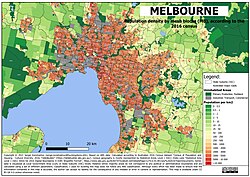
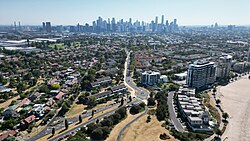
Located approximately 669 km southwest of Canberra, Melbourne is a sprawling urban area covering 9,993 km². The city is characterized by its diverse landscape, ranging from the dense Central Business District (CBD) to the surrounding metropolitan suburbs and nearby localities like the Grampians and Gippsland.
The "Four Seasons in One Day" Phenomenon
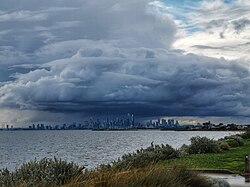
Melbourne is famous for its highly changeable weather, often leading locals to claim the city experiences "four seasons in one day." The climate is temperate, with mean maximum temperatures around 20.2°C and mean minimums near 9.7°C. Rainfall is distributed throughout the year, with an annual average of approximately 515.5 mm.
Urban Structure and Architecture
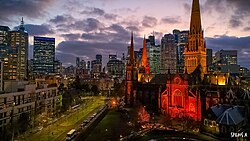
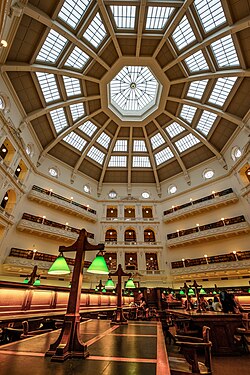
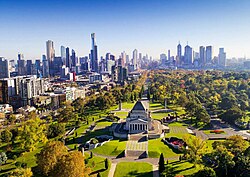
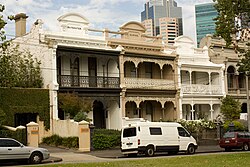
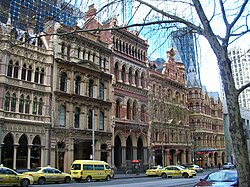
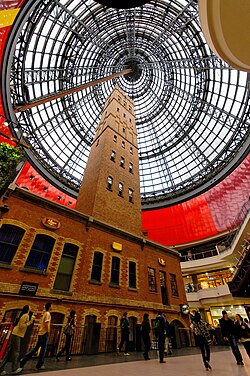
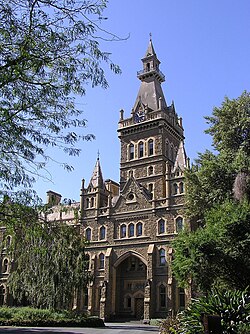
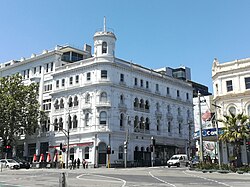
The architectural landscape of Melbourne is a striking mix of the old and the new. The city is renowned for its Victorian-era heritage, with many inner suburbs featuring beautifully preserved 19th-century terrace houses. In the CBD, skyscrapers are often set back from the street to preserve the visual integrity of historic buildings on streets like Collins Street.
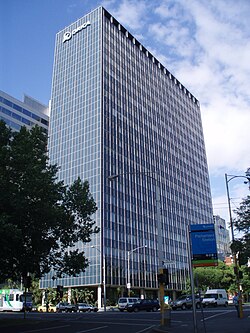
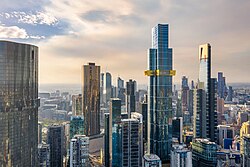
In contrast to its historic core, Melbourne boasts a modern skyline featuring 77 skyscrapers. Notable landmarks include Australia 108, the only building in the Southern Hemisphere to exceed 100 storeys, and the Eureka Tower.
Cultural and Commercial Hubs
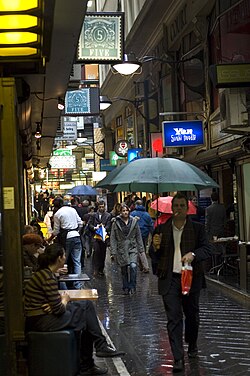
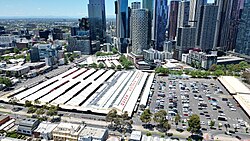
The city's identity is deeply tied to its unique urban layout. A network of laneways and arcades defines the inner city, serving as a cultural attraction famous for street art, coffee culture, and diverse bars. For shopping and local flavor, the Queen Victoria Market stands as the largest open-air market in the Southern Hemisphere.
Culture, Sport, and Entertainment
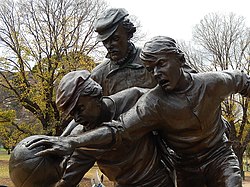
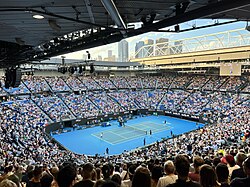
Melbourne is widely recognized as a global sporting capital. It is home to the Melbourne Cricket Ground (MCG) and hosts prestigious events such as the Australian Open, the first of the four annual Grand Slam tennis tournaments. The city's connection to sport is so deep that even the origins of Australian rules football are tied to the local parklands.
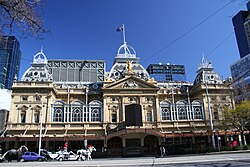
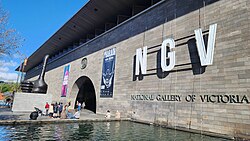
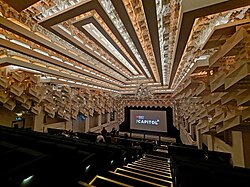
Beyond sport, the city is a cultural powerhouse. From the historic Princess Theatre to the National Gallery of Victoria (NGV), there is an abundance of artistic expression. The city's entertainment sector is also a significant economic driver, exemplified by the Crown Casino and Entertainment Complex, which generates AU$2.7 billion in net revenue annually.
![The Crown Casino and Entertainment Complex generates AU$2.7 billion in net revenue annually.[208]](/images/ca/38/ca38c13b895fa9b89193f41fa361f6821032805886308622c0edeab9b528b572.jpg)
Demographics and Connectivity
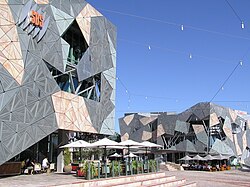
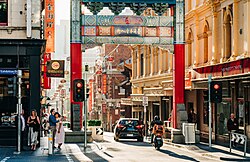
As of 2025, Melbourne is Australia's second-largest city, with a population exceeding 5.4 million. It is a highly multicultural society; the 2021 census showed significant populations from India, China, England, and Vietnam. This diversity is reflected in the city's many ethnic enclaves, such as Chinatown, which remains the longest continuous Chinese settlement outside of Asia.
Transport and Infrastructure
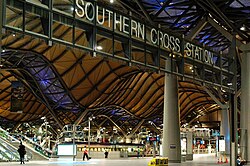
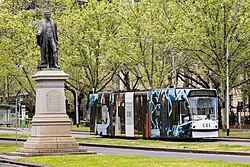
Moving around Melbourne is made easy by its extensive transport network. The city boasts the largest tram network in the world, consisting of 493 trams. For regional and interstate travel, Southern Cross station serves as the primary hub, situated on the City Loop.
Summary of Melbourne at a Glance
| Category | Details |
|---|---|
| Population (2025) | 5,435,590 |
| State | Victoria |
| Established | 30 August 1835 |
| Time Zone | UTC+10 (AEST) / UTC+11 (AEDT) |
| Largest Market | Queen Victoria Market |
| Tram Network | 493 trams (World's largest) |
Key Facts
- Narrm is the traditional name for Melbourne used by the Boonwurrung and Woiwurrung peoples.
- Melbourne is home to the world's largest tram network.
- The Australian Open is held annually in Melbourne.
- Chinatown is the longest continuous Chinese settlement outside of Asia.
- The city is famous for its "four seasons in one day" weather pattern.
Frequently Asked Questions
What is the population of Melbourne?
As of 2025, the total population of Melbourne is estimated to be 5,435,590.
What is the largest tram network in the world?
Melbourne is home to the largest tram network in the world, consisting of 493 trams.
When was Melbourne established?
Melbourne was established on 30 August 1835.
What is the significance of Chinatown in Melbourne?
Melbourne's Chinatown is the longest continuous Chinese settlement located outside of Asia.
Why is Melbourne's weather described as having "four seasons in one day"?
This is a common expression used to describe the city's highly changeable and unpredictable weather patterns.
What is the largest open-air market in the Southern Hemisphere?
The Queen Victoria Market is the largest open-air market in the Southern Hemisphere.