Meet Me in St. Louis: The Turbulent Production of an MGM Classic
The creation of Meet Me in St. Louis was a complex journey of creative revisions, personal drama, and financial escalation. Based on "The Kensington Stories"—a series of sentimental family tales by Sally Benson published in The New Yorker in 1942—the film was envisioned as a nostalgic piece of cinema. Producer Arthur Freed, who had previously found success with Judy Garland, secured the film rights for $25,000 and sought to blend Benson's storytelling with the nostalgic appeal of the hit Broadway play Life with Father.
Visual Artistry and Design
Director Vincente Minnelli, leveraging his professional background in costume and set design, was tasked with creating the film's aesthetic. Working alongside designer Lemuel Ayers and art director E. Preston Ames, Minnelli aimed to replicate the evocative style of Thomas Eakins, a prominent artist and illustrator of the era in which the story is set.
One of the film's most distinctive stylistic choices was the use of greeting-card illustrations that dissolved into live action to introduce each seasonal segment. This technique was likely inspired by Orson Welles' 1942 film, The Magnificent Ambersons.
A Script in Constant Flux
The screenplay underwent numerous iterations involving a staff of six writers. While Sally Benson and Doris Gilbert worked to preserve the essence of the original stories, other writers were brought in to adjust the tone. In mid-1942, Victor Heerman and Sarah Mason introduced a blackmail plot involving the character Esther Smith; however, Arthur Freed found this element inappropriate. He subsequently hired William Ludwig, a specialist in adolescent romance, to remove the blackmail subplot and integrate courtship stories.
Despite these changes, Judy Garland remained dissatisfied, feeling the plot was weak and her character too juvenile. To address this, further revisions added the central conflict of the family's impending move to New York. Even with these additions, Garland continued to express unhappiness with the script.
Production Challenges and Budgetary Growth
The road to production was fraught with delays. Internal studio conflicts, including a clash between Arthur Freed and producer Joseph L. Mankiewicz, nearly postponed the project indefinitely. Production was further stalled by the heavy schedule of Technicolor Inc. and various studio issues.
When filming finally began on December 7, 1943, the budget had already risen from an initial $1,395,000 to $1,500,000. The final cost eventually climbed to nearly $1.8 million. A significant portion of the budget was allocated to high production values, specifically sets and music.
| Category/Person | Cost/Salary |
|---|---|
| Set Design | $497,000 |
| Music | $234,000 |
| Story and Continuity | Over $132,000 |
| Judy Garland (Weekly) | $2,500 |
| Vincente Minnelli (Weekly) | $1,000 |
| Margaret O'Brien (Weekly) | $250 |
Personal Struggles and On-Set Drama
The production was marked by significant personal turmoil. Judy Garland struggled with severe emotional issues, an addiction to amphetamines, and physical ailments including recurring migraines. These challenges led to fits of hysteria, habitual lateness, and a week-long absence due to a claimed ear infection.
Despite these frictions, Garland and Minnelli developed a close relationship, eventually becoming lovers and marrying shortly after the film's release. Garland also had a brief affair with costar Tom Drake during production.
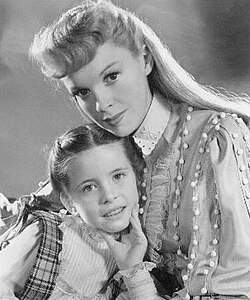
Additional delays were caused by health issues among the cast, including pneumonia suffered by Mary Astor and appendicitis suffered by Joan Carroll. Environmental factors also played a role, as severe rains and flooding in Los Angeles hindered the filming of exterior scenes.
Post-Production and Legacy
Filming concluded on April 7, 1944. The initial rough cut exceeded two hours, but was edited down to 113 minutes for preview screenings. Due to overwhelmingly positive audience reactions, MGM strategically held the release for the Christmas season.
The production of Meet Me in St. Louis established a new blueprint for Minnelli's future musicals, characterized by budgets exceeding $1 million, extensive preproduction (often over a year), and lengthy shooting and post-production phases.
Key Facts
- Source Material: Based on "The Kensington Stories" by Sally Benson and inspired by the play Life with Father.
- Financials: Final budget reached nearly $1.8 million, with nearly half spent on sets and music.
- Visual Influence: Set design was inspired by the paintings of Thomas Eakins.
- Timeline: Filming ran from December 1, 1943, to April 7, 1944.
- Final Length: Edited from over two hours down to 113 minutes.
Frequently Asked Questions
Why was the script for Meet Me in St. Louis rewritten so many times?
The script underwent numerous changes to remove inappropriate plot points—such as a blackmail storyline—and to address Judy Garland's concerns that the plot was weak and her character was too juvenile.
What caused the production delays during filming?
Delays were caused by studio problems, the busy schedule of Technicolor Inc., severe flooding and rain in Los Angeles, and illnesses among the cast, including pneumonia and appendicitis.
How did the film's visual style come to be?
Director Vincente Minnelli and his design team looked to the paintings of Thomas Eakins for inspiration, and Minnelli utilized a greeting-card dissolve technique influenced by Orson Welles' The Magnificent Ambersons.
What were the personal challenges Judy Garland faced during production?
Garland dealt with severe emotional problems, an addiction to amphetamines, and recurring migraine headaches, which occasionally disrupted the filming schedule.
How did this film influence future MGM musicals?
It established a pattern for Minnelli's future work, involving budgets over $1 million, preproduction periods exceeding a year, and extended shooting and post-production schedules.