Meadow Lane: The Historic Home of Notts County
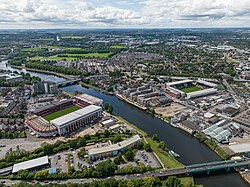
For over a century, Meadow Lane has served as the fortress for Notts County. The stadium's origins are rooted in a struggle for stability, moving from the shared spaces of cricket grounds to a dedicated home that has weathered wars, floods, and urban development.
The Move from Trent Bridge
Before 1910, Notts County operated as a tenant of the Nottinghamshire County Cricket Club, playing their home matches at Trent Bridge. However, this arrangement was fraught with conflict, as cricket took priority. The football club was frequently forced to move early and late-season fixtures to alternative venues to avoid scheduling clashes.
The Football League eventually intervened, ruling that this instability was inappropriate. They demanded that Notts County either negotiate better terms at Trent Bridge or find a permanent home. The situation reached a breaking point in 1908 when the cricket club trustees declined to renew the lease, leaving the club with two years to secure a new location.
Establishing a New Home
In 1910, the club leased a plot of land from the city council located near the cattle market on the opposite side of the River Trent. A new stadium was hastily constructed, which even included a temporary stand salvaged from Trent Bridge to ensure the ground was functional.
On September 3, 1910, Notts County officially opened Meadow Lane. The inaugural match was a high-profile 1–1 draw against their local rivals, Nottingham Forest, attracting a crowd of 27,000 spectators and generating receipts of £775.
Survival and Structural Evolution
The early years at Meadow Lane were not without threat. In 1920, the landlord—the Nottingham Corporation—nearly evicted the club to make room for an abattoir (a slaughterhouse for livestock). Fortunately, the club remained in place.
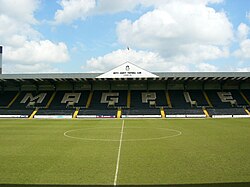
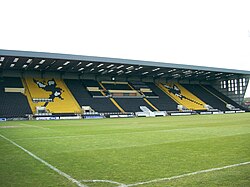
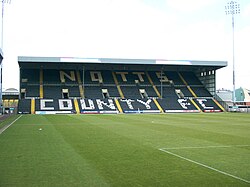
The stadium began to evolve in 1923 when the Sneinton Side was replaced by a new structure. This was named the County Road Stand, taking its name from the newly built road running behind the stand.
War and Recovery
World War II brought significant devastation to the ground. Bombing raids damaged the northern side of the Main Stand and left the pitch unplayable, forcing the club to suspend all fixtures during the 1942 season.
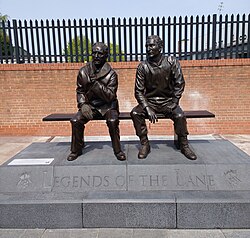
A Sanctuary for Local Football
Meadow Lane has often acted as a supportive neighbor to Nottingham Forest. The stadium hosted Forest games on several occasions, most notably after the war when flooding from the River Trent rendered the City Ground unusable, and again in 1968 following a fire that destroyed the City Ground's Main Stand during a match against Leeds United.
Modern updates continue to keep the stadium current, including the installation of new LED floodlights in July 2022, replacing the previous system installed in 2014.
Key Facts
- Opening Date: September 3, 1910.
- First Match: A 1–1 draw against Nottingham Forest.
- Initial Attendance: 27,000 fans.
- Major Disruptions: WWII bombing (1942) and threats of redevelopment into an abattoir (1920).
- Recent Upgrade: New LED floodlights installed in July 2022.
| Year | Event | Impact |
|---|---|---|
| 1908 | Lease non-renewal | Club forced to leave Trent Bridge |
| 1910 | Move to Meadow Lane | Establishment of a dedicated home |
| 1920 | Abattoir Proposal | Near-eviction by Nottingham Corporation |
| 1923 | County Road Stand | Replacement of the Sneinton Side |
| 1942 | WWII Bombing | Suspension of all fixtures |
| 2022 | Lighting Upgrade | Installation of new LED floodlights |
Frequently Asked Questions
Why did Notts County leave Trent Bridge?
The club left because cricket took priority at the ground, causing fixture clashes. The Football League demanded a more stable arrangement, and the cricket club trustees ultimately refused to renew the lease in 1908.
Who played in the first match at Meadow Lane?
The first match was played on September 3, 1910, between Notts County and their rivals, Nottingham Forest, ending in a 1–1 draw.
How did World War II affect the stadium?
The stadium was bombed, which severely damaged the northern side of the Main Stand and ruined the pitch, leading to the cancellation of all fixtures in 1942.
Has Nottingham Forest ever played at Meadow Lane?
Yes, Forest used Meadow Lane when the City Ground was unplayable due to River Trent flooding after the war, and again in 1968 after a fire destroyed their Main Stand.
What is the most recent major facility upgrade at the ground?
In July 2022, the club installed new LED floodlights to replace the system that had been in place since 2014.