Mate: The Cultural and Social Heart of South American Infusions
Across the vast landscapes of the Southern Cone, a distinct aroma of toasted leaves and hot water signals more than just a caffeine break; it signals a social ritual. Mate is a traditional hot infusion derived from the leaves of yerba mate, serving as a cornerstone of national identity in Argentina, Paraguay, and Uruguay, while remaining deeply embedded in the cultures of Brazil, southern Chile, and eastern Bolivia.
The word "mate" is multifaceted, referring simultaneously to the beverage and the vessel used to drink it. This terminology originates from the Quechua word mati, describing the calabash gourd traditionally used as a container.
![Tertulia and Mate party in Santiago de Chile, in 1821, by Scharf and Schmidtmeyer. John Carter Brown Library.[5][6]](/images/93/82/938238964d54e9d8673f51634b5463dba016f355296d6d92b39f0df3f7279cdc.jpg)
Key Facts
- National Drink: Official national beverage of Argentina, Paraguay, and Uruguay.
- Primary Producers: Argentina (56–62%) and Brazil (34–36%) are the leading producers as of 2018.
- Highest Consumption: Uruguay leads per capita consumption at approximately 19 liters per person annually.
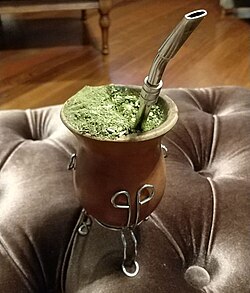
- Key Components: Prepared using yerba mate leaves, hot water (70–85°C), a gourd, and a metal straw called a bombilla.
- Chemical Profile: Rich in caffeine and chlorogenic acid, but contains no catechins.
A History of Domestication and Trade
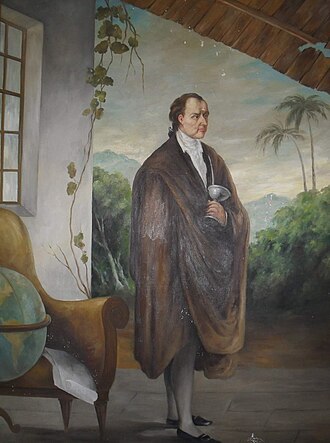
The consumption of yerba mate dates back to the Pre-Columbian era, with the first European written records appearing in the 15th century via Spanish colonizers. By the late 16th century, Spanish settlers in Paraguay adopted the drink, and by the 17th century, it had spread to Peru, Chile, and the Río de la Plata region. For a time, it became Paraguay's primary commodity, surpassing beef, cotton, and tobacco.
Initially harvested from wild stands using aboriginal labor, the plant was domesticated in the mid-17th century by Jesuits in the Misiones province of Argentina. However, the expulsion of the Jesuits in the 1770s led to the ruin of many plantations. The industry saw a resurgence in the late 19th and early 20th centuries through new domestication projects in Brazil and Argentina.
The Art of Preparation and Brewing
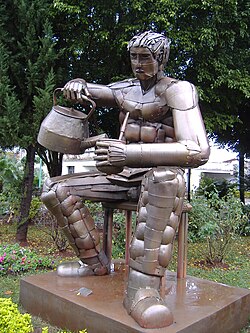
Preparing mate is a straightforward process that requires specific tools. The leaves (yerba) are placed in a gourd, and hot water—specifically not boiling, typically between 70 and 85°C—is poured over them. The liquid is sipped through a bombilla, a specialized straw that filters out the leaves.
A single serving of yerba can be refilled many times. When the flavor begins to fade—a state known as lavado (washed out)—the drinker can perform a process called reformar el mate (reforming the mate). This involves pushing the mound of leaves to one side of the gourd to create space for fresh water on the opposite side, reviving the infusion's strength.
Social Etiquette and the Ritual of the Circle
Mate is rarely a solitary activity; it is a social glue used in family and friend gatherings. The ritual is governed by a strict set of unwritten rules centered around the cebador (the server), who is often the host.
- The Order: The cebador prepares the mate, drinks the first brew to ensure quality, and then passes it to the person on their right. The circle continues in this order.
- The First Sip: In some regions, the first brew is called mate del zonzo (fool's mate) and is kept by the cebador because it may be too bitter or cold.
- The Silence of Gratitude: Drinkers do not say "thank you" after every turn. A final gracias or obrigado indicates that the person has had enough and does not wish for another refill.
- The Taboos: It is considered impolite for anyone other than the cebador to move the bombilla. Additionally, holding the gourd for too long while talking may prompt others to warn the drinker that the mate "is not a microphone."

Global Variants and Modern Adaptations
While the traditional bitter infusion is most common, several variations exist across different regions:
- Tereré: A cold-water version popular in Paraguay and Argentina.
- Chimarrão: A specific Brazilian style of preparation.
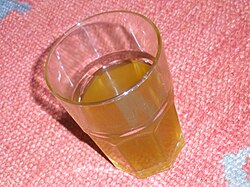
- Mate Cocido: A boiled version, often served in tea bags and drunk from a cup, common in Argentina and Brazil.
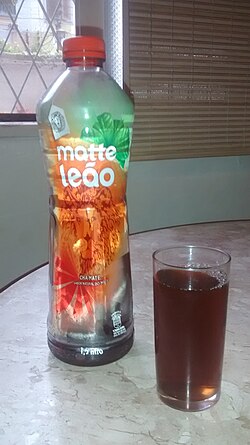
- International Reach: Due to migration, mate is popular in Syria and Lebanon, with Syria being the world's largest importer of yerba mate (15,000 tons annually). In North America, it is available as loose leaf, bottled drinks, and even carbonated sodas like Materva.
Health Considerations and Chemical Properties
Mate is a potent stimulant. While some marketing claims suggest it contains a unique substance called mateína, chemical analysis confirms that this is simply caffeine. It also contains high levels of chlorogenic acid.
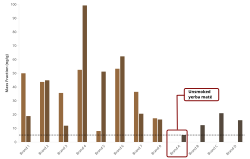
There are, however, concerns regarding contaminants. Traditional smoking of the leaves can introduce polycyclic aromatic hydrocarbons (PAHs), such as benzo(a)pyrene, which are carcinogenic. Some studies link these PAHs to lung and bladder cancers, while the high temperature of the drink (above 65°C) is specifically associated with esophageal cancer. Using unsmoked mate is often suggested as a preventive measure.
| Feature | Details |
|---|---|
| Primary Ingredients | Yerba mate leaves, hot or cold water |
| Essential Tools | Calabash gourd (mate/cuia), Bombilla (filter straw) |
| Ideal Temperature | 70°C to 85°C (158°F to 185°F) |
| Main Producers | Argentina, Brazil, Paraguay |
| Active Compounds | Caffeine, Chlorogenic acid |
Frequently Asked Questions
What is the difference between mate and tereré?
Mate is typically a hot infusion, while tereré is a version prepared with ice-cold water, common in Paraguay and Argentina.
Is "mateína" a different stimulant than caffeine?
No. Although often marketed as a distinct substance, chemical analysis has proven that mateína is actually caffeine.
Why is it considered rude to move the bombilla?
The bombilla is placed specifically by the cebador to filter the liquid without clogging. Moving it can disrupt the brew and is seen as an affront to the server's skill.
What are the health risks associated with drinking mate?
Very hot temperatures (above 65°C) are linked to esophageal cancer. Additionally, the smoking process used for some leaves can introduce carcinogenic polycyclic aromatic hydrocarbons (PAHs).
Why is Syria a major importer of yerba mate?
The tradition was brought back to the Eastern Mediterranean by Syrian and Lebanese immigrants who had lived in South America during the late 19th and early 20th centuries, particularly within Druze communities.