Master's Degrees: Evolution, Types, and Global Standards
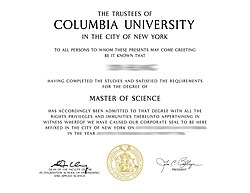
A master's degree (derived from the Latin magister) is a postgraduate academic qualification awarded by universities or colleges. It signifies that a student has achieved mastery or a high-order overview of a specific field of study or a particular area of professional practice. Typically, this degree requires the completion of a bachelor's level education, either as a prerequisite or as part of an integrated course of study.
Graduates holding a master's degree are expected to demonstrate advanced knowledge of theoretical and applied topics within their specialization. They must possess high-order skills in critical evaluation, analysis, and professional application, alongside the ability to think independently and solve complex problems rigorously.
Key Facts
- Academic Level: A postgraduate degree requiring previous bachelor's level study.
- Core Competencies: Advanced theoretical knowledge, critical analysis, and complex problem-solving.
- Historical Shift: Evolved from a general MA to a wide variety of specialized professional and scientific degrees.
- Global Variation: Program duration and nomenclature vary significantly by country (e.g., 2-year vs. 4-year programs in Pakistan).
Historical Development
Medieval Era to the 18th Century
The master's degree has deep roots in the medieval university system, serving as a foundational step in academic progression before the modern specialization of degrees.
The 19th Century Expansion
The 1800s marked a period of significant diversification. At the start of the century, the Master of Arts (MA) was the primary master's degree and was often awarded without further examination. This changed as professional needs evolved. In 1815, the University of Glasgow introduced the Master in Surgery. By 1861, this degree was adopted across Scotland, as well as by the University of Dublin in Ireland and the universities of Cambridge and Durham in England. This trend extended to North America, with the Philadelphia College of Surgeons conferring the Master of Surgery in 1870 to align with European standards.
The 20th Century and Beyond
The 20th century further refined the degree structure. This era saw the rise of postgraduate programs such as the MSc (Master of Science) and MSt (Master of Studies), as well as integrated degrees like the MEng (Master of Engineering). Additionally, "conversion degrees" emerged, allowing students to pivot to a new subject, though these sometimes differed in standard from traditional undergraduate degrees in the same field.
Global Variations and Nomenclature
The structure and naming of master's degrees vary by region. For instance, the UK Quality Assurance Agency categorizes these degrees to maintain standards across England, Wales, and Northern Ireland.
Asia and the Middle East
- Pakistan: Offers 2-year programs (mostly MA) leading to MPhil/PhM, and 4-year programs (mostly MS) leading to a PhD.
- India: Features a wide array of specialized degrees including MTech (Master of Technology), MCom (Master of Commerce), LLM (Master of Laws), and MVSc (Master of Veterinary Science).
- Indonesia: Uses specific nomenclature such as Magister Sains (MSi) for Science and Magister Hukum (MH) for Law.
- Nepal: Prominent internationalized programs include the MCA (Master of Computer Applications), MScIT (Master of Science in Information Technology), and MBS (Master of Business Studies).
European Standards
Many European countries have aligned their systems to facilitate mobility and recognition, often following a structured progression from bachelor's to master's and then to doctorate.
| Abbreviation | Full Title | Typical Focus |
|---|---|---|
| MA | Master of Arts | Humanities and Social Sciences |
| MSc | Master of Science | Sciences, Technology, and Medicine |
| MBA | Master of Business Administration | Business Management |
| LLM | Master of Laws | Advanced Legal Studies |
| MEng | Master of Engineering | Professional Engineering Practice |
Frequently Asked Questions
What is the primary purpose of a master's degree?
The primary purpose is to demonstrate mastery or a high-order overview of a specific field, providing the holder with advanced theoretical knowledge and the ability to solve complex problems independently.
Do I need a bachelor's degree to pursue a master's?
Yes, a master's degree normally requires previous study at the bachelor's level, either as a separate degree or as part of an integrated course.
How do master's degrees differ between Pakistan and other countries?
In Pakistan, there is a distinction between 2-year programs (typically MA leading to MPhil/PhM) and 4-year programs (typically MS leading to a PhD).
What are conversion degrees?
Conversion degrees are postgraduate programs that allow students to gain a qualification in a subject different from their undergraduate degree, though their academic standard may vary compared to traditional degrees in that subject.
Which master's degrees are common in India?
India offers a diverse range of master's degrees, including the MA, MSc, MTech, MCom, LLM, MPhil, and specialized degrees like the Master of Veterinary Science (MVSc).