Marysville History: From Trading Post to Snohomish County Hub
The story of Marysville is one of transformation, evolving from a remote 19th-century trading post into one of the fastest-growing cities in Washington state. Situated in Snohomish County, the city's development was shaped by its relationship with the land, the timber industry, and its strategic location along the waterways and highways of the Pacific Northwest.
Foundation and Early Settlement
Marysville was established in 1872 by James P. Comeford, an Irish immigrant and Civil War veteran, and his wife Maria. They founded a trading post on the Tulalip Indian Reservation, which had been created by the Point Elliot Treaty of 1855. This treaty, signed by local Native American tribes and Governor Isaac Stevens in Mukilteo, opened much of Snohomish County to American commercial activities such as trapping, fishing, and logging.
In the indigenous Lushootseed language spoken by the Coast Salish peoples, the area is known as sɬəp̓qs.
During the 1860s and 1870s, timber harvesting dominated the local economy. In 1874, Comeford purchased 1,280 acres of timber claims for $450. By 1877, he and Maria had moved to the current site of Marysville, where they built a wharf and a store. While the settlement remained small for several years, a school district and post office were established by 1879. To facilitate the petition for these services, Comeford's Native American neighbors provided signatures using "Boston" names.
The Naming of the City
The origin of the name "Marysville" is a point of historical debate. The Marysville Historical Society suggests it was originally intended to be "Mariasville" after Maria Comeford, but was changed because a similar name already existed in Idaho. Conversely, early residents James Johnson and Thomas Lloyd claimed the town was named after their previous home in Marysville, California.
Growth and Incorporation
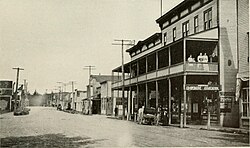
Marysville was formally platted on February 25, 1885, and officially incorporated as a fourth-class city on March 20, 1891. At the time of incorporation, the population was approximately 400, and Mark Swinnerton served as the first mayor. The arrival of the Great Northern Railway in 1891, which included a drawbridge over Ebey Slough, provided a critical link for the city's sawmills to transport lumber.
By the early 20th century, the city expanded its infrastructure. A city hall was opened in 1901, and by 1906, the city inaugurated its first water and electrical supply systems. The local economy remained diverse, with the timber industry peaking in 1910 when 10 sawmills operated along Ebey Slough.
The "Strawberry City" Era
As timber harvesting declined, the region's fertile soil led to a boom in agriculture, specifically strawberry farming. By 1920, Marysville boasted over 2,000 acres of strawberry fields. This agricultural success earned the city the nickname "Strawberry City" and led to the creation of the annual Strawberry Festival in 1932.
Modern Expansion and Urban Development
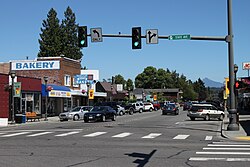
The mid-20th century brought significant infrastructure changes. The completion of the Pacific Highway (later U.S. Route 99) in 1927 and the staged completion of Interstate 5 between 1954 and 1969 transformed Marysville into a bedroom community for Seattle and Everett. While the freeway bypassed the town center, it eliminated severe traffic bottlenecks and eventually spurred suburban growth.
The late 20th century was marked by efforts to revitalize the downtown core. After a failed $30 million urban renewal plan in 1983, the city instead developed a $17 million shopping mall in 1988, which required the demolition of several historic buildings and a water tower.
Regional Ambitions and Annexations
Between 1990 and 2010, Marysville aggressively expanded its borders. A major turning point occurred in 2009 when the city annexed North Marysville, adding 20,000 residents and 2,847 acres. The city also attempted to attract large-scale projects, including a proposed NASCAR racetrack in 2004 and a University of Washington satellite campus, though both were ultimately cancelled.
Marysville in the 21st Century
By 2010, Marysville became the second-largest city in Snohomish County with a population of 60,020. In 2015, it recorded the highest growth rate of any city in Washington state at 2.5 percent. Recent urban planning has focused on a 20-year downtown master plan adopted in 2009, aiming to transition the Towne Center Mall into a mixed-use, pedestrian-oriented district.
The community also faced tragedy on October 24, 2014, when a school shooting at Marysville Pilchuck High School resulted in five deaths. The school's cafeteria was subsequently replaced by a new building, funded by $8.3 million from the state legislature and the school district, which opened in 2017.
Key Facts
- Founded: 1872 by James P. and Maria Comeford.
- Indigenous Name: sɬəp̓qs (Lushootseed language).
- Nickname: "Strawberry City" due to extensive strawberry farming by 1920.
- Incorporation: March 20, 1891.
- Major Industry: Transitioned from timber (peaking in 1910) to agriculture and then to a residential hub.
- Population Milestone: Became the second-largest city in Snohomish County by 2010.
| Year | Event | Significance |
|---|---|---|
| 1872 | Trading Post Established | Foundation of the settlement by the Comefords. |
| 1891 | City Incorporation | Official status as a fourth-class city. |
| 1910 | Timber Peak | 10 sawmills operating on Ebey Slough. |
| 1932 | Strawberry Festival | Celebration of the city's agricultural identity. |
| 1954-1969 | Interstate 5 Completion | Shift toward becoming a bedroom community. |
| 2009 | North Marysville Annexation | Massive population and land area increase. |
Frequently Asked Questions
Who founded Marysville?
Marysville was founded in 1872 by James P. Comeford, an Irish immigrant and former Civil War soldier, and his wife Maria, who established a trading post on the Tulalip Indian Reservation.
Why is Marysville called "Strawberry City"?
The nickname comes from the city's fertile land, which supported over 2,000 acres of strawberry fields by 1920, leading to the establishment of the annual Strawberry Festival in 1932.
How did the Great Northern Railway affect the city?
The railway completed its tracks through Marysville in 1891, building a drawbridge over Ebey Slough. This provided essential transportation for the city's sawmills and helped fuel early economic growth.
What happened to the original Marysville depot?
The depot, which served the city since 1891, was destroyed on June 6, 1969, when a Great Northern freight train rammed into disconnected cars. It was subsequently demolished and not rebuilt.
How has the city's population changed recently?
Marysville has seen rapid growth, particularly after the 2009 annexation of North Marysville. By 2010, it became the second-largest city in Snohomish County, and in 2015, it had the highest growth rate of any city in Washington state.