Mary Datchelor School: A Legacy of Education and Teacher Training
The story of the Mary Datchelor School is a fascinating journey from a family endowment to a pioneering institution for girls' education. Founded in the late 19th century, the school became a beacon of academic excellence and a critical hub for professional teacher training in England.
The Foundations of the School
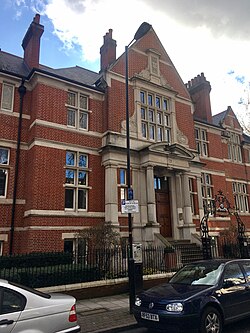
The school's origins were unconventional, stemming from an endowment originally intended for the maintenance of the 18th-century Datchelor family tomb. In 1871, a board of trustees was formed with £20,000 to establish a school specifically for girls. Designed by architect Thomas Chatfeild-Clarke, the institution officially opened its doors in 1877.
The school experienced rapid growth under its first headmistress, Caroline Rigg (1852–1929), who led the institution for forty years until 1917. Starting with just thirty girls, the student population expanded to over 400 by the turn of the century.
Pioneering Teacher Training
Caroline Rigg was a professionally trained educator who believed deeply in the importance of staff qualifications. Beginning in 1879, she began training selected pupils herself. As the demand for qualified teachers grew, senior girls were granted student-teacherships, allowing them to pursue further studies at the Maria Grey Training College.
In 1888, Rigg successfully persuaded the trustees to create the Datchelor Training College, an entity associated with the school. Rigg served as the college principal, supported by a lecturer in educational science and a mistress of method. The college achieved significant milestones in recognition:
- 1899: Granted recognition by the Cambridge training syndicate.
- 1902: Inspected and recognized by the Board of Education.
- 1905: Became part of the University of London.
The college operated two distinct departments: one focused on preparing students for the Cambridge Higher Locals (and later the London BA), and the other focused on the Cambridge or London teaching diploma.
The Era of Dorothy Brock and Musical Excellence
From 1918 to 1950, the school was led by Dorothy Brock, who elevated the institution's reputation through unconventional teaching methods and a commitment to scholarly achievement. Under Brock's leadership, the school expanded the horizons of its pupils, preparing them for diverse careers in industry, commerce, social service, and nursing.
The school became particularly renowned for its music curriculum. In the early 20th century, it served as a key center for developing secondary school music education. Starting in 1919, the school provided a funded two-year post-GCE music course, leading many graduates into professional music and teaching careers.
War, Closure, and Transformation
During World War II, Dorothy Brock managed the school's evacuation, moving the students first to Kent and subsequently to Llanelli. Following Brock's tenure, Rachel N. Pearse took over as headmistress.
The school eventually closed in 1981, as the trustees chose closure over converting the institution into a private school or a comprehensive school. The historic building later served as the headquarters for Save the Children before being converted into a residential complex known as Mary Datchelor House by Berkeley Homes in 2009.
Key Facts
- Founded: Opened in 1877 with 30 students.
- Initial Funding: £20,000 from a family tomb endowment.
- Key Leaders: Caroline Rigg (1877–1917) and Dorothy Brock (1918–1950).
- Academic Affiliation: The associated training college joined the University of London in 1905.
- Specialization: A pioneer in secondary school music curriculum and teacher training.
- Final Status: Closed in 1981; now residential apartments.
| Year/Period | Event/Milestone |
|---|---|
| 1871 | Board of trustees established with £20,000. |
| 1877 | School opens with 30 girls. |
| 1888 | Datchelor Training College established. |
| 1905 | Training college joins the University of London. |
| 1919 | Introduction of funded post-GCE music courses. |
| 1981 | School closes. |
| 2009 | Building converted to Mary Datchelor House apartments. |
Frequently Asked Questions
How was the Mary Datchelor School originally funded?
The school was funded by a £20,000 endowment that was originally intended for the upkeep of the 18th-century Datchelor family tomb.
Who was the first headmistress and what was her impact?
Caroline Rigg was the first headmistress (1877–1917). She grew the school from 30 to over 400 pupils and established the Datchelor Training College to professionalize teacher education.
What made the school famous during Dorothy Brock's leadership?
Under Dorothy Brock, the school became known for its scholarly achievements, unconventional teaching methods, a wide variety of career paths for graduates, and its influential music curriculum.
What happened to the school building after it closed in 1981?
After closing, the building served as the headquarters for Save the Children for several years. In 2009, Berkeley Homes converted the site into a complex of apartments called Mary Datchelor House.
Why did the school close in 1981?
The school closed because the decision was made not to transition the institution into either a private school or a comprehensive school.