The Evolution and Diversity of Martial Arts: From Ancient Warfare to Modern Sport
Martial arts are codified systems and traditions of combat that serve a vast array of purposes. While often associated with fighting, these practices range from self-defense, military training, and law enforcement to non-violent exercise, ceremonial traditions, and spiritual development. Today, martial arts are also practiced for competition, entertainment, and the preservation of a nation's intangible cultural heritage.
Though the term "martial arts" was originally used to describe the traditions of East Asia, it has since expanded to encompass combat systems from all over the world. The name itself is derived from the Latin term meaning "the arts of Mars," referring to the Roman god of war. This terminology was used to describe European combat systems as early as the 1550s.

Key Facts
- Global Reach: Taekwondo is practiced by an estimated 70 million people across 190 countries.
- Etymology: The term originates from "the arts of Mars," the Roman god of war.
- Cultural Impact: The 1970s "kung fu wave" in cinema, led by Bruce Lee, popularized Asian martial arts globally.
- Economic Scale: The US martial arts industry was estimated at $40 billion in 2003.
- Diverse Applications: Practices range from spiritual development to high-stakes military combatives.
Categorizing Martial Arts
Because of their immense variety, martial arts are typically categorized by the techniques taught, the tools used, or the intent of the practitioner.
By Technique and Equipment
Martial arts can be divided into armed and unarmed disciplines. Armed styles are further categorized by the weapon used, such as swordsmanship or stick fighting. Unarmed styles are often defined by their combat focus:
- Striking: Using hands, feet, elbows, or knees to deliver impact.
- Grappling: Focusing on throws, pins, and ground fighting.
- Clinch Fighting: Close-quarters trapping and control.
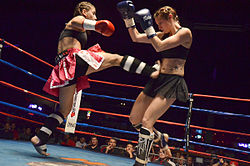
Technical Focus: Striking and Grappling
Within unarmed combat, practitioners specialize in different methods of engagement. Striking disciplines include Boxing, Karate, and Muay Thai, which utilizes punches, kicks, elbows, and knees. Other notable striking arts include Taekwondo, Capoeira, and Kung Fu.
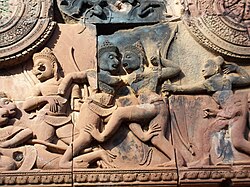
Grappling focuses on controlling an opponent through throwing, pinning, or clinching. Disciplines such as Judo, Wrestling, Aikido, and Sumo are prominent examples of arts that prioritize leverage and control over impact.
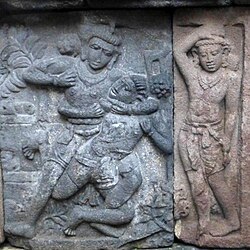
A Journey Through History
Human warfare and combat training date back to the Epipalaeolithic and early Neolithic eras. Some of the earliest evidence of organized fighting is found in Spanish cave paintings dating between 10,000 and 6,000 BCE, depicting groups using bows and arrows.
Ancient Traditions and Cultural Exchange
The development of many modern systems was fueled by early cultural exchanges. For instance, the development of Chinese and Indian martial arts was likely facilitated by contact between the two regions. In China, the Warring States period (480–221 BC) saw significant advancements in martial philosophy, famously documented by Sun Tzu in The Art of War.
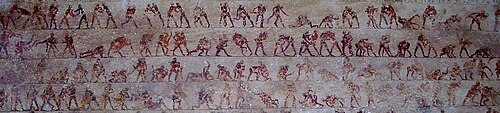
Legendary accounts suggest that Shaolinquan originated from the spread of Buddhism from India to China in the 5th century AD. Similarly, written evidence of combat in Southern India dates back to the Sangam literature (2nd century BCE – 2nd century AD), which serves as a precursor to Kalaripayattu.
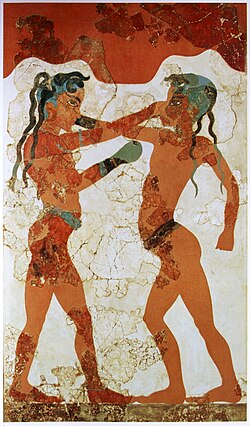
Medieval and Early Modern Developments
During the Middle Ages, European combat manuals documented various styles, including sword and shield and two-handed swordfighting. In Asia, martial arts became highly documented during the medieval period: the Japanese Samurai established traditions in the 12th century, while Chinese arts were detailed during the Ming era.
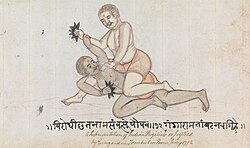
As time progressed, combat transitioned toward sport. Modern boxing evolved through the rules of Jack Broughton in the 18th century and later the Marquess of Queensberry Rules in 1867. European fencing also transitioned from a necessity of dueling to a regulated Olympic sport following the founding of the Féderation Internationale d'Escrime in 1913.
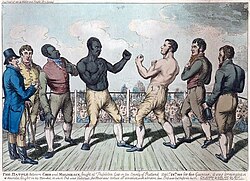
The Modern Era: Globalization and Pop Culture
The 20th century saw a massive shift in how martial arts were perceived and practiced. Following World War II and the Korean War, Western military personnel were exposed to various Asian fighting styles, leading to increased global interest.
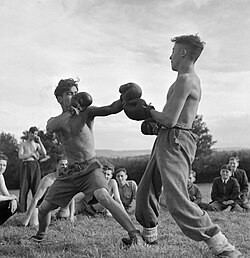
The 1960s and 1970s marked a turning point for Western interest, largely driven by the "kung fu wave" in Hong Kong cinema. Icons like Bruce Lee helped bridge the gap between Eastern traditions and Western audiences, making martial arts a mainstream cultural phenomenon.
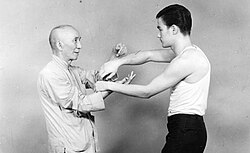
This era also saw the rise of specialized systems. Taekwondo was developed in the context of the Korean War in the 1950s, and kickboxing emerged in the 1970s as a hybrid of boxing and karate. By the 1980s, Hollywood films like The Karate Kid further cemented the martial arts image in the Western consciousness.

In the modern age, martial arts have branched into highly specialized training, including combatives for military and law enforcement (such as Krav Maga or Systema) and high-level athletic competition, such as Mixed Martial Arts (MMA) and Olympic sports like Judo.
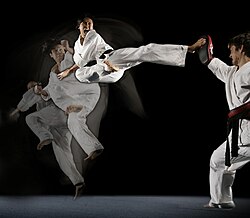
While many martial arts are now regulated sports, some maintain extreme tests of spirit. In Kyokushin Karate, for example, practitioners may attempt the 100-man kumite—a grueling challenge of 100 continuous rounds against fresh opponents with minimal protection.
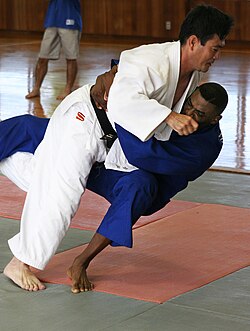
The practical application of these arts remains vital for security professionals. Modern instructors continue to teach techniques ranging from strikes to sophisticated defensive maneuvers against weapons.

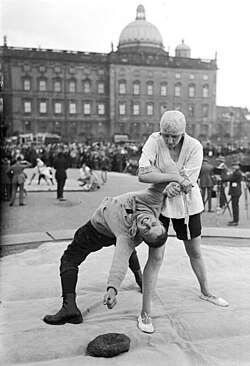
Summary of Martial Arts Overview
| Category | Primary Focus | Examples |
|---|---|---|
| Striking | Impact via limbs | Boxing, Muay Thai, Karate, Taekwondo |
| Grappling | Control and leverage | Judo, Wrestling, Aikido, Sumo |
| Armed | Weapon utilization | Swordsmanship, Stick fighting |
| Combatives | Military/Self-defense | Krav Maga, Systema, KAPAP |
Frequently Asked Questions
What is the difference between "internal" and "external" martial arts?
In Chinese tradition, martial arts are often categorized into "external" styles and "internal" styles, though they represent different approaches to movement and energy.
How did martial arts become popular in the West?
Western interest grew through increased trade with Asia in the late 19th century and exploded in the 1960s and 70s due to the influence of Hong Kong action cinema and martial artists like Bruce Lee.
Are martial arts only for fighting?
No. While some use them for self-defense or combat, many people practice martial arts for non-violent exercise, spiritual development, mental discipline, or as a competitive sport.
What is the "100-man kumite"?
It is an ultimate test of endurance, strength, and technique within Kyokushin Karate, where a challenger fights 100 continuous rounds against fresh opponents.
What should I watch out for when choosing a school?
The surge in popularity during the 1970s led to some fraudulent or low-quality schools. It is important to research the legitimacy of a program to avoid "martial arts fraud."