Kuk Sool Won: The Comprehensive History and Techniques of Korean Martial Arts
Kuk Sool Won is a sophisticated, hybrid martial art that serves as a systematic study of traditional Korean fighting methods. Founded in 1958 by Grandmaster Suh In-hyuk, the system integrates a vast spectrum of Asian combat disciplines, ranging from hand-to-hand combat and joint-locking to the mastery of diverse traditional weaponry. Today, it is practiced globally, with significant presence in the United States and the United Kingdom.
The name itself carries deep linguistic meaning. In Korean, "kuk" translates to nation or country, "sool" means method or technique, and "won" refers to a courtyard or institute. Together, they represent a "national martial arts institute," a contraction of the broader term hanguk musool (Korean martial arts).
Key Facts
- Founder: Suh In-hyuk (Grandmaster)
- Founded: 1958 in South Korea
- Core Ancestry: Hapkido, Traditional Chinese martial arts, and indigenous Korean arts like Taekkyeon
- Training Focus: Hand strikes, kicks, grappling, weapons, and mental development
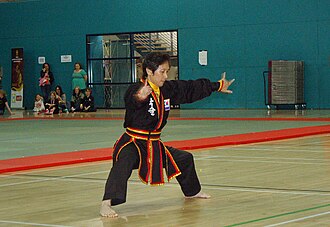
- Primary Uniform: Black dobok (representing wisdom)
The Origins and Evolution of the Art
The history of Kuk Sool Won is a complex tapestry of tradition and controversy. According to the founder, Suh In-hyuk, the art is a family legacy passed down through sixteen generations, beginning with his grandfather, Suh Myung-Deuk, a master-instructor to the Korean Royal Court. Suh claims that after the death of his grandfather during the Korean War, he traveled throughout the Far East, studying under Buddhist monks and various martial arts masters to refine his own system.
However, this narrative has faced scrutiny. Legal challenges have raised allegations regarding the authenticity of the founder's lineage and the historical role of his grandfather. Despite these disputes, the technical development of the art remains a significant achievement. In the mid-20th century, many Korean practitioners sought to distance themselves from Hapkido because its Chinese character notation was identical to the Japanese art Aikido. Kuk Sool Won emerged as a distinct style, characterized by its continuous development of unique, specialized techniques.
Technical Structure and Training
Kuk Sool Won is organized into three foundational branches that reflect different historical aspects of Korean combat:
- Tribal martial arts (Sah Doh Mu Sool)
- Buddhist Temple martial arts (Bul Kyo Mu Sool)
- Royal Court martial arts (Koong Joong Mu Sool)
By combining elements of Hapkido, Kung Fu (specifically Mantis style), and indigenous arts like Taekkyeon, the system creates a cohesive curriculum. Training is rigorous and includes hyungs (kata-like forms) and hundreds of specific techniques. The fighting style is noted for being rapid and capable of inflicting significant damage to joints, leading practitioners to emphasize that these skills should only be used in controlled settings or for true self-defense.
Combat and Weaponry Mastery
The curriculum is exceptionally broad, covering a wide array of physical and mental disciplines:
- Hand strikes, blocks, and parries
- Kicks, leg sweeps, and grappling
- Joint-locking and safe falling (break-falls)
- Animal-style movements and body conditioning
- Meditation and specialty breathing techniques
Weaponry is a cornerstone of the art. Students progress through training with various tools, including the short sword, knife, cane, fan, bow and arrow, jointed staff, rope, and spear. The sword training specifically includes four fundamental forms (gum bup):
- Jung gum hyung: Straight grip sword form
- Yuk gum hyung: Inverted grip sword form
- Ssang jang gum hyung: Twin long sword form
- Ssang dan gum hyung: Twin short sword form
Ranking and Attire
Practitioners wear a black dobok, a color chosen to symbolize wisdom in Korean culture. For high-ranking masters, special dress uniforms exist, patterned after ancient Korean generals. The Grandmaster wears a unique Wang Sa dobok, utilizing royal colors of gold and purple.
The ranking system is highly structured. Below the Black Belt (DAN) rank, there are 12 distinct grades. Colored belts are awarded to students as they progress, with some ranks featuring stripes or transverse tape to denote incremental accomplishments.
| Title | Meaning / Rank | Color Scheme / Details |
|---|---|---|
| Kuk Sa Nym | Grandmaster | Wangsa dobok |
| Su Suhk Kwang Jang Nim | Senior Executive Master (9th Dan) | Gold / Gold |
| Suhn Im Kwang Jahng Nim | Executive Master (8th Dan) | Red & Gold / Gold |
| Ji Do Kwang Jahng Nim | Senior Master (7th Dan) | Red & Gold / Red |
| Joo Im Kwang Jahng Nim | Head Master (6th Dan) | Red / Red |
| Pyung Kwan Jahng Nim | Master (5th Dan) | Red / White |
| Sa Bum Nim | Instructor (4th Dan) | Red & Silver / White (KSW logo) |
| Pu Sa Bum Nim | Deputy Instructor (3rd Dan) | Silver / White (KSW logo) |
| Kyo Sa Nim | Assistant Instructor (2nd Dan) | Silver / White (ROK flag) |
| Jo Kyo Nim | Instructor-in-Training (1st Dan) | Silver / White (ROK flag) |
| Dahn Boh Nim | Black Belt Candidate | Black-Brown Belt |
| Ja Ddi | Brown Belt | Brown |
| Hohng Ddi | Red Belt | Red |
| Chuhng Ddi | Blue Belt | Blue |
| Noh Rahng Ddi | Yellow Belt | Yellow |
| Huin Ddi | White Belt | White |
Frequently Asked Questions
What is the primary focus of Kuk Sool Won training?
Kuk Sool Won is a holistic system that integrates hand-to-hand combat, various traditional weapons, body conditioning, mental development, and meditation.
Is Kuk Sool Won the same as Hapkido?
While Kuk Sool Won is considered a style of Hapkido by some in Korea and incorporates many Hapkido elements, it is a distinct system with its own unique curriculum and development.
What does the black uniform signify?
In Korean culture, the color black is used to represent wisdom, which is why all Kuk Sool Won training uniforms (doboks) are black.
Where is Kuk Sool Won practiced globally?
It has a significant international presence, with large bases in the United States and the United Kingdom, as well as schools in the Netherlands and Iran.
What are the three branches of Kuk Sool Won?
The curriculum is organized into Tribal martial arts, Buddhist Temple martial arts, and Royal Court martial arts.