Marist University: A History of Growth and Academic Evolution
From its humble beginnings as a training center for religious educators to its current status as a comprehensive academic institution, Marist University has undergone a remarkable transformation. Located in the Mid-Hudson Valley of New York, the university has evolved through phases of religious devotion, strategic expansion, and eventual independence, consistently adapting to meet the needs of a changing student population.
Foundation by the Marist Brothers (1905)
The roots of the institution trace back to 1905, when members of the Marist Brothers—a Catholic society founded in France in 1816 by Saint Marcellin Champagnat—arrived in the Mid-Hudson Valley. Their goal was to establish the first Marist house of studies in the United States. After purchasing property from Thomas McPherson on the east bank of the Hudson River, north of Poughkeepsie, they created "Saint Ann's Hermitage." This site served as a sanctuary for young men to pursue a life dedicated to study, work, prayer, and service.
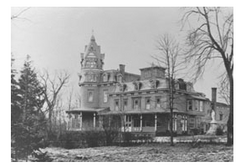
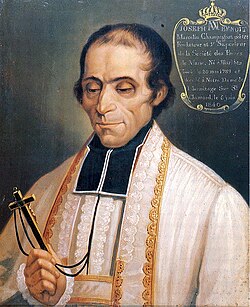
Growth followed quickly. In 1908, the Brothers acquired the Edward Bech estate, expanding their holdings to 150 acres. By 1929, the center had evolved into the Marist Normal Training School, which provided college-level courses under the guidance of Fordham University, with a charter obtained by Leo Brouilette.
Transition to a Four-Year College
A pivotal shift occurred in 1946 when the State of New York granted the institution an official four-year college charter as Marian College, under the leadership of Paul Ambrose Fontaine, FMS. While its primary mission remained the training of Marist Brothers as teachers, the campus began to grow physically. Between 1947 and 1957, the Brothers spent their summers and weekends constructing essential facilities, including the original Marian Hall gymnasium, Our Lady Seat of Wisdom Chapel, and the original Fontaine Hall.
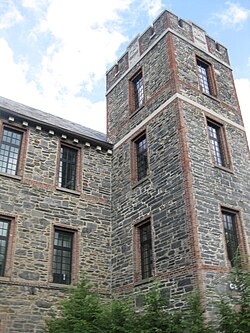
The college's library also saw early growth, residing in Greystone from 1928 until 1963, gradually expanding from the top floor to occupy the second and lowest levels.
Broadening the Mission
In 1958, Linus Richard Foy became president at age 28, making him the youngest college president in the U.S. at the time. Under his tenure, the institution was renamed Marist College in 1960, and its mission expanded to admit lay male students. This era saw a surge in residential construction, including Sheahan Hall (1962), Leo Hall (1963), and Champagnat Hall (1965). Donnelly Hall was also built in 1962 through the manual labor of the Brothers.
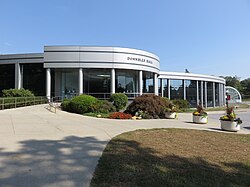
The college further diversified by admitting women to evening classes in 1966 and day classes in 1968. To accommodate growth, Benoit House and Gregory House were built in 1968 as residences for the Marist Brothers.
Institutional Independence and Modernization
In 1969, ownership of the college transferred from the Marist Brothers to the Marist College Educational Corporation. This move to an independent, predominantly lay board of trustees was driven by rapid expansion and New York State laws regarding federal aid for religious institutions.
The 1970s and 80s were marked by academic diversification. The college introduced graduate programs in community psychology and business administration, established a computer center, and launched cooperative "bridge" programs with local high schools in 1973. Extension centers were later opened in Fishkill (1984) and Goshen (1993).
Despite this progress, the era was not without tragedy; on February 18, 1975, freshman Shelley Sperling was killed in the dining hall by an ex-boyfriend.
The Era of Rapid Expansion (1979–2000s)
Under the presidency of Dennis J. Murray, who took office in 1979, enrollment more than doubled and the campus grew to 180 acres. A landmark partnership with IBM in 1984 provided $2.5 million in equipment and nearly $2 million in software, cementing the college's commitment to technology.
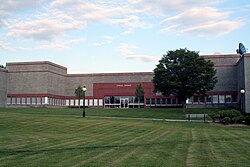
Significant infrastructure projects defined this period:
- Foy Townhouses (1982): Named after Linus Richard Foy.
- Marian Hall (1983): Built around the original gymnasium.
- Lowell Thomas Communications Center (1987): Housing communications, math, and computer science.
- Dyson Center (1990): Home to the School of Management and Social and Behavioral Sciences.
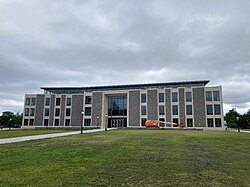
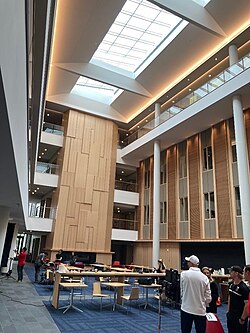
In 1998, the college purchased the Poughkeepsie Steel Plant to temporarily house the library while a new facility was built. The Steel Plant eventually became the permanent home for the fine arts program.
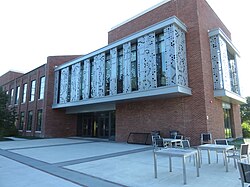
The James A. Cannavino Library, completed in 1999, stands as the architectural heart of the campus. Its fieldstone construction unifies the campus's historic district, including Greystone and the Kieran Gatehouse.
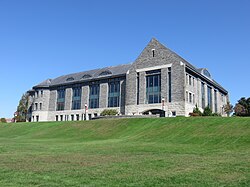
Further expansions included a new Fontaine Hall in 2000 and several townhouse complexes across Route 9 (Lower West Cedar, Upper West Cedar, Upper Fulton, and Lower Fulton) to address the housing needs of upperclassmen.
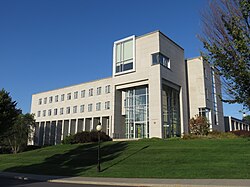
Full Independence and 21st Century Growth
The college's independence from the Catholic Church was formally clarified in 2003 following protests over a commencement speaker. Cardinal Edward Egan stated that Marist was no longer a Catholic institution and thus outside the Church's jurisdiction.
Recent decades have seen continued investment in facilities and leadership:
- Longview Park (2007): Added a bike/walk path and the renovated Cornell boathouse.
- Raymond A. Rich Leadership Institute (2009): Established via a $75 million bequest, including the 60-acre Col. Oliver Hazard Payne Estate.
- Hancock Center (2011): A Gothic-style building housing the Marist Institute for Public Opinion and a business trading room.
- Steel Plant Renovation (2019): Expanded to house Digital Media and Fashion programs.
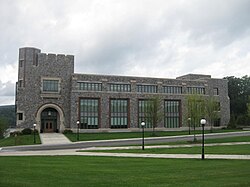
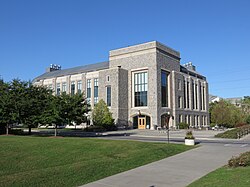
In October 2021, Kevin Weinman became the fifth president of the institution. Most recently, in August 2024, a major renovation of the Dyson Center was completed, resulting in a 107,000-square-foot facility.
University Status (2025)
Marking the culmination of over a century of growth, Marist College was officially renamed Marist University on January 29, 2025.
Key Facts
- Founded: 1905 as Saint Ann's Hermitage by the Marist Brothers.
- Campus Size: Expanded to 180 acres under President Dennis J. Murray.
- Key Partnerships: Major technological boost from IBM in 1984.
- Major Donation: $75 million bequest from Raymond A. Rich in 2009.
- Status Change: Transitioned from a religious training school to an independent college (1969) and finally to a university (2025).
| Year | Institutional Name/Status | Key Milestone |
|---|---|---|
| 1905 | Saint Ann's Hermitage | Foundation by Marist Brothers |
| 1929 | Marist Normal Training School | College-level courses via Fordham University |
| 1946 | Marian College | Granted official four-year college charter |
| 1960 | Marist College | Admitted lay male students |
| 1969 | Independent College | Ownership transferred to lay board of trustees |
| 2025 | Marist University | Official renaming to University status |
Frequently Asked Questions
Who founded the institution that became Marist University?
The institution was founded in 1905 by the Marist Brothers, a Catholic society established in France by Saint Marcellin Champagnat.
When did the college become independent from the Catholic Church?
Ownership was transferred to an independent, predominantly lay board of trustees in 1969, and the Archdiocese of New York formally stated it was no longer a Catholic institution in 2003.
What is the significance of the James A. Cannavino Library?
Completed in 1999, the 83,000-square-foot library is considered the heart of the campus and architecturally unifies the college's historic fieldstone buildings.
How did IBM contribute to the university's development?
In 1984, IBM provided $2.5 million in equipment and nearly $2 million in software to expand the use of computers for academic and administrative purposes.
What is the Raymond A. Rich Leadership Institute?
Established through a 2009 bequest of $75 million (including the Col. Oliver Hazard Payne Estate), the institute focuses on teaching communication and interpersonal skills for global leadership.