Mario Livio: Bridging the Gap Between Astrophysics and Public Curiosity
Mario Livio is a distinguished Israeli-American astrophysicist and author who has dedicated his career to both the rigorous study of the cosmos and the art of making complex science accessible to the general public. Born on June 19, 1945, in Bucharest, Romania, Livio's journey has taken him from a childhood marked by political upheaval to the forefront of modern astronomical research.
For over two decades, from 1991 to 2015, Livio served as an astrophysicist at the Space Telescope Science Institute, the organization responsible for operating the Hubble Space Telescope. His dual legacy as a researcher and a communicator is reflected in his publication of more than 400 scientific articles and a series of acclaimed books that explore the intersection of mathematics, nature, and the universe.
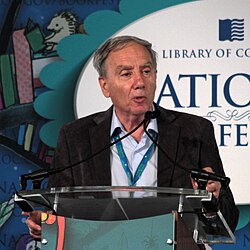
Key Facts
- Professional Role: Former astrophysicist at the Space Telescope Science Institute (1991–2015).
- Research Focus: Supernova explosions, black holes, dark energy, and the emergence of life in the universe.
- Major Contribution: Co-predicted that merging neutron stars produce gravitational waves, gamma-ray bursts, and heavy elements.
- Literary Success: Author of several bestsellers, including The Golden Ratio and Is God a Mathematician?
- Honors: Fellow of the American Association for the Advancement of Science (AAAS) and recipient of the Peano Prize.
Scientific Contributions and Research
Livio's scientific career is characterized by a deep dive into the most violent and mysterious phenomena in the universe. Much of his early research focused on supernova explosions—the powerful deaths of stars—and how they can be used to determine the rate at which the universe is expanding.
Astrophysics and Cosmology
Livio has made significant strides in understanding accretion onto compact objects, which refers to the process of gas and matter falling onto white dwarfs, neutron stars, and black holes. In 1980, he achieved a milestone by publishing one of the first multi-dimensional numerical simulations of a massive star's collapse and subsequent supernova explosion.
He was also a pioneer in studying the common envelope evolution of binary stars (systems where two stars orbit each other), applying these findings to the formation of planetary nebulae and the progenitors of Type Ia supernovae.
Predicting Cosmic Events
In a seminal collaboration with D. Eichler, T. Piran, and D. Schramm, Livio co-authored a paper predicting that the merger of neutron stars would result in three distinct phenomena: gravitational waves, gamma-ray bursts, and the creation of specific heavy elements. These theoretical predictions were later confirmed by observational evidence, cementing his place in the history of astrophysics.
The Search for Life
Since 2010, Livio has shifted a significant portion of his focus toward the emergence of life. Working primarily with Rebecca G. Martin, he has explored the conditions necessary for life to arise on Earth and the potential for life to emerge on extrasolar planets (planets orbiting stars other than our Sun).
Popularizing Science and Mathematics
Beyond the laboratory and the observatory, Mario Livio is a prolific author who translates high-level scientific concepts into engaging narratives. His work often explores the "beauty" of scientific laws and the philosophical questions underlying mathematics.
Notable Literary Works
- The Golden Ratio (2002): An exploration of the irrational number phi and its appearance in art, architecture, and nature. This work earned him the Peano Prize and the International Pythagoras Prize.
- Is God a Mathematician? (2009): A philosophical inquiry into whether mathematics is a human invention or a discovery of a pre-existing universal language.
- Brilliant Blunders (2013): An analysis of the mistakes made by scientific giants such as Albert Einstein and Charles Darwin, highlighting how errors can be part of the scientific process.
- Galileo and the Science Deniers (2020): A look at the life of Galileo Galilei and the parallels between historical heresy charges and modern science denialism.
- Is Earth Exceptional? (2024): Co-authored with Nobel laureate Jack Szostak, this book examines the origin of life on Earth and the search for extraterrestrial life.
Livio's ability to communicate complex ideas has led to frequent appearances on PBS, NPR, and CBS, as well as multiple nominations as a "Nifty Fifty Speaker" for youth outreach.
Summary of Career and Achievements
| Category | Details |
|---|---|
| Primary Fields | Astrophysics, Cosmology, Mathematics |
| Key Institutions | Space Telescope Science Institute, Technion – Israel Institute of Technology |
| Major Awards | AAAS Fellow, Peano Prize, International Pythagoras Prize, Carnegie Centenary Professorship |
| Core Research | Type Ia Supernovae, Black Holes, Exoplanets, Origin of Life |
| Public Outreach | Author of 8+ popular science books, TV/Radio commentator |
Frequently Asked Questions
What is Mario Livio's primary contribution to astrophysics?
Livio is well-known for his research on supernova explosions and his role in predicting that merging neutron stars produce gravitational waves, gamma-ray bursts, and heavy elements.
What is the "Golden Ratio" mentioned in his work?
The Golden Ratio, represented by the Greek letter phi, is an irrational number that appears frequently in nature, art, and architecture, creating patterns that are often perceived as aesthetically pleasing.
How has Livio contributed to the study of the Hubble Space Telescope?
He worked as an astrophysicist at the Space Telescope Science Institute for 24 years and, in 2015, published a comprehensive review of the telescope's scientific achievements during its first 25 years of operation.
Does Mario Livio focus only on space?
No. While he is an astrophysicist, he has written extensively on the history of mathematics, the nature of human curiosity, and the biological emergence of life on Earth and other planets.
What is the main theme of "Brilliant Blunders"?
The book examines the significant scientific errors made by famous figures like Albert Einstein and Lord Kelvin to demonstrate that even the most brilliant minds make mistakes in the pursuit of truth.