Marine Aircraft Group 21: A History of Service and Evolution
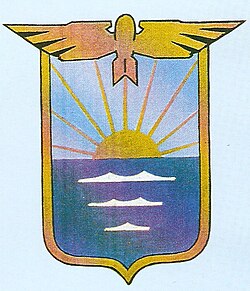
The legacy of Marine Aircraft Group 21 (MAG-21) is a testament to the adaptability and resilience of United States Marine Corps aviation. From its origins in the early 1920s to its modern role in training the next generation of aviators, the group has transitioned through numerous designations and theaters of war, playing a pivotal role in the Pacific during World War II.
Early Years and Organizational Evolution
The unit began its journey in August 1922, when it was formed as the 2nd Aviation Group at Naval Air Station San Diego. Over the next two decades, the group underwent several redesignations to align with evolving military structures. In July 1926, it became the Aircraft Squadrons, West Coast Expeditionary Force, and by January 8, 1934, it was renamed Aircraft Two, Fleet Marine Force.
On May 1, 1939, the unit was redesignated as the 2nd Marine Aircraft Group. In January 1941, the group deployed overseas to Marine Corps Air Station (MCAS) Ewa in Hawaii. Following a consolidation with the headquarters of the 2nd Marine Aircraft Wing on July 10, 1941, the unit was officially redesignated as Marine Aircraft Group 21 less than a month later.
World War II Combat and Operations
The onset of World War II brought immediate and severe challenges to MAG-21. During the attack on Pearl Harbor on December 7, 1941, the group suffered 17 casualties, and all 21 of its aircraft were destroyed.
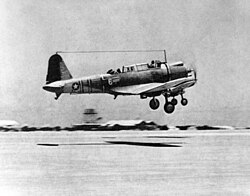
Despite these losses, squadrons from MAG-21 were instrumental in several critical Pacific campaigns. These units fought in the Battle of Wake Island, the Battle of Midway, and served as part of the Cactus Air Force—the makeshift Allied air force based on Guadalcanal—during the Battle of Guadalcanal.
While its squadrons were engaged in combat, the group headquarters remained at MCAS Ewa until February 1943, when it departed for Banika in the Russell Islands. By June 1943, MAG-21 squadrons were conducting large-scale operations against Japanese installations in the northern Solomon Islands. The group later moved to Efate in November 1943, remaining there until June 1944, before establishing its final wartime base on Guam in August 1944.
Following the conclusion of the war, the group returned to MCAS Miramar in March 1946 and subsequently moved to MCAS Cherry Point, North Carolina, before being decommissioned in June 1947.
Modern Era: MATSG-21
The lineage of the group was revived in May 2000. The Commandant of the Marine Corps directed that the Marine Aviation Training Support Group at NAS Pensacola be redesignated as Marine Aviation Training Support Group 21 (MATSG-21). This change was part of a broader effort to promote Marine Corps identity and preserve the history of its aviation units.
The unit faced a significant setback in 2004-2005 when Hurricane Ivan caused catastrophic damage to the historic NAS Pensacola. The buildings housing MATSG-21 were severely impacted, forcing the command to relocate to the Parachute Rigger Building on Farrar Road.
Current Missions and Training
Today, the command oversees training along the Gulf Coast, including Reserve and Recon activities. A key component of its current mission is the Enhanced Training Program. This program supports Marines awaiting their Military Occupational Specialty (MOS)—the specific job code for their professional role—by providing "Marine Peculiar Training." This curriculum includes:
- Leadership education and development
- Martial arts and pistol qualification
- Tactics and professional military education
- Physical fitness and community involvement
Key Facts
- Founded: August 1922 at NAS San Diego.
- WWII Losses: 17 casualties and 21 aircraft destroyed during the Pearl Harbor attack.
- Major Engagements: Wake Island, Midway, and Guadalcanal (Cactus Air Force).
- Wartime Bases: MCAS Ewa, Banika, Efate, and Guam.
- Modern Designation: Marine Aviation Training Support Group 21 (MATSG-21).
- Current Location: NAS Pensacola, Florida.
| Date/Period | Designation/Location | Key Event/Role |
|---|---|---|
| 1922 | 2nd Aviation Group | Formation at NAS San Diego |
| 1941 | MAG-21 (MCAS Ewa) | Pearl Harbor attack and Pacific combat |
| 1944 | MAG-21 (Guam) | Final wartime basing |
| 1947 | Decommissioned | End of original group active service |
| 2000 | MATSG-21 (NAS Pensacola) | Redesignation for training support |
| Present | MATSG-21 | Gulf Coast training and MOS preparation |
Frequently Asked Questions
What happened to MAG-21 during the attack on Pearl Harbor?
MAG-21 suffered significant losses on December 7, 1941, with 17 casualties and the destruction of all 21 of its aircraft.
What was the Cactus Air Force?
The Cactus Air Force was the Allied air force that operated during the Battle of Guadalcanal, which included squadrons from MAG-21.
Why was the unit redesignated as MATSG-21 in 2000?
The redesignation was ordered by the Commandant of the Marine Corps to promote Marine Corps identity and tradition by allowing the history of the original aviation groups to live on.
How did Hurricane Ivan affect the unit?
Hurricane Ivan caused catastrophic damage to the buildings at NAS Pensacola used by MATSG-21, forcing the unit to relocate to the Parachute Rigger Building on Farrar Road.
What is the purpose of the Enhanced Training Program?
The program provides Marines waiting for their Military Occupational Specialty (MOS) school with essential training in leadership, martial arts, tactics, and physical fitness.