Manners: The Life and Legacy of a Hampshire Nobleman
The life of Manners was defined by a transition from a second son to a primary heir, marked by distinguished military service and a commitment to public duty in Hampshire. Born into the British aristocracy, his trajectory was irrevocably altered by the tragedies of the First World War, leading him to inherit both a peerage and a significant estate.
Early Life and Military Service
Manners was the second son of John Manners-Sutton, the 3rd Baron Manners, and Constance Edwina Adelaide Hamlyn-Fane. While he was not originally the primary heir, the death of his older brother, John Neville Manners, in September 1914 during the First World War placed him as the successor to his father's peerage and his mother's estate at Avon Tyrrell in Hampshire.
Educated at Eton, Manners began his military journey as a cadet in the Officers' Training Corps. On July 23, 1915, he was commissioned as a Second Lieutenant in the Grenadier Guards, an elite infantry regiment of the British Army. By the end of the war, he had risen to the rank of Captain and served as aide-de-camp to Arthur Asquith, who later married Manners's sister, Betty Constance Manners, on April 30, 1918.
Inheritance and Public Office
Following the death of his mother on March 4, 1920, and his father on August 19, 1927, Manners inherited his seat in the House of Lords, the upper house of the UK Parliament. He dedicated much of his later life to the administration and welfare of Hampshire.
His contributions to local governance included appointments as a Justice of the Peace in 1933 and a Deputy Lieutenant for Hampshire in 1939. He also served on the Hampshire County Council, where he chaired the Welfare Services Sub-Committee in 1948. He remained a county councillor until 1961, after which his wife succeeded him in the role by 1968.
World War II and Philanthropy
Manners returned to active service during the Second World War. Serving with the Hampshire Regiment, he rose to the rank of Lieutenant-Colonel and was awarded the Military Cross, a decoration for gallantry during active operations against the enemy.
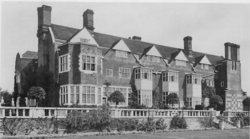
During the conflict, his residence was requisitioned for war efforts. Upon the war's conclusion, Manners chose not to return to the property. In a significant act of philanthropy in 1949, he donated the house to the National Association of Girls' Clubs and Mixed Clubs, a charitable trust.
Final Years and Succession
By 1968, Manners resided at Tyrrell's Ford in Christchurch, an expansive 18th-century house situated within ten acres of grounds. Upon his death in 1972, he was succeeded by his eldest son, John.
Key Facts
- Military Ranks: Captain (WWI, Grenadier Guards) and Lieutenant-Colonel (WWII, Hampshire Regiment).
- Honors: Recipient of the Military Cross.
- Public Roles: Justice of the Peace, Deputy Lieutenant for Hampshire, and Hampshire County Councillor.
- Philanthropy: Donated Avon Tyrrell house to the National Association of Girls' Clubs and Mixed Clubs in 1949.
- Family: Son of the 3rd Baron Manners; succeeded by his son John in 1972.
| Category | Details |
|---|---|
| Education | Eton |
| Military Service | Grenadier Guards (WWI); Hampshire Regiment (WWII) |
| Political Roles | House of Lords, Hampshire County Council |
| Key Estate | Avon Tyrrell and Tyrrell's Ford |
| Death Year | 1972 |
Frequently Asked Questions
How did Manners become the heir to the peerage?
Manners was the second son, but he became the heir after his older brother, John Neville Manners, was killed in action during the First World War in September 1914.
What military honors did Manners receive?
During the Second World War, while serving as a Lieutenant-Colonel in the Hampshire Regiment, Manners was awarded the Military Cross.
What happened to the Avon Tyrrell estate?
After the house was requisitioned during World War II, Manners decided not to return to it and instead gave the property to the National Association of Girls' Clubs and Mixed Clubs in 1949.
What roles did Manners hold in Hampshire's local government?
He served as a Justice of the Peace (appointed 1933), a Deputy Lieutenant (appointed 1939), and a member of the Hampshire County Council, where he chaired the Welfare Services Sub-Committee in 1948.
Where did Manners live in his final years?
In 1968, he was living at Tyrrell's Ford in Christchurch, which featured a large 18th-century house and ten acres of grounds.