Alexander Mountbatten, 1st Marquess of Carisbrooke
Alexander Albert Mountbatten, known to his family as "Drino," occupied a unique position in British history as the last surviving grandson of Queen Victoria. Born into the princely House of Battenberg, his life spanned a period of immense geopolitical shift, reflecting the transition of the British monarchy from the House of Saxe-Coburg-Gotha to the House of Windsor.
His journey took him from the halls of Windsor Castle to the front lines of three major conflicts, and eventually into the pioneering role of the first member of the British royal family to pursue a career in the commercial sector.
Key Facts
- Full Name: Alexander Albert Mountbatten (born Prince Alexander Albert of Battenberg).
- Royal Lineage: Grandson of Queen Victoria and Prince Albert.
- Military Service: Served in the Royal Navy, British Army (Grenadier Guards), and Royal Air Force.
- Historical Milestone: First British royal to work in the commercial sector.
- Titles: 1st Marquess of Carisbrooke, Earl of Berkhamsted, and Viscount Launceston.
- Lifespan: 23 November 1886 – 23 February 1960.
Early Life and Royal Lineage
Alexander was born on 23 November 1886 at Windsor Castle. He was the son of Prince Henry of Battenberg and Princess Beatrice, the youngest child of Queen Victoria. His paternal lineage was characterized by a morganatic marriage—a legal union between people of unequal social rank where the spouse and children do not inherit the higher-ranking partner's titles or privileges.
Because of this, Alexander was initially styled as His Serene Highness Prince Alexander of Battenberg. However, his grandmother, Queen Victoria, issued a Royal Warrant on 13 December 1886, elevating his style to His Highness. He was educated at Wellington College and the Britannia Royal Naval College.
A Distinguished Military Career
The Marquess of Carisbrooke dedicated significant portions of his life to military service, spanning three different branches of the armed forces across three major wars.
Naval and Army Service
Alexander began his service in the Royal Navy in 1902, training aboard the HMS Britannia. After leaving the Navy in 1908, he joined the British Army in 1909 as a Second Lieutenant in the Grenadier Guards. He rose to the rank of Captain and served during the First World War, receiving the Russian Order of St Vladimir for distinguished service to the Allied cause.
World War II and the RAF
Despite being in his mid-fifties, Alexander returned to active duty during the Second World War. He joined the Royal Air Force (RAF) in 1941, eventually reaching the rank of Flight Lieutenant. During this period, he served as a staff officer attached to Air Chief Marshal Sir Trafford Leigh-Mallory.
The Transition to Mountbatten
During the First World War, anti-German sentiment in the United Kingdom prompted King George V to rename the royal house from Saxe-Coburg-Gotha to the House of Windsor in July 1917. As part of this shift, British subjects within the royal family were required to relinquish German titles.
The Battenberg family Anglicized their name to Mountbatten. On 7 November 1917, Alexander was created the Marquess of Carisbrooke, Earl of Berkhamsted, and Viscount Launceston.
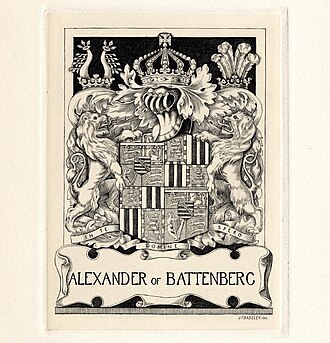
![Coat of arms of Alexander Mountbatten. He used a coronet of a child of a daughter of a Sovereign above the shield rather than a marquess's coronet.[1]](/images/ed/b1/edb16c5ea018491fc159ef7a8610478cfbb16aee8771c6ce18dbbf26017a5cd4.webp)
Personal Life and Residences
On 19 July 1917, Alexander married Lady Irene Denison at the Chapel Royal of St James's Palace. The couple had one daughter, Lady Iris Mountbatten, born in 1920. While the marriage was public, later diaries from figures such as Cecil Beaton suggested that Lord Carisbrooke may have been homosexual or bisexual, citing a long-term relationship with Simon Fleet.
The couple resided in various prestigious locations, including Belgrave Place and Kensington Palace. In their later years, they lived in King's Cottage in Kew Gardens, a grace-and-favour residence (a house provided by the monarch for members of the royal family or distinguished servants without rent).
Commercial Career and Later Years
Unlike many of his royal relatives, Lord Carisbrooke received no state allowance. This necessity led him to become the first member of the British royal family to enter the commercial workforce. He started as an entry-level clerk at Lazard Brothers bankers and eventually ascended to become a director of Lever Brothers and other major corporations.
Lord Carisbrooke passed away on 23 February 1960, at Kensington Palace. Because he had no male heirs, the title of Marquess of Carisbrooke became extinct upon his death.
Summary of Life and Service
| Category | Details |
|---|---|
| Born | 23 November 1886, Windsor Castle |
| Died | 23 February 1960, Kensington Palace |
| Military Ranks | Lieutenant (RN), Captain (Army), Flight Lieutenant (RAF) |
| Key Titles | 1st Marquess of Carisbrooke |
| Spouse | Lady Irene Denison |
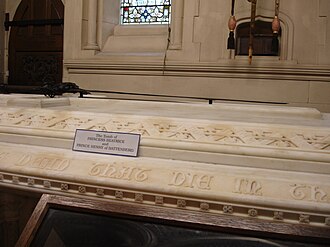
| Burial Site | Whippingham Church, Isle of Wight |
Frequently Asked Questions
Why did Prince Alexander change his name to Mountbatten?
During World War I, King George V changed the name of the Royal House to Windsor and requested that relatives relinquish German titles and styles due to anti-German sentiment. The Battenbergs Anglicized their name to Mountbatten.
What was unique about Lord Carisbrooke's professional life?
He was the first member of the British royal family to work in the commercial sector, starting as a clerk at Lazard Brothers and eventually becoming a corporate director.
What is a morganatic marriage in the context of his birth?
A morganatic marriage is one where the spouse of lower social rank and any children from the union do not inherit the titles or privileges of the higher-ranking partner. This is why Alexander was not initially granted the status of "Grand-Ducal Highness."
Which military conflicts did he participate in?
The Marquess of Carisbrooke served during the Second Boer War, the First World War, and the Second World War.
What happened to the title of Marquess of Carisbrooke after his death?
Because Lord Carisbrooke had no sons to inherit the title, the Marquessate of Carisbrooke became extinct upon his death in 1960.