Mammals: Evolution, Anatomy, and Diversity of the Class Mammalia
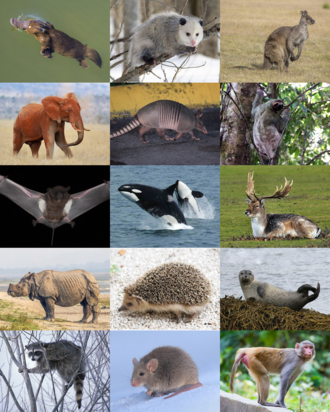
Mammals are a diverse class of amniotes—vertebrates that lay eggs or give birth to young protected by an amnion—characterized by the presence of mammary glands and hair. From the tiny bumblebee bat to the massive blue whale, mammals have adapted to nearly every environment on Earth, evolving complex biological systems that allow them to maintain internal body temperatures and care for their offspring with high levels of investment.
The history of mammals is a journey of resilience and adaptation, spanning from the Late Triassic or Early Jurassic periods (approximately 225 to 179 million years ago) to the present day.
Key Facts
- Defining Traits: All mammals possess mammary glands (which produce milk) and hair or fur.
- Thermoregulation: Most mammals are endothermic, meaning they generate internal heat to maintain a constant body temperature.
- Classification: Divided into three main groups: Monotremes (egg-laying), Marsupials (pouched), and Placentals.
- Biomass Distribution: Livestock account for 62% of the world's mammal biomass, humans 34%, and wild mammals only 4%.
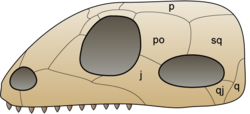
- Evolutionary Root: Mammals evolved from synapsids, a group of animals with a single temporal opening behind the eye socket.
Evolutionary Origins
Mammals did not appear suddenly but evolved from older amniotes known as synapsids. The original synapsid skull structure featured one temporal opening behind the orbitals, which likely provided more space for jaw muscles, thereby increasing biting strength.
Over millions of years, these creatures transitioned into mammal-like reptiles and eventually into the first true mammals. One of the earliest known eutherians (placental mammals) is Juramaia sinensis, dating back roughly 160 million years.
![Restoration of Juramaia sinensis, the oldest-known eutherian (160 mya)[39]](/images/0a/d0/0ad0df16d74b4cd45634ac8a6ce30f1d24bc2c1bdb800cbba0462f3ce853e9a8.jpg)
Early ancestors like Thrinaxodon represent the transition toward mammalian traits, while later prehistoric mammals, such as Hyaenodon horridus, became dominant predators during the Eocene and Miocene epochs.
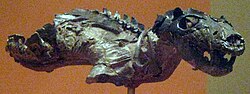
![Hyaenodon horridus at the Royal Ontario Museum. The genus Hyaenodon was among the most successful mammals of the late Eocene-early Miocene epochs spanning for most of the Paleogene and some of the Neogene periods, undergoing many endemic radiations in North America, Europe, and Asia.[61]](/images/81/a8/81a87999b50105a995d73bf3b50174aadd73af7a1ea78adb385e0630010c57e0.jpg)
Mammalian Anatomy and Biological Systems
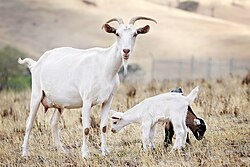
The success of mammals is attributed to several highly specialized biological systems that support a high metabolic rate and complex behaviors.
The Integumentary System
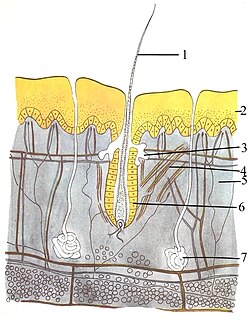
The skin of a mammal is a complex organ consisting of the epidermis, dermis, and hypodermis. The most distinguishing feature is the hair, which serves various functions:
- Vibrissae: Sensory hairs, such as whiskers, used for navigation.
- Pelage: A combination of guard hairs and under-fur.
- Spines: Stiff guard hairs used for defense, as seen in porcupines.
- Wool: Long, soft, curly hair used for insulation.

Internal Systems and Physiology
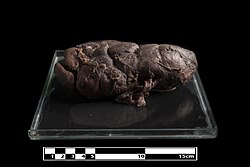
Mammals possess advanced circulatory and respiratory systems to support endothermy. Their respiratory systems are designed for efficient oxygen exchange, while their excretory systems, including specialized kidneys, manage waste and osmoregulation (the maintenance of constant osmotic pressure in the fluids of an organism).
Reproduction and Development
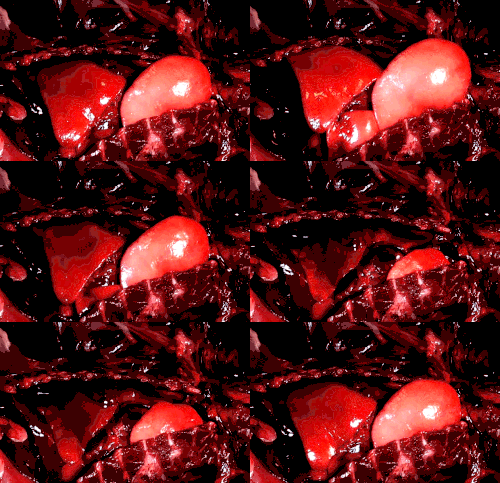
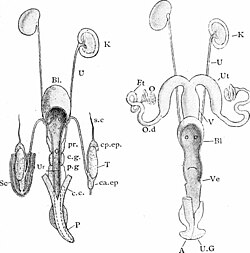
Mammals are categorized by how they reproduce. Monotremes lay eggs, while Theria (marsupials and placentals) give birth to live young. Placentals are characterized by a complex placenta that nourishes the fetus in the uterus for a longer period.
Diversity and Classification
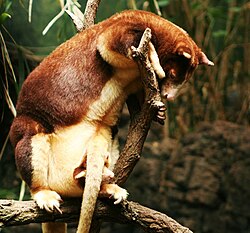
Modern mammals are classified into various orders based on molecular phylogeny and physical characteristics. Rodents (Rodentia) and bats (Chiroptera) make up the largest percentages of mammalian species.
| Order | Approximate Percentage of Species |
|---|---|
| Rodentia (Rodents) | 40.5% |
| Chiroptera (Bats) | 22.2% |
| Eulipotyphla (Hedgehogs, Shrews) | 8.8% |
| Primates | 7.8% |
| Artiodactyla (Even-toed ungulates) | 5.4% |
| Carnivora | 4.7% |
![Genus-level molecular phylogeny of 116 extant mammals inferred from the gene tree information of 14,509 coding DNA sequences.[16] The major clades are colored: marsupials (magenta), xenarthrans (orange), afrotherians (red), laurasiatherians (green), and euarchontoglirans (blue).](/images/f7/0f/f70f279abc52748524997d8a6f1c4e3a8805a6e7f4a7fe1d07a7e0c1152933b6.webp)
Behavior and Adaptation

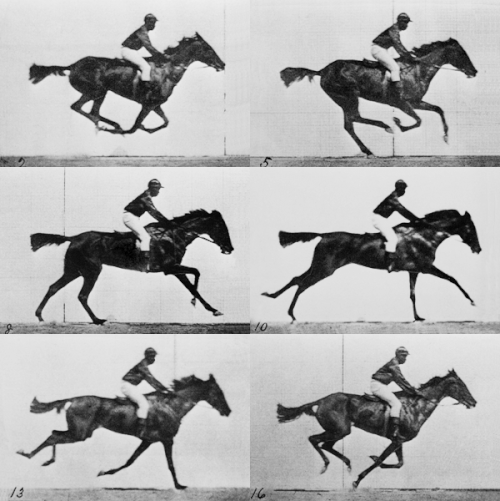
Mammals have evolved diverse modes of locomotion to survive in different niches:
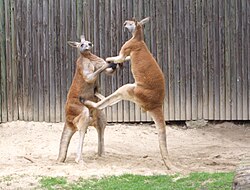
- Terrestrial: Walking, running, or hopping (e.g., kangaroos).
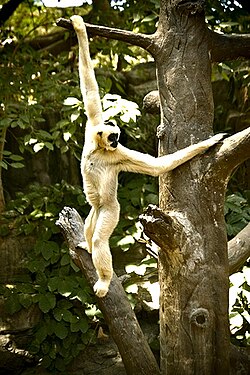
- Arboreal: Climbing and brachiating (swinging by arms), a skill perfected by gibbons.
- Aerial: Powered flight, unique to bats.
- Aquatic: Swimming adaptations found in whales and dolphins.
- Fossorial: Digging and living underground.
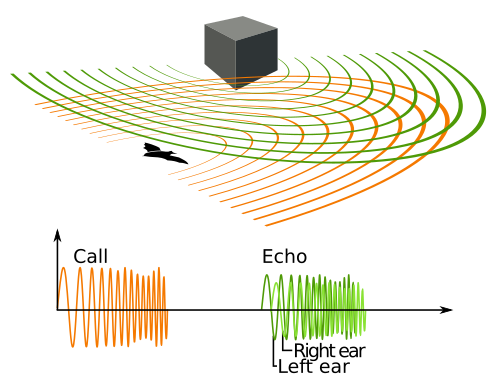
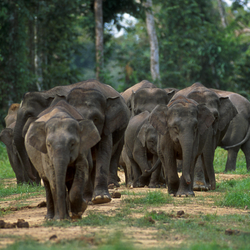
Communication is equally diverse, ranging from the ultrasonic signals used by bats for echolocation to the complex alarm calls of vervet monkeys and the social structures of female elephants.
![Vervet monkeys use at least four distinct alarm calls for different predators.[178]](/images/d2/b1/d2b18585647afdfb633b420b752ba03e0af73b74b1cc2b6d17b07c49c36a2c07.jpg)
Mammals and Humans
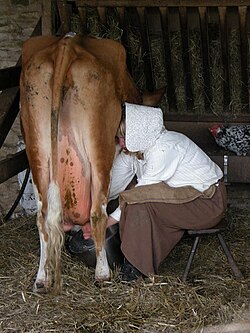
Humans have a profound impact on mammalian biodiversity. While we have domesticated many species for milk, meat, and companionship, this has led to a massive shift in biomass. Today, livestock and humans dominate the mammalian landscape, while wild mammal populations have dwindled.
![Livestock make up 62% of the world's mammal biomass; humans account for 34%; and wild mammals are just 4%[276]](/images/55/9c/559cbd7bf0cd5ad0205d15506ae4892d98814730db68081e618c9afa092da42d.png)
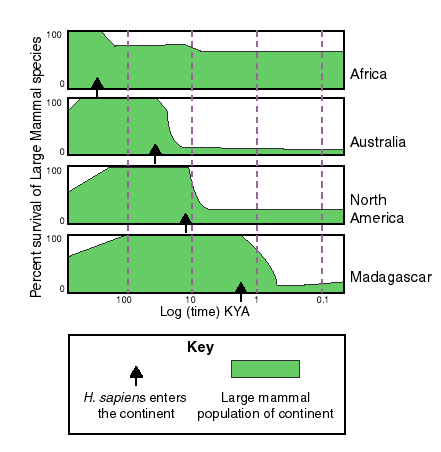
Many wild mammals now face threats of extinction due to hunting and habitat loss, highlighting the urgent need for conservation efforts to protect the remaining biodiversity across the continents.
Frequently Asked Questions
What is the main difference between monotremes, marsupials, and placentals?
Monotremes are the only mammals that lay eggs. Marsupials give birth to underdeveloped young that typically complete their growth in a pouch. Placentals develop fully inside the uterus, nourished by a placenta.
How do mammals regulate their body temperature?
Most mammals are endothermic, meaning they use metabolic energy to generate heat internally, allowing them to remain active in a wide range of environmental temperatures.
What is the purpose of the temporal opening in synapsid skulls?
The temporal opening provided space for the attachment and expansion of jaw muscles, which is believed to have increased the biting strength of these early ancestors.
Which mammalian order is the most numerous?
Rodentia (rodents) is the most numerous order, accounting for approximately 40.5% of all mammal species.
What is brachiation?
Brachiation is a form of arboreal locomotion where animals, such as gibbons, use their elongated limbs to swing from branch to branch.