Major-General Robert Kekewich: A Distinguished Career in the British Army
Major-General Robert George Kekewich, CB, was a highly decorated officer of the British Army whose career spanned four decades and multiple global conflicts. Known for his steady nerves and diplomatic capabilities, Kekewich rose through the ranks to command significant forces during some of the British Empire's most challenging military engagements at the turn of the 20th century.
Key Facts
- Full Name: Robert George Kekewich
- Rank: Major-General
- Service Years: 1874–1914
- Major Conflicts: Third Anglo-Burmese War, Second Boer War, Perak War, and Sudan campaigns.
- Key Achievement: Commanded the garrison during the successful defense of Kimberley.
- Honors: Companion of the Order of the Bath (CB).
Early Life and Education
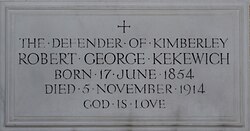
Born on 17 June 1854, Robert Kekewich was the second son of Trehawke Kekewich of Peamore House, located near Exeter, Devon. He came from a family of prominence; his father was the son of Samuel Trehawke Kekewich, and his brother was Sir Trehawke Herbert Kekewich, 1st Baronet. His uncle, Sir Arthur Kekewich, served as a judge. Robert received his formal education at King Edward's School in Birmingham and Marlborough.
Rise Through the Ranks
Kekewich began his military journey in the militia before joining the Buffs on 2 December 1874. His early career was marked by active service in several regions. He fought in the Perak War (1875–6) and served in the Sudan between 1884 and 1885, where he earned a brevet majority (a promotion in rank without an immediate increase in pay or official position).
By 1888, he served as the Deputy Assistant Adjutant-General during a Sudan campaign. His versatility was further demonstrated when he acted as the military secretary to the Commander-in-Chief in Madras and participated in the Third Anglo-Burmese War.
Leadership in the Second Boer War
Promoted into the Loyal Regiment (North Lancashire), Kekewich took command of the 1st Battalion during the Second Boer War. He is perhaps best remembered for commanding the garrison in Kimberley. During the siege of the town, Kekewich successfully managed the defense despite significant internal friction with Cecil Rhodes, who was also present. Historian Thomas Pakenham noted that Kekewich's unassuming nature and diplomatic skills were essential in countering Rhodes' emotional and sometimes irresponsible behavior, which had threatened the town's stability.
Following the relief of Kimberley on 15 February 1900, Rhodes influenced General John French to replace Kekewich as garrison commander. Despite this political maneuver, the military establishment recognized Kekewich's merit; he received a brevet promotion to colonel on 21 February 1900.
Kekewich continued to serve with distinction, surviving a wound received during an attack by General de la Rey near Moedwil in September 1901. In April 1902, he led British forces to victory at the Battle of Rooiwal, the final major engagement of the war. Lord Kitchener, the Commander in Chief in South Africa, praised Kekewich in a June 1902 despatch, describing him as a soldier of "character, loyalty and discretion" who was well qualified for high command.
Honors and Later Years
For his bravery and leadership, Kekewich was appointed a Companion of the Order of the Bath (CB) in the April 1901 honors list, receiving the decoration from King Edward VII in October 1902. He was promoted to Major-General for distinguished field service in August 1902 before being placed on half-pay in October of that year.
Although he retired from active duty in 1904, he maintained strong ties to the military and was appointed honorary Colonel of the Buffs in 1909. In his private life, he was close with Robert Baden-Powell, serving as the Best Man at Baden-Powell's 1912 wedding and later becoming the Godfather to his son, Peter.
Final Command and Death
At the onset of World War I in 1914, Kekewich returned to service to command the 13th (Western) Division. However, his health declined rapidly. Suffering from depression and poor physical health, he was invalided from his command and hospitalized. After returning to his home near Exeter, Major-General Robert Kekewich died by suicide on 5 November 1914, at the age of 60. He was buried in St Martin's Churchyard, Exminster, Devon.
Summary of Service
| Category | Details |
|---|---|
| Service Period | 1874 – 1914 |
| Highest Rank | Major-General |
| Regiments | The Buffs, Loyal Regiment (North Lancashire) |
| Key Battles | Siege of Kimberley, Battle of Rooiwal |
| Major Awards | Companion of the Order of the Bath (CB) |
Frequently Asked Questions
What was Robert Kekewich's role in the Second Boer War?
He commanded the 1st Battalion of the Loyal Regiment and led the successful defense of the Kimberley garrison during its siege. He also led the British victory at the Battle of Rooiwal in 1902.
Who was Cecil Rhodes and how did he affect Kekewich's career?
Cecil Rhodes was a prominent figure present during the siege of Kimberley. He clashed with Kekewich, undermining his leadership and eventually persuading General John French to replace Kekewich as the garrison commander.
What honors did Major-General Kekewich receive?
He was appointed a Companion of the Order of the Bath (CB) and was promoted to Major-General in 1902 for his distinguished service in the field.
When and how did Robert Kekewich die?
Major-General Kekewich died by suicide on 5 November 1914, at the age of 60, after suffering from depression and poor health while serving in World War I.
What was Kekewich's relationship with Robert Baden-Powell?
The two shared a close personal bond; Kekewich served as the Best Man at Baden-Powell's wedding in 1912 and was the Godfather to Baden-Powell's son, Peter.