Madras Army: History and Evolution of a Presidency Force
The Madras Army was a pivotal military command of the Honourable East India Company, serving as a cornerstone of British power in Southern India for over a century. Established to safeguard commercial interests, it evolved from a collection of untrained guards into a sophisticated, multi-ethnic fighting force that played a critical role in the administration and defense of the Madras Presidency.
Initially, the need for a formal military structure became urgent following the French capture of Madras in 1746. By 1757, the East India Company shifted its strategy, raising well-trained units capable of conducting offensive operations, conquering territory, and securing the allegiance of local rulers.
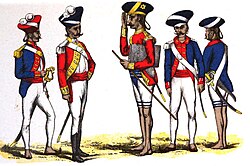
Key Facts
- Active Period: 1757–1895 as the Madras Army; 1895–1908 as the Madras Command.
- Peak Size: Approximately 47,000 personnel in 1876.
- Headquarters: Ootacamund, Nilgiris district.
- Loyalty: Remained almost entirely loyal during the Indian Rebellion of 1857.
- Legacy: The Madras Sappers and Miners and the modern Madras Regiment are its direct descendants.
Early History and Cultural Integration
In its formative years, the Madras Army was characterized by a high degree of cultural sensitivity. British officers were acutely aware of the sepoys (Indian soldiers) local customs, caste rituals, and social hierarchies. This inclusive approach attracted members of the local nobility, such as Mootoo (Muthu) Nayak of Madura, to join the ranks.
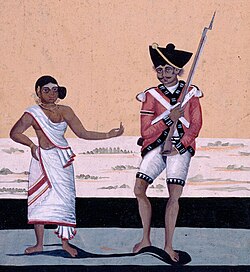
However, as the army expanded and more officers arrived from Company sources, this nuanced leadership style declined. This shift in management contributed to rising tensions, culminating in the Vellore Mutiny on July 10, 1806. Triggered by political and military grievances, sepoys at Vellore Fort killed 129 British personnel. The uprising was suppressed within hours, aided by loyal Madras cavalry units.
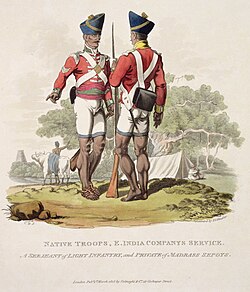
Internal Security and Professionalism
By the 1830s, the army's primary focus shifted toward internal security and supporting civil administration. It functioned as a multi-ethnic force where British officers were encouraged to learn Asian languages to better communicate with their troops. This professionalism was evident in 1832–33, when the army's superior discipline allowed it to successfully quell a rebellion in the Visakhapatnam district.
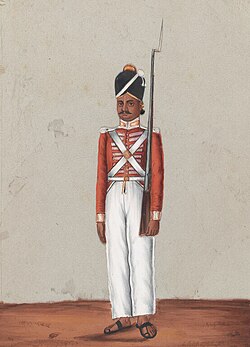
The Madras Army Under the British Raj
The mid-19th century marked a turning point for the Presidency armies. During the Indian Rebellion of 1857, the Madras Army stood in stark contrast to the Bengal Army. While the latter suffered widespread mutinies and disbandments, all 52 regiments of the Madras Native Infantry remained loyal.
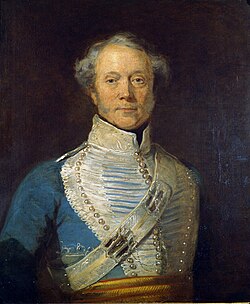
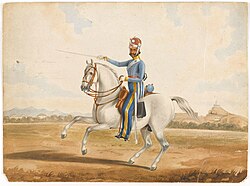
Following the transition from East India Company rule to direct British Crown rule in 1858, the Madras Native Infantry passed into the new Indian Army. However, the post-1858 reorganization saw the disappearance of the Madras Artillery batteries and four regiments of Madras Light Cavalry. The Madras Fusiliers, a European infantry unit, were transferred to the regular British Army.
Unification and Disbandment
The era of separate Presidency armies ended in 1895 when a unification process began, concluding with the Kitchener reforms in 1903. The Army of India was divided into four commands: Madras (including Burma), Punjab, Bengal, and Bombay. By 1903, separate numbering systems were abolished in favor of a single organizational sequence.
Between 1862 and 1933, the majority of the Madras Native Infantry regiments were gradually disbanded. By the early 1930s, only the Madras Sappers and Miners (combat engineers) remained as a Madrasi unit. It was not until 1942, during World War II, that a new Madras Regiment was raised. Both the Sappers and the Regiment continue to serve in the modern Indian Army.
Organizational Structure
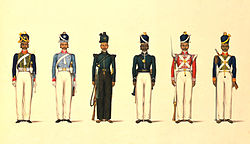
The composition of the army varied over time. In 1856, the force included eight regiments of Light Cavalry, a mix of European and Native Artillery, the Corps of Engineers, and 52 regiments of Native Infantry. By 1864, the cavalry had been reduced to four regiments, while the infantry remained a dominant force.
The following table outlines the standard personnel structure for various units during the army's operational peak.
| Unit Type | British Personnel | Indian Officers/NCOs | Other Ranks | Total Personnel |
|---|---|---|---|---|
| Native Cavalry Regiment | Commandant, 4 Squadron Commanders, 5 Officers, Adjutant, Medical Officer | Subadar-Major, 7 Subadars, 8 Jamadars, Havildar Major, 36 Havildars, 36 Naiks | 486 Sowars, 8 Trumpeters, 4 Smiths, etc. | 628 |
| Native Infantry Regiment | Commandant, 4 Double-company Commanders, 3 Officers, Adjutant, Quartermaster, Medical Officer | Subadar-Major, 7 Subadars, 8 Jamadars, Havildar Major, 40 Havildars, 40 Naiks | 720 Sepoys, 16 Drummers, etc. | 865 |
| Madras Sappers and Miners | Commandant, 2 Superintendents, Adjutant, 11 Company Commanders, 11 Officers | 9 Subadars, 18 Jamadars, 67 Havildars, 103 Naiks | 1426 Sappers, 90 Drivers, 18 Buglers | 1847 |
Frequently Asked Questions
Why was the Madras Army established?
It was created by the Honourable East India Company to protect commercial interests and secure territory, especially after the French captured Madras in 1746.
How did the Madras Army react to the 1857 Rebellion?
Unlike the Bengal Army, the Madras Army remained almost entirely loyal; all 52 regiments of the Madras Native Infantry stayed faithful to the British during the uprising.
What was the Vellore Mutiny?
Occurring on July 10, 1806, it was a violent uprising by sepoys at Vellore Fort driven by military and political grievances, resulting in the deaths of 129 British officers and soldiers.
Which units of the Madras Army still exist today?
The Madras Sappers and Miners and the Madras Regiment (re-raised in 1942) both continue to exist within the modern Indian Army.
When did the Madras Army stop being a separate entity?
The process of unification began in 1895, and by 1903, presidency affiliations disappeared as regiments were integrated into a single organizational sequence for the Army of India.