Madame Chiang Kai-shek: The Life and Legacy of a Global Icon
Madame Chiang was a figure of immense influence and complexity, serving as a bridge between China and the West during some of the most turbulent decades of the 20th century. As a fluent English speaker and a devout Christian, she became the face of a modernizing China to the American public, navigating the delicate intersection of diplomacy, power, and international perception.
Throughout her life, she was viewed through vastly different lenses. To many in the United States, she represented the educated, pro-American future of China. Conversely, some within China viewed her as a symbol of a corrupt past. This duality defined her public persona as she lobbied for her husband's government and sought international support during critical global struggles.
Key Facts
- Death: Passed away in her sleep on October 23, 2003, in Manhattan, New York City.
- Age: 105 years old at the time of her death.
- Family: The longest-lived and final surviving member of the renowned Soong sisters.
- Interment: Currently interred at Ferncliff Cemetery in Hartsdale, New York.
- Global Standing: Described by contemporary media as one of the most powerful women in the world.
International Appraisals and Public Perception
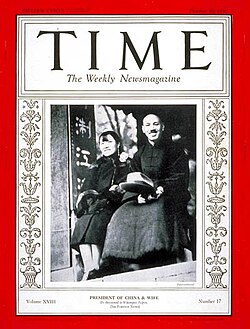
The international press often struggled to categorize Madame Chiang, reflecting the political tensions of the era. Life magazine once labeled her the "most powerful woman in the world," while Liberty magazine went further, describing her as "the real brains and boss of the Chinese government."
Her influence extended to prominent intellectuals and writers of the time. Diplomat Clare Boothe Luce compared her to historical figures such as Joan of Arc and Florence Nightingale, while the celebrated author Ernest Hemingway referred to her as the "empress" of China.
The American Perspective
The New York Times noted that Madame Chiang struck a chord with American audiences starting in the 1930s. By traveling across the United States to raise funds and lobby for her husband's government, she became a symbol of the modern, educated China that many Americans hoped to see emerge.
Final Years and Lasting Tributes
Madame Chiang's passing in 2003 prompted tributes from high-ranking officials. Then-U.S. President George W. Bush released a statement praising her intelligence, strength of character, and her lifelong friendship with the United States. Additionally, Jia Qinglin, chairman of the National Committee of the Chinese People's Political Consultative Conference (CPPCC), sent a message of mourning to her relatives.
Her final resting place remains a subject of political significance. While she is currently at Ferncliff Cemetery, the intention is for her to be buried with her late husband, who is entombed in Cihu, Taiwan. Ultimately, the stated goal is for both to be buried in mainland China once political differences are resolved.
| Category | Details |
|---|---|
| Date of Death | October 23, 2003 |
| Place of Death | Manhattan, New York City |
| Current Burial Site | Ferncliff Cemetery, Hartsdale, NY |
| Intended Final Burial | Mainland China (pending political resolution) |
| Husband's Location | Cihu, Taiwan |
Frequently Asked Questions
How old was Madame Chiang when she died?
Madame Chiang was 105 years old at the time of her death in 2003.
Who were the Soong sisters?
Madame Chiang was one of the Soong sisters; she was the last and longest-lived member of this influential group of siblings.
Where is Madame Chiang currently buried?
She is currently interred at Ferncliff Cemetery in Hartsdale, New York.
What was the ultimate plan for her burial?
The stated intention is for her to be buried with her husband in mainland China once political differences are resolved.
How did the American press view her?
She was often seen as a symbol of a modern, educated, and pro-American China, with some publications calling her the most powerful woman in the world.