Luxembourg Working Classes: From Industrial Powerhouse to Financial Hub
Following the Second World War, the social and economic landscape of Luxembourg was defined by its industrial strength. The nation's recovery from Nazi occupation relied heavily on the working classes, particularly those in the mining, construction, and industrial sectors. Under the guidance of Pierre Krier, the socialist Minister for Employment, these workers were recognized as essential to the country's infrastructural reconstruction.
Krier focused on enhancing social welfare benefits and improving working conditions to ensure social stability. This effort built upon a pre-war social welfare system that was already more robust than many of its European counterparts.
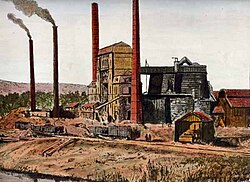
The Golden Age of Industry
Between the late 1940s and the 1970s, Luxembourg's industrial sector entered a period of relative prosperity known as its "golden age." During this era, the industrial workforce grew from 39.5% to 46% of the total working population by 1970, earning the sector the reputation of being the "true backbone" of the national economy.
The steel and mining sectors saw significant growth in personnel. In 1950, these sectors employed 20,458 people, a number that peaked ten years later at 24,120. This economic boom translated into tangible lifestyle improvements for the working class; starting in the 1960s, salaries grew by an average of 3.7% annually. This increase in purchasing power allowed workers to acquire household goods and cars, which were previously considered rare luxuries.
The Transition to a White-Collar Economy
The economic tide began to shift after 1970. The industrial sector entered a decline, and the mining sector disappeared entirely by 1990. By 2001, the number of employees in the steel industry had dropped to 3,344. This shift marked a fundamental transition in the Luxembourgish workforce from predominantly blue-collar (manual labor) to white-collar (professional, desk-based) employment.
This decline was tempered by the rapid ascent of the banking and financial services sector, which began growing in the 1960s. By the 1990s, Luxembourg had established itself as one of the top ten financial services centers globally. This move into the tertiary sector—the segment of the economy that provides services rather than producing goods—allowed the working population to transition into new occupations.

The Modern Industrial Footprint
While no longer the dominant employer, the steel industry remains a vital economic contributor. Today, it accounts for 0.77% of the total workforce but continues to be a powerhouse in trade, representing 14% of all Luxembourgish exports.
The Rise of the Frontaliers
The dominance of the service and financial industries has created a demand for labor that exceeds the local population, leading to a surge in temporary migratory work. These workers, known as frontaliers, are residents of neighboring Belgium, France, and Germany who commute into Luxembourg daily for work.
As of 2020, frontaliers make up 44.3% of the total working population. While they are spread across various industries, they are heavily represented in the financial sector, which employed 10,114 frontaliers as of 2009.
| Metric/Period | Industrial/Steel/Mining | Financial/Service Sector | Frontaliers (2020) |
|---|---|---|---|
| 1950 Employment | 20,458 workers | Growing | N/A |
| 1960 Employment | 24,120 workers (Peak) | Expanding | N/A |
| 1970 Workforce % | 46% of population | Increasing | N/A |
| Modern Status | 0.77% of workforce | Largest employer | 44.3% of workforce |
Key Facts
- Industrial Peak: Steel and mining employment peaked in 1960 with 24,120 workers.
- Economic Shift: The workforce transitioned from blue-collar industrial roles to white-collar service roles in the late 20th century.
- Export Power: Despite a smaller workforce, the steel industry still accounts for 14% of all exports.
- Cross-Border Labor: 44.3% of the 2020 workforce are frontaliers, with 50.2% coming from France, 23.9% from Germany, and 23.2% from Belgium.
- Financial Standing: By the 1990s, Luxembourg became one of the world's top ten financial services centers.
Frequently Asked Questions
Who was Pierre Krier and why was he important?
Pierre Krier was the socialist Minister for Employment after World War II. He was a strong advocate for the working classes and sought to improve social welfare and working conditions to maintain stability during the country's reconstruction.
What happened to the mining sector in Luxembourg?
The mining sector experienced a steady decline following the industrial peak of the 1960s and completely disappeared by 1990.
What are "frontaliers"?
Frontaliers are cross-border workers who live in neighboring countries—specifically France, Germany, and Belgium—and travel into Luxembourg on a daily basis for employment.
How did the working class's lifestyle change in the 1960s?
Due to an average annual salary growth of 3.7%, workers experienced increased purchasing power, allowing them to buy luxury items such as cars and household goods.
Is the steel industry still relevant to Luxembourg today?
Yes. Although it employs only 0.77% of the workforce, it remains an important economic contributor, accounting for 14% of the nation's total exports.