Grand Duchy of Luxembourg: A Comprehensive Overview of Europe's Economic Powerhouse
Nestled in the heart of Western Europe, the Grand Duchy of Luxembourg stands as a unique and prosperous sovereign state. Despite its relatively small geographic footprint, it exerts a significant influence on the global economy and serves as a vital hub for European political and financial institutions. Known for its high standard of living and multicultural society, Luxembourg offers a fascinating blend of deep-rooted history and cutting-edge modernity.
![Text page from the Codex Aureus of Echternach, an important surviving codex, was produced in the Abbey of Echternach in the 11th century.[24]](/images/c3/9e/c39ed351ccce5af170fe9fe0c388e204b7511d9f3507a55ca5702ee12aab425e.jpg)
Key Facts
- Capital: Luxembourg City
- Official Languages: Luxembourgish, German, and French
- Government Type: Unitary parliamentary constitutional monarchy
- GDP Per Capita (PPP): $154,914 (Ranked 1st in 2025 estimate)
- Currency: Euro (€)
- National Motto: "Mir wëlle bleiwe wat mir sinn" (We want to stay what we are)
Historical Evolution
The history of Luxembourg is marked by shifting allegiances and a resilient drive for independence. Its origins can be traced back long before the 10th century, with significant developments occurring during the emergence and expansion period between 963 and 1312. The nation experienced a "Golden Age" from 1312 to 1443, followed by centuries of complex rule involving the Habsburgs and various French invasions.
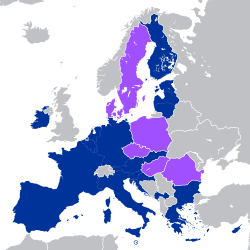
Modern Luxembourg began to take its current shape following the French Empire. Key milestones include its elevation to a Grand Duchy on June 9, 1815, and its independence through a personal union with the Netherlands via the Treaty of London in 1839. The personal union with the Netherlands ended in 1890, and the nation later endured the hardships of German occupation during the World Wars before its liberation in 1944/1945. Today, Luxembourg is a founding member of both NATO and the European Union.
![Charles IV, the 14th-century Holy Roman Emperor and King of Bohemia from the House of Luxembourg[37]](/images/2f/2b/2f2b48b21f72d25be28eda15b36620af8f17036b992879edbcdb0e390d23e45d.jpg)


Geography and Demographics
Luxembourg covers a total area of 2,586.4 km², making it the 168th largest country in the world. Its landscape is characterized by a low percentage of water (0.23%). The population is growing, with a 2026 estimate of approximately 693,916 people, resulting in a density of 264 people per km².
The nation is remarkably diverse. As of 2025, the nationality breakdown includes 53% Luxembourgers, 13.2% Portuguese, 7.2% French, and 3.7% Italians, with 23% representing other nationalities. This diversity is reflected in the linguistic landscape; while Luxembourgish is the national language, German and French are used for administrative purposes. The 2021 census showed that Portuguese and French are also widely spoken.


Major Urban Centers
The population is concentrated in several key towns and cities. Luxembourg City serves as the capital and largest urban center, followed by Esch-sur-Alzette, Differdange, and Dudelange.
| Rank | Name | Canton | Population |
|---|---|---|---|
| 1 | Luxembourg | Luxembourg Canton | 136,161 |
| 2 | Esch-sur-Alzette | Esch-sur-Alzette Canton | 37,922 |
| 3 | Differdange | Esch-sur-Alzette Canton | 30,789 |
| 4 | Dudelange | Esch-sur-Alzette Canton | 22,203 |
| 5 | Pétange | Esch-sur-Alzette Canton | 21,086 |
Government and Political Structure
Luxembourg operates as a unitary parliamentary constitutional monarchy. The head of state is the Grand Duke, currently Guillaume V. The executive branch is led by the Prime Minister, Luc Frieden, while the legislative power is vested in the Chamber of Deputies. The President of the Chamber of Deputies is Claude Wiseler.


Economy and Infrastructure
Luxembourg boasts one of the most robust economies in the world. It holds the top global ranking for both GDP per capita (PPP) and nominal GDP per capita as of 2025 estimates. The economy is highly developed, with a very high Human Development Index (HDI) of 0.922.
The nation's infrastructure supports its status as a modern European hub. This includes Luxembourg Airport, the country's only international airport, and the presence of Luxair, the national airline. The country is also a significant player in the digital economy, hosting numerous data centers and maintaining high-speed communications infrastructure.


Culture, Education, and Society
The cultural fabric of Luxembourg is enriched by its history and international character. From the architectural significance of the Notre-Dame Cathedral to the artistic contributions of figures like photographer Edward Steichen, the country maintains a rich heritage. Education is centralized through the University of Luxembourg, the nation's sole university.


The country also plays a central role in European governance, hosting the Court of Justice of the European Union in Luxembourg City.

Frequently Asked Questions
What are the official languages of Luxembourg?
Luxembourg has three official languages: Luxembourgish (the national language), German, and French. These are used for various administrative and daily purposes.
How is the economy of Luxembourg performing?
Luxembourg is a global economic leader, ranking 1st in the world for GDP per capita (both nominal and PPP) according to 2025 estimates.
What type of government does Luxembourg have?
Luxembourg is a unitary parliamentary constitutional monarchy, headed by a Grand Duke.
Is Luxembourg part of the European Union?
Yes, Luxembourg is a member of the European Union and uses the Euro (€) as its official currency.
What is the main religion in Luxembourg?
Based on 2021 data, Christianity is the most practiced religion (53%), with Catholicism being the largest denomination (46%). Approximately 38% of the population identifies as having no religion.