Loriini: The Specialized World of Lories and Lorikeets
Within the diverse world of parrots, the tribe Loriini stands out as a group of vibrant, arboreal birds specifically adapted for a life of nectar and fruit. Comprising both lories and lorikeets, these small to medium-sized parrots are found throughout the Australasian region, spanning south-eastern Asia, Polynesia, Papua New Guinea, Timor Leste, and Australia. Known for their striking plumage and unique feeding mechanisms, they represent a fascinating branch of the parrot family Psittaculidae.
Key Facts
- Specialized Diet: They possess brush-tipped tongues designed to collect nectar and pollen.
- Distribution: Primarily found in the Australasian region and surrounding islands.
- Taxonomy: Currently classified as a tribe containing 61 species across 12 genera.
- Physical Distinction: "Lorikeets" generally have longer, tapering tails, while "lories" have shorter, blunt tails.
- Conservation Status: Some species, such as the ultramarine lorikeet, are critically endangered due to invasive predators.
Morphology and Specialized Feeding
The most defining physical characteristic of the Loriini is the brush-tipped tongue. This evolutionary adaptation allows them to feed on the nectar of approximately 5,000 different plant species. The tip of the tongue is covered in papillae—extremely fine hairs—that act like a brush to efficiently collect nectar and pollen from blossoms.
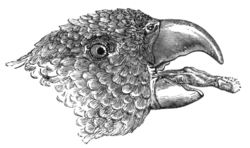
Beyond their tongues, these birds are recognized for their brilliant, multi-colored feathers. The rainbow lorikeet, for example, is one of the most iconic representatives of the group, frequently appearing in historical ornithological records and lithographs.
Diet and Behavior
In their natural habitats, lories and lorikeets primarily consume pollen and nectar, supplemented by soft fruits and berries. Because of their appetite for fresh fruit, they are sometimes viewed as pests by orchard owners when they arrive in large groups to strip trees.
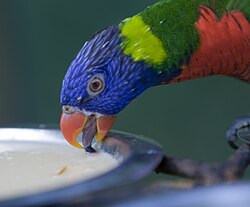
While nectar is their primary fuel, these birds are opportunistic. They are known to visit bird feeders for sunflower seeds, apples, grapes, and pears. Interestingly, there have been occasional observations of these birds feeding on meat, adding a layer of complexity to their known dietary habits.
Taxonomy and Evolution
The classification of Loriini has shifted significantly over time. Historically, they were viewed as a separate subfamily (Loriinae) or even a distinct family (Loriidae). However, modern molecular and morphological studies have repositioned them as a tribe within the family Psittaculidae. Genetic evidence suggests they are closely related to fig parrots and the budgerigar.
A major phylogenetic study in 2020 reorganized the group, resulting in the resurrection of four genera (Charminetta, Hypocharmosyna, Charmosynopsis, and Glossoptilus) and the creation of three new ones. One notable change was the movement of the collared lory from the genus Phigys into the genus Vini.
Summary of Loriini Genera
| Genus | Example Species |
|---|---|
| Trichoglossus | Rainbow lorikeet, Coconut lorikeet |
| Lorius | Black-capped lory, Purple-naped lory |
| Vini | Collared lory, Ultramarine lorikeet |
| Chalcopsitta | Dusky lory, Cardinal lory |
| Psitteuteles | Varied lorikeet, Little lorikeet |
Conservation Challenges
Many species within the Loriini tribe face severe threats. The ultramarine lorikeet is currently one of the 50 rarest birds in the world, and the blue lorikeet is classified as vulnerable. The primary driver of these declines is the introduction of European rats to small island habitats, where they prey on the birds. Conservationists are working to relocate vulnerable populations to predator-free environments to prevent extinction.
Lories in Culture and Literature
The term "lory" originates from the Malay word lūri, used to describe colorful parrots. This term was documented as early as 1682 by Dutch writer Johan Nieuhof. The birds have also made their way into classic literature; for instance, a Lory appears in Lewis Carroll's Alice's Adventures in Wonderland, where it engages in a spirited argument with Alice regarding its age.
Frequently Asked Questions
What is the difference between a lory and a lorikeet?
The distinction is largely subjective and based on tail shape. Generally, species with short, blunt tails are called lories, while those with longer, tapering tails are called lorikeets.
How do lories eat nectar?
They use a specialized tongue with a brush-like tip consisting of papillae (fine hairs) that soak up nectar and pollen from flowers.
Where are lories and lorikeets found?
They are widely distributed across the Australasian region, including Australia, Papua New Guinea, Timor Leste, Polynesia, and south-eastern Asia.
Why are some lorikeet species endangered?
The introduction of invasive species, specifically European rats, to their island habitats has led to high predation rates and habitat destruction.
Are lories related to other parrots?
Yes, they are part of the family Psittaculidae and are closely related to budgerigars and fig parrots.