Lord High Chancellor of Great Britain
The Lord High Chancellor of Great Britain is one of the most historic and complex roles within the United Kingdom's government. As a Great Officer of State, the Lord Chancellor serves as a vital link between the executive, legislative, and judicial branches of government. While the role has undergone significant modernization to ensure a clearer separation of powers, it remains a cornerstone of the British constitutional framework.
Today, the Lord Chancellor also serves as the Secretary of State for Justice, heading the Ministry of Justice. This dual role combines ancient ceremonial traditions with the modern administration of the legal system in England and Wales.
![Seal of William de Longchamp, chancellor in the late 12th century: the text includes ANGLI[A]E CANCELL[ARIUS], "Chancellor of England".](/images/e1/72/e1726c031aa9084f2089726d834614934b38b460526e80a978872091f51282da.webp)
Key Facts
- Current Incumbent: Alex Norris (since 20 July 2026).
- Primary Department: Ministry of Justice.
- Core Responsibility: Administration of courts, tribunals, and legal aid in England and Wales.
- Appointment: Appointed by the Monarch on the advice of the Prime Minister.
- Historical Shift: The Constitutional Reform Act 2005 removed the Lord Chancellor's role as head of the judiciary.
- Eligibility: Since 2007, the holder does not need to be a peer or a qualified lawyer.
The Evolution of the Office
The office dates back to 1066 in England. For centuries, the position was dominated by churchmen. This trend shifted in 1529 following the dismissal of Cardinal Thomas Wolsey, the Archbishop of York, who failed to secure an annulment for Henry VIII's marriage to Catherine of Aragon. After a brief return of ecclesiastics under Mary I, laymen became the standard choice for the role.
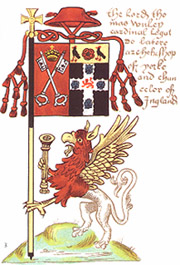
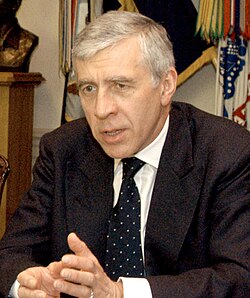
Historically, the office was tied to the peerage; commoners were typically appointed as Lord Keeper and only became Lord Chancellor after being granted a peerage. This changed in the 21st century. In 2007, Jack Straw became the first commoner to hold the office since 1587.
Formation of the Great Britain Office
Originally, separate chancellors existed for England, Scotland, and Ireland. Following the Act of Union 1707, the offices of England and Scotland merged to create the Lord High Chancellor of Great Britain. The Irish office persisted until 1922, when the Irish Free State was formed. Consequently, the title remains "Lord High Chancellor of Great Britain" rather than "of the United Kingdom."
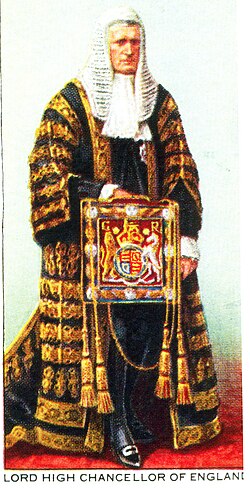
Modern Functions and Responsibilities
The Lord Chancellor operates primarily through the Ministry of Justice, overseeing the administration of the courts, tribunals, and the prison and probation services in England and Wales. Their executive duties include regulating legal services via the Legal Services Board and managing law reform through the Law Commission.
Judicial Appointments
The Lord Chancellor plays a critical role in the appointment of judges. Since 2005, senior judges—including Justices of the Supreme Court and Lords Justices of Appeal—are appointed by the sovereign on the Lord Chancellor's advice, following consultation with the independent Judicial Appointments Commission. This process is governed by the Constitutional Reform Act 2005 and the Crime and Courts Act 2013.
Ecclesiastical and Regency Duties
Despite the secular nature of the modern role, some ecclesiastical (church-related) functions remain. While Catholics were historically ineligible, the Lord Chancellor (Tenure of Office and Discharge of Ecclesiastical Functions) Act 1974 clarified that there is no impediment to a Catholic holding the office, though their church duties may be temporarily transferred to another minister.
Additionally, under the Regency Act 1937, the Lord Chancellor is one of five people empowered to determine if the sovereign is physically or mentally incapable of discharging their duties, which would trigger the appointment of a regent.
Constitutional Reform and the Separation of Powers
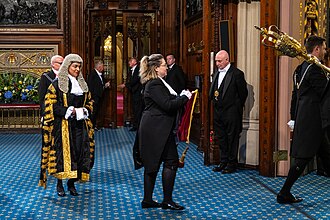
Until 2005, the Lord Chancellor was the head of the judiciary, a judge in the House of Lords, and the presiding officer of the House of Lords. This concentration of power across all three branches of government led to the Constitutional Reform Act 2005.
This landmark legislation transferred the head of the judiciary role to the Lord Chief Justice and the presiding role in the House of Lords to the Lord Speaker. These changes ensured that a Cabinet minister could no longer act as a professional judge, aligning the UK more closely with the principle of the separation of powers.
Summary of the Office
| Feature | Details |
|---|---|
| Official Style | The Right Honourable |
| Department | Ministry of Justice |
| Salary (2022) | £159,038 (including MP salary) |
| Key Legislation | Constitutional Reform Act 2005 |
| First Woman Holder | Liz Truss (2016) |
Frequently Asked Questions
Does the Lord Chancellor have to be a lawyer?
No. While historically the role was held by lawyers, several recent holders, including Chris Grayling, Michael Gove, Liz Truss, and David Lidington, did not have a legal background.
What is the difference between the Lord Chancellor and the Secretary of State for Justice?
In modern practice, they are the same person. The Lord Chancellor is the ancient title and Great Officer of State, while the Secretary of State for Justice is the ministerial role that manages the Ministry of Justice.
Can a Catholic serve as Lord Chancellor?
Yes. The Lord Chancellor (Tenure of Office and Discharge of Ecclesiastical Functions) Act 1974 explicitly removed any legal impediments for Catholics to hold the office.
Why is the title "of Great Britain" and not "of the United Kingdom"?
This is because the office was formed by the union of England and Scotland in 1707. The separate office for Ireland existed until 1922, and the title was never updated to include the entire United Kingdom.
What happened to the Lord Chancellor's judicial powers?
Most judicial functions were removed by the Constitutional Reform Act 2005 to separate the executive and judiciary. The role of head of the judiciary was transferred to the Lord Chief Justice.