Lord Dannatt: A Legacy of Leadership in the British Army
General The Right Honourable Lord Dannatt (GCB, CBE, MC, DL) is a distinguished retired senior officer of the British Army whose career spanned nearly four decades of conflict, reorganization, and high-level diplomacy. From his early days as a platoon commander in Northern Ireland to serving as the Chief of the General Staff (CGS)—the professional head of the British Army—Dannatt's trajectory is marked by both operational bravery and a willingness to challenge the political establishment.
His journey is not only one of military ascent but of personal resilience, having overcome a life-threatening health crisis early in his career to eventually lead the land forces of the United Kingdom.
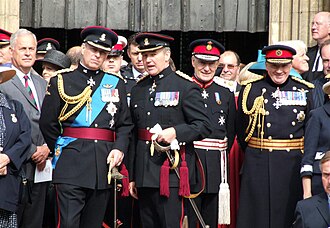
Key Facts
- Highest Rank: General
- Primary Role: Chief of the General Staff (2006–2009)
- Regiment: Green Howards
- Major Awards: Military Cross (MC), Knight Grand Cross of the Order of the Bath (GCB)
- Post-Military Roles: Constable of the Tower of London (2009–2016), Member of the House of Lords (Life Peerage 2011)
- Conflicts: The Troubles, Bosnian War, Kosovo War, Iraq, and Afghanistan
Early Career and Resilience
Francis Richard Dannatt was commissioned into the Green Howards in 1971. His early service was defined by the intensity of "The Troubles" in Northern Ireland. Serving as a platoon commander in Belfast, Dannatt demonstrated exceptional gallantry during an operation in East Belfast on February 7, 1972, for which he was awarded the Military Cross.
In 1977, at the age of 26, Dannatt suffered a major stroke. This health crisis nearly ended his military career, but with the encouragement of his commanding officer, he underwent a two-year recovery and returned to active duty in 1978.
Throughout the 1980s, Dannatt continued his ascent, attending the Command and Staff Course at Camberley and eventually taking command of the Green Howards in 1989. During this time, he oversaw the regiment's transition into an airmobile role as part of the 24th Airmobile Brigade.
Rise to High Command
By the 1990s, Dannatt had moved into strategic leadership. He commanded the 4th Armoured Brigade in 1994 and led the British component of the Implementation Force in Bosnia and Herzegovina the following year. In 1999, he took command of the 3rd Mechanised Division and simultaneously led British forces in Kosovo.
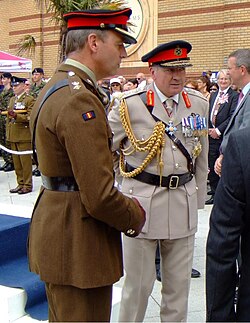
Following the events of September 11, 2001, Dannatt played a pivotal role in planning Middle Eastern operations. As Commander of the Allied Rapid Reaction Corps (ARRC) in 2003, he coordinated the planning for deployments to Iraq and Afghanistan. By 2005, he became Commander-in-Chief, Land Command, where he managed the day-to-day operations of the army and implemented a controversial reorganization of the infantry that saw the Green Howards amalgamated into the Yorkshire Regiment.
Chief of the General Staff and Public Advocacy
In August 2006, Dannatt was appointed Chief of the General Staff. His tenure was characterized by a candid and often outspoken approach to military welfare and strategy. He famously called for improved pay and conditions for soldiers and advocated for a drawdown of forces in Iraq to ensure that operations in Afghanistan were properly staffed.
Beyond strategy, Dannatt focused on the human cost of war. He assisted in the formation of Help for Heroes to fund facilities at Headley Court and brokered a press agreement that allowed Prince Harry to serve in Afghanistan.
Post-Military Life and Public Service
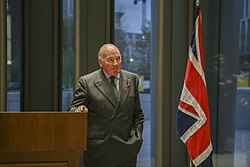
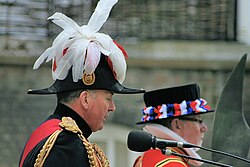
Upon retiring from active service in 2009, Dannatt was appointed as the 159th Constable of the Tower of London, a historic role he held until 2016. He also entered the political sphere as a Crossbencher in the House of Lords following his life peerage in 2011.
In his later years, Dannatt has remained a critical voice on defense policy. During the Iraq Inquiry in 2010, he testified that the army had been overstretched by simultaneous operations in Iraq and Afghanistan. In his 2016 book, Boots on the Ground: Britain and her Army since 1945, he described the decision to enter Iraq as a "strategic error of near biblical proportions."
Summary of Career Milestones
| Period/Year | Role/Event | Key Significance |
|---|---|---|
| 1971 | Commissioned into Green Howards | Beginning of active service in Belfast |
| 1972 | Awarded Military Cross | Gallantry in East Belfast |
| 1977 | Major Stroke | Two-year recovery and return to duty |
| 1989 | Commanding Officer, Green Howards | Transitioned regiment to airmobile role |
| 2003 | Commander, ARRC | Planning for Iraq and Afghanistan |
| 2006–2009 | Chief of the General Staff | Head of the British Army |
| 2009–2016 | Constable of the Tower of London | Senior ceremonial official at the Tower |
| 2011 | Life Peerage | Joined House of Lords as a Crossbencher |
Frequently Asked Questions
What was Lord Dannatt's most senior military role?
Lord Dannatt served as the Chief of the General Staff (CGS) from 2006 to 2009, which is the professional head of the British Army.
How did Lord Dannatt contribute to soldier welfare?
He was a vocal advocate for better pay and conditions for soldiers and helped establish the charity Help for Heroes to support wounded veterans.
What is the significance of the Military Cross awarded to him?
The Military Cross was awarded to Dannatt for his gallantry during an operation in East Belfast on February 7, 1972, while serving as a platoon commander.
What are Lord Dannatt's views on the Iraq War?
In his writings and testimony, he described the invasion of Iraq as a strategic error and argued that the army was overstretched by fighting in both Iraq and Afghanistan simultaneously.
What ceremonial role did he hold after retirement?
He served as the 159th Constable of the Tower of London from 2009 until July 2016.