Longman Publishing History: From Paternoster Row to Global Influence
The story of Longman is a chronicle of the evolution of the English book trade. Founded in the early 18th century, the firm grew from a modest London bookselling operation into a powerhouse of literary and educational publishing, shaping the way the English-speaking world accessed knowledge for centuries.
The Beginnings of a Publishing Dynasty
The company was established by Thomas Longman (1699–1755), the son of Ezekiel Longman of Bristol. After completing an apprenticeship in 1716 under London bookseller John Osborn—and subsequently marrying Osborn's daughter—Thomas entered the trade as a professional. In August 1724, he made a pivotal investment, purchasing the stock and household goods of William Taylor (the first publisher of Robinson Crusoe) for £2,282 9s 6d.
Longman established his publishing house in London's Paternoster Row, occupying two shops known as the Black Swan and the Ship. During this era, businesses were identified by signs rather than street numbers.
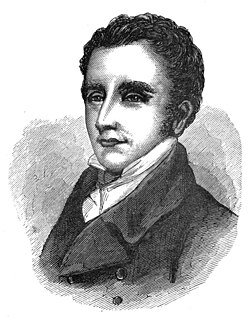
Early in his career, Longman formed a partnership with his father-in-law, Osborn, who held a one-sixth share in Ephraim Chambers's Cyclopaedia (1728). Longman also played a significant role in one of the most important linguistic projects in history, serving as one of the six booksellers responsible for the publication of Samuel Johnson's Dictionary between 1746 and 1755.
Expansion Through the Second and Third Generations
In 1754, the firm expanded to include Thomas Longman's nephew (1730–1797), rebranding as T. and T. Longman. Following his uncle's death in 1755, the younger Thomas became the sole proprietor and aggressively expanded the firm's colonial trade.
The business continued to evolve through new partnerships. Owen Rees joined in 1794, and Thomas Brown entered as an apprentice that same year. By 1824, the firm's title had expanded to reflect a broader partnership: Longman, Hurst, Rees, Orme, Brown & Green, though records suggest this name change may have occurred as early as 1823.
During this period, the firm acquired several high-value copyrights that ensured financial stability and prestige:
- Lindley Murray's English Grammar (purchased 1799), which sold approximately 50,000 copies annually.
- Richmal Mangnall's Historical and Miscellaneous Questions (purchased 1800), which reached 84 editions by 1857.
- Lyrical Ballads by Wordsworth and Joan of Arc by Southey (purchased c. 1800 from Joseph Cottle).
The firm became a hub for the Romantic movement, publishing the works of Scott, Coleridge, Southey, and Wordsworth. They also served as the London agent for the Edinburgh Review starting in 1802 and published the massive 39-volume Rees's Cyclopædia (completed in 1819).
The Fourth and Fifth Generations: Literary and Educational Growth
Following the death of Thomas Norton Longman (1771–1842) on August 29, 1842, control passed to his sons, Thomas (1804–1879) and William (1813–1877). This era was marked by significant literary successes, most notably the publication of Macaulay's Lays of Ancient Rome and his History of England, the latter of which sold 40,000 copies within a few years.
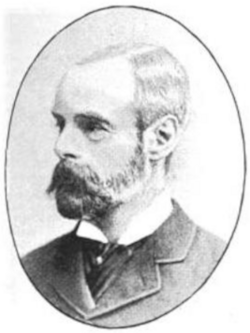
The brothers were scholars in their own right. Thomas edited an illustrated New Testament, while William authored works on the life of Edward III and the history of the Three Cathedrals dedicated to St Paul.
The firm continued to grow through strategic acquisitions, taking over John William Parker's business in 1863 (including Fraser's Magazine and the works of John Stuart Mill and James Anthony Froude) and incorporating the Rivington firm in 1890. By the late 19th century, the firm—now Longmans, Green & Co.—began focusing heavily on education. In 1884, they hired educationalist John William Allen, who expanded their textbook list and eventually became a shareholder in 1918.
Key Facts
- Founded: 1724 by Thomas Longman in Paternoster Row, London.
- Major Early Works: Samuel Johnson's Dictionary and Ephraim Chambers's Cyclopaedia.
- Romantic Era Ties: Published Wordsworth, Coleridge, and Southey.
- Commercial Success: Lindley Murray's English Grammar sold ~50,000 copies per year.
- Key Acquisitions: Incorporated the Rivington firm (est. 1711) in 1890.
| Era/Generation | Key Figure(s) | Major Milestone/Publication |
|---|---|---|
| 1st Generation | Thomas Longman | Purchase of William Taylor's stock (1724) |
| 2nd Generation | Thomas Longman (nephew) | Expansion of colonial trade |
| 3rd Generation | Thomas Norton Longman | Acquisition of Lyrical Ballads and English Grammar |
| 4th/5th Generation | Thomas & William Longman | Macaulay's History of England; shift to educational texts |
Frequently Asked Questions
Where was the Longman publishing house originally located?
The firm was based in Paternoster Row, London, originally occupying two shops known as the Black Swan and the Ship.
Which famous dictionary was Thomas Longman involved in publishing?
Thomas Longman was one of the six booksellers who undertook the responsibility of publishing Samuel Johnson's Dictionary between 1746 and 1755.
How did the firm expand its reach in the early 19th century?
The firm expanded by purchasing high-selling copyrights, such as Lindley Murray's English Grammar, and by acting as the London agent for the Edinburgh Review.
Who were some of the major authors published by Longman?
The firm published prominent figures including William Wordsworth, Samuel Taylor Coleridge, Robert Southey, Walter Scott, and Thomas Babington Macaulay.
When did the firm begin to focus on educational publishing?
The focus on educational materials grew significantly after 1884, when the firm employed John William Allen as an educationalist to develop their textbook list.