Long Meg and Her Daughters: The Mysteries of the Ancient Stone Circle
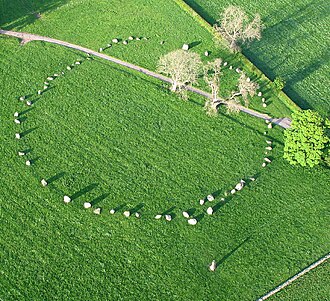
Standing as a testament to prehistoric engineering and astronomical precision, Long Meg and Her Daughters is a remarkable stone monument. This complex consists of a large circle of stones accompanied by a singular, towering monolith known as Long Meg, which stands apart from the main group. The site reflects a sophisticated understanding of geology and the movement of celestial bodies.
Key Facts
- Dimensions: The circle measures 120 m (390 ft) by 100 m (330 ft) in diameter.
- The Monolith: Long Meg is the tallest stone at 12 ft (3.7 m) and weighs approximately 9 tonnes.
- Composition: The circle consists of 69 stones, primarily made of rhyolite (a volcanic rock) and quartz crystal.
- Alignment: Long Meg is aligned with the center of the circle and the midwinter sunset.
- Artistry: The monolith features inscribed spirals and other rock art on the face facing the circle.
Construction and Composition
The monument is characterized by a diverse use of stone types, suggesting deliberate selection. The main circle is composed of glacial erratics—rocks that were transported by glaciers from their original location—specifically rhyolite. In contrast, the Long Meg monolith is crafted from local red sandstone, likely sourced from the nearby Lazonby hills or the River Eden.
Beyond the primary circle, the site includes two large blocks positioned to the east and west, as well as two "portal" stones located to the south-west. Evidence suggests the circle may have once featured a surrounding bank, and the central area may have been scraped out during its creation.
The Long Meg Monolith
Long Meg stands 80 ft (24 m) outside the circle and 20 ft (6.1 m) above the farthest stone of the perimeter. This monolith is not only the tallest of the 69 stones but also the most ornate. While its south-west face contains natural crystals, the side facing the circle is adorned with spirals and other prehistoric rock art.
Astronomical and Calendrical Significance
The placement of the stones suggests the site served as a prehistoric calendar. The alignment between the center of the circle and Long Meg corresponds specifically to the midwinter sunset. Furthermore, the use of different colored stones—predominantly red, white, and blue/grey—appears to be intentional.
Four specific stones in the circle are made of quartz crystal. These non-local stones are positioned to mark significant calendrical events, such as solstices and sunsets related to the four seasons. To use these markers, an observer would stand outside the circle at the stone directly opposite the quartz stone in question. One such alignment, occurring during Samhain (All Souls' Day), may involve a portal stone, a quartz stone, and Long Meg herself.
Additionally, a red "equinox stone" on the east side may have been used to track the vernal and autumn equinoxes, similar to patterns found at the Swinside and Castlerigg stone circles. The site may have also tracked lunar cycles, including the most northerly and southerly Moon rises and sets.
Historical Observations
The English antiquary William Dugdale previously reported the existence of two barrows made of cobble-stones, standing nine or ten feet high, in the center of the circle. Modern interpretations suggest these were likely later burials that utilized cobbles from the surrounding landscape.
| Feature | Detail |
|---|---|
| Circle Diameter | 120 m x 100 m |
| Total Stones in Circle | 69 |
| Long Meg Height | 12 ft (3.7 m) |
| Long Meg Weight | c. 9 tonnes |
| Primary Materials | Rhyolite, Red Sandstone, Quartz Crystal |
| Primary Alignment | Midwinter Sunset |
Frequently Asked Questions
What is the difference between the stones in the circle and Long Meg?
The stones in the circle are primarily rhyolite glacial erratics, whereas Long Meg is made of local red sandstone from the River Eden or Lazonby hills.
What is the purpose of the quartz crystal stones?
The four quartz stones are placed at specific points to mark calendrical events, such as solstices and seasonal sunsets, acting as markers for observers standing opposite them.
Does the monument track anything other than the sun?
Yes, evidence suggests the stones may have been used to track lunar timings, specifically the most northerly and southerly rises and sets of the Moon.
What art can be found on the Long Meg monolith?
The face of the monolith that looks toward the circle features inscribed spirals and other forms of prehistoric rock art.
Were there burials at the site?
William Dugdale reported two cobble-stone barrows in the center of the circle, which are believed to be later burials using local materials.